

























Opinion: Canada Rejects Claims of Selling Out to Beijing

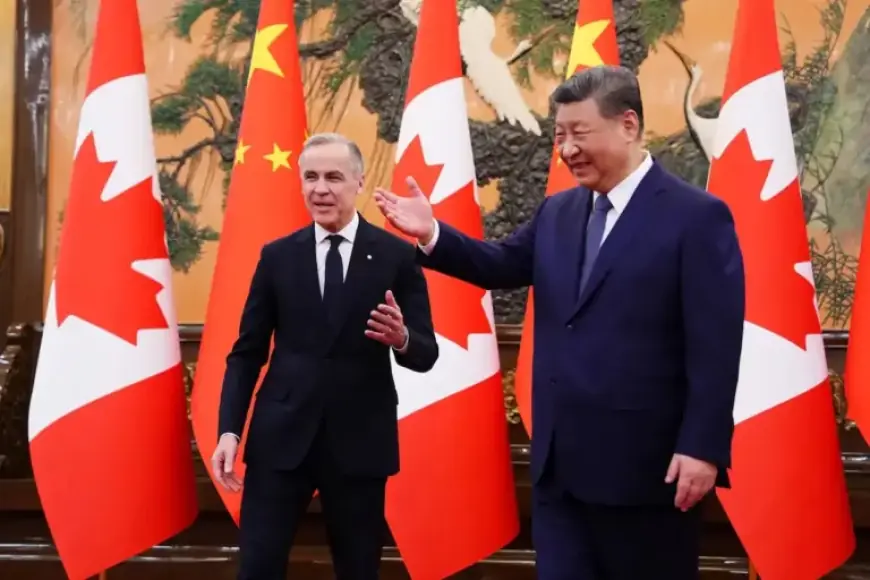
Recent discussions regarding Canada’s relationship with China have stirred significant debate. Critics in the United States have accused Canada of aligning itself with Beijing, which they interpreted as a betrayal of long-standing ties with the U.S. Such assertions emerged prominently following Prime Minister Mark Carney’s visit to China, where he met with President Xi Jinping.
Canada’s Trade Agreement with China
The recent trade discussions between Canada and China focused mainly on two sectors: agricultural products and electric vehicles. Following the agreements, Canada anticipates a reduction of Chinese tariffs on canola seeds from 84% to 15%. Additionally, other products such as canola meal, lobster, crabs, and peas are expected to see some tariff relief.
- Canada will admit up to 49,000 Chinese electric vehicles annually at a tariff of 6.1%.
- Canadian exports of beef and pet food are projected to resume.
- Future Chinese investments in the Canadian auto industry are under discussion but not officially committed.
The agreements also included non-binding memorandums related to various areas such as food safety, cultural exchanges, and crime prevention. Key dialogues outlined in the discussions included the revitalization of the Canada-China Economic and Financial Strategic Dialogue and the reestablishment of the Canada-China Joint Economic and Trade Commission.
Implications and Concerns
Although the recent agreements may improve trade relations, concerns exist regarding dependence on China. The past actions of the Chinese regime raise questions about potential risks associated with deeper engagement.
Currently, exports to China constitute about $30 billion annually, less than 4% of Canada’s total exports. The Canadian government aims to boost exports to China by 50% by 2030. However, given the projected growth of the Chinese economy, a more realistic expectation puts this increase at about 25% to 35%.
Ultimately, the shift in trade focus may result in Chinese exports comprising a slightly larger portion of Canada’s total exports over the next five years. This change, though modest, is symbolically significant. It indicates that Canada is exploring options beyond its traditionally strong ties with the United States.
The Bigger Picture for Canada’s Trade
This recent move to solidify trade relations with China is part of Canada’s broader strategy to diversify its trade partnerships. While establishing ties with China might not amount to an ideological shift, it does reflect Canada’s effort to expand its economic horizons in a complex global landscape.
In conclusion, Canada’s engagement with China does not signify a sellout to a dictatorship or a complete abandonment of traditional allies. Instead, it demonstrates a pragmatic approach to securing trade opportunities in an evolving world order.