























Davos Conference Explained: Where Davos Is, What “Davos” Means, and Why Davos 2026 Is Getting So Much Attention

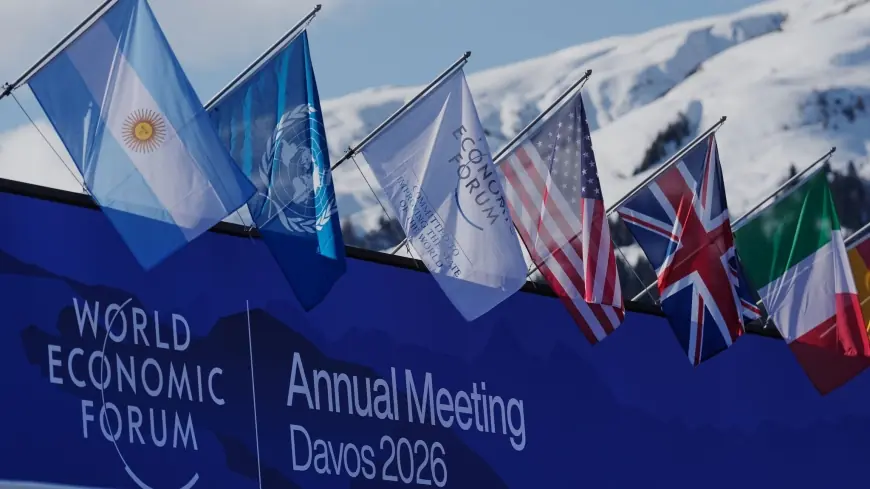
Davos is a mountain town in eastern Switzerland that becomes a global political-and-business crossroads each January when the World Economic Forum’s Annual Meeting arrives. When people say “Davos,” they usually mean that conference: a week of public sessions and private meetings where leaders discuss wars, trade, technology, energy, and the world economy. In 2026, the meeting is drawing extra attention because geopolitical tensions are sharper, the AI investment wave is colliding with real-world results, and security concerns are high across Europe.
The 2026 gathering runs January 19–23, 2026, with the theme “A Spirit of Dialogue.” That framing matters: it signals an attempt to keep communication open in a period when many governments and blocs are drifting into harder lines and more transactional diplomacy.
Where is Davos? Davos, Switzerland, in plain terms
Davos is an Alpine resort town in the canton of Graubünden (Grisons) in eastern Switzerland. It sits high in a valley at roughly 1,560 meters (about 5,100 feet) above sea level, surrounded by ski terrain and mountain passes. It’s remote enough to feel insulated, but connected enough to host large international events—one reason it’s been used for major conferences for decades.
In everyday geography terms: it’s in the Swiss Alps, not far from the better-known resort area around Klosters, and reachable by rail and road via the Chur/Landquart corridor.
-
Davos is in eastern Switzerland (Graubünden).
-
It’s a high-altitude Alpine town built around tourism and winter sports.
-
“Davos” in news headlines usually means the World Economic Forum Annual Meeting held there.
What is Davos? What people mean by the “Davos conference”
The “Davos conference” is the shorthand name for the World Economic Forum (WEF) Annual Meeting. It brings together heads of state, finance ministers, central bankers, CEOs, union and civil society leaders, and experts for discussions that range from the very public to the intensely private.
The meeting has two layers:
-
Official program: panel sessions, speeches, debates, and briefings—often where leaders try to set narratives or signal policy priorities.
-
Bilateral and deal-making ecosystem: side meetings where governments and companies explore partnerships, coordinate responses to crises, and test ideas away from cameras.
Because the room is packed with decision-makers at the same time, Davos can accelerate conversations that would otherwise take months.
Davos 2026: what’s driving headlines this week
Davos 2026 is landing in a moment when global rules and alliances feel less stable than they did even a few years ago. One major theme emerging from the opening days is the fear that international norms are weakening and power politics are returning more openly. France’s president used his Davos appearance to argue that the world is sliding toward a “rules-light” era—language that reflects growing anxiety in Europe about sovereignty, borders, and the durability of international law.
At the same time, the AI boom is being questioned in a more practical way: business leaders are increasingly focused on whether AI spending is producing measurable gains. A prominent audit-and-consulting leader said a majority of companies are seeing little or no benefit so far, blaming weak preparation and unclear operational goals—an argument that Davos attendees are taking seriously because it hits budgets, productivity, and competitiveness.
Even the offstage Davos scene has become a story: organizers have warned of scams involving fake “VIP passes” tied to high-demand invitation-only venues around the meeting, a reminder that the Davos ecosystem includes exclusivity—and opportunists who try to monetize it.
-
Davos 2026 runs Jan 19–23 under “A Spirit of Dialogue.”
-
Leaders are openly debating whether the world is shifting toward weaker international rules.
-
The AI conversation is moving from hype to ROI and execution.
-
Security and access remain sensitive, and credential scams have become a talking point.
-
The meeting blends public speeches with private diplomacy that can shape months of policy and investment decisions.
Davos has been a fixture of global elite gatherings since the late 20th century, but its symbolism evolved: it’s no longer just an economic summit. It has become a mirror of the world’s anxieties—financial shocks in some years, pandemics and supply chains in others, and now a mix of wars, energy security, and technology rivalry.
Why Davos matters, even if you never watch a single panel
Davos rarely produces one “treaty moment.” Its influence is subtler: it aligns narratives, tests proposals, and lets leaders compare notes quickly. When global politics is fragmented, that coordination function becomes more valuable—while also fueling criticism that too much is discussed behind closed doors.
For markets and policy-watchers, the key is not only what gets said on stage, but what themes repeat across conversations: risk tolerance, recession expectations, energy and commodity planning, and how governments intend to regulate AI and data.
FAQ: Davos conference basics
Is Davos a city or the name of the event?
It’s both: Davos is a town in Switzerland, and “Davos” is commonly used as shorthand for the World Economic Forum Annual Meeting held there.
Who goes to Davos?
Political leaders, CEOs, investors, academics, NGOs, and international organizations—plus large delegations that hold side meetings all week.
What is Davos 2026 focused on?
Dialogue amid rising geopolitical tensions, the practical reality of AI adoption, energy and security concerns, and economic resilience.
In the days ahead, watch for three signals that usually define Davos outcomes: whether leaders announce concrete policy coordination (not just speeches), whether AI talk shifts toward specific standards and accountability, and whether geopolitical statements harden into new red lines or reopen channels for negotiation. Davos 2026 is being sold as dialogue—its real test is whether dialogue turns into decisions.