






















EU Chief Vows Strong Retaliation to Trump’s Tariff Threats on Social Media

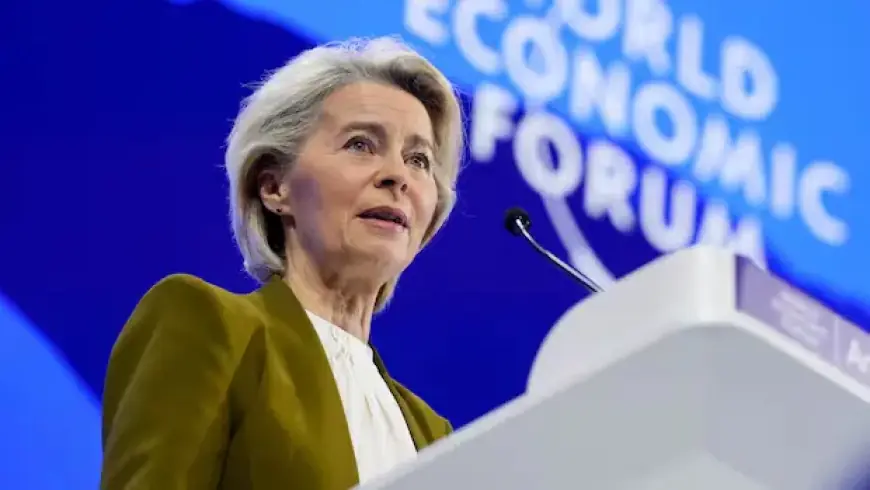
European Commission President Ursula von der Leyen addressed the escalating tensions between the European Union and the United States regarding President Donald Trump’s tariff threats. During a speech at the World Economic Forum in Davos, Switzerland, on Tuesday, she emphasized that the EU shares the U.S. concerns over Arctic security but warned that any imposition of tariffs by Trump would provoke a strong and united response from Europe.
Retaliation Against Trump’s Tariff Threats
Von der Leyen made it clear that the EU would respond “unflinchingly” if Trump followed through on his plans. The U.S. President had announced a new tariff regime targeting eight countries, including Denmark, following disputes over Greenland. The U.S. has expressed ambitions to acquire Greenland, leading to heightened tensions.
- Countries targeted by the tariffs: Denmark, Finland, France, Germany, the Netherlands, Sweden, and others.
- Proposed tariff rates: 10% effective February 1, rising to 25% on June 1.
Von der Leyen highlighted that Trump’s actions risk degrading U.S.-EU relations, suggesting that such measures would only benefit adversaries of both sides. She reaffirmed that a trade agreement established the past summer should be respected.
EU’s Strategic Response
The potential tariffs initiated a flurry of diplomatic reactions within Europe. Leaders are considering countermeasures, including retaliatory tariffs and invoking the EU’s anti-coercion instrument for the first time. This tool allows the EU to limit access to its services, investments, and procurement processes but requires consensus among at least 15 member states.
French President Emmanuel Macron asserted that Europe prefers respect over bullying. He remarked on the shocking notion that the EU should contemplate using its anti-coercion measures against a traditional ally like the U.S.
Geopolitical Context of Greenland
The U.S. has a strategic interest in Greenland, an island crucial for ballistic missile defense due to its location between Europe and North America. The Trump administration’s aggressive stance on U.S. territorial claims has created confusion regarding a 1951 agreement allowing American military operations in Greenland with Danish consent.
Danish Foreign Minister Lars Løkke Rasmussen expressed readiness to engage in discussions, emphasizing the need for pragmatism amid the rising tensions.
Public Sentiment and Further Implications
Polls indicate that a majority of Americans do not support aggressive actions toward Greenland. Amidst these tensions, California Governor Gavin Newsom called on European leaders to adopt a more assertive stance against Trump’s assertions.
As the situation unfolds, the EU is planning a meeting in Brussels to further address the implications of Trump’s remarks on Greenland and the potential tariffs. The dynamics of transatlantic relations are at a pivotal point, with the balance of power being tested.