
















Carney Defends Greenland, Urges Criticism of Allies Using Economic Coercion

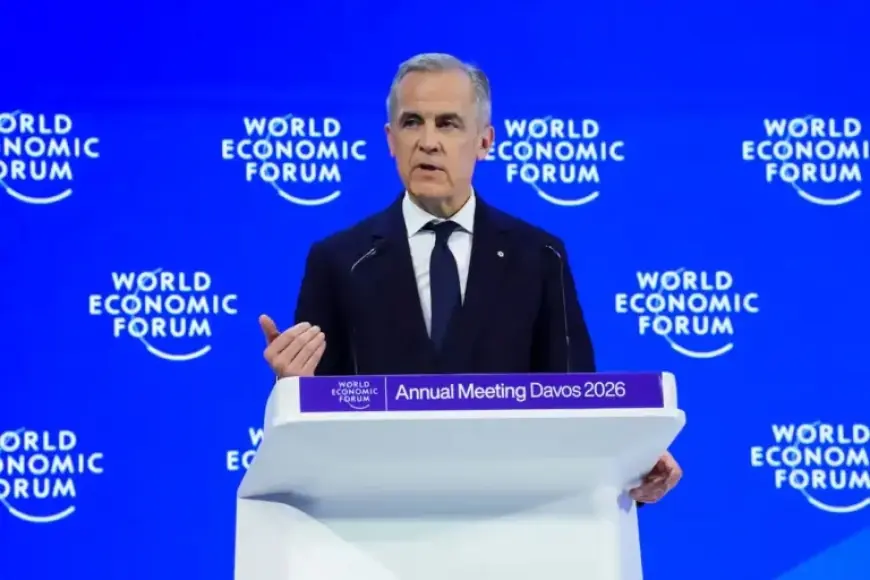
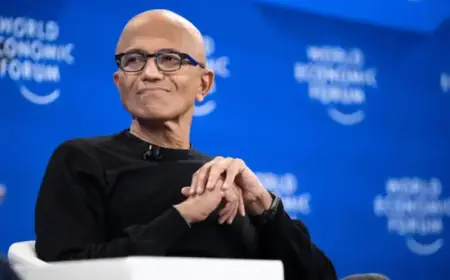
Prime Minister Mark Carney recently addressed the World Economic Forum in Davos, Switzerland. His remarks highlighted the challenges faced by middle powers in a world increasingly defined by economic coercion and competition among great powers.
Criticism of Economic Coercion
During his speech, Carney emphasized the need for countries to confront the reality of a disintegrating rules-based international order. He asserted that middle powers must stop pretending that this system still functions effectively. Instead, they should come together to form coalitions that can resist domination by larger nations.
Carney noted that the United States, while not directly named, played a key role in this changing landscape. He stated, “More recently, great powers began using economic integration as weapons,” which includes leveraging tariffs and exploiting supply chains. He urged nations, including allies, to condemn such economic coercion.
Focus on Greenland
The backdrop of Carney’s speech included recent tensions surrounding Greenland, a territory that U.S. President Donald Trump has indicated an interest in acquiring strategically. Carney reiterated Canada’s opposition to any imposed tariffs related to Greenland, advocating instead for dialogue and cooperation.
He stated, “Canada strongly opposes tariffs over Greenland and calls for focused talks to achieve our shared objectives of security and prosperity in the Arctic.” Carney solidified Canada’s commitment to NATO, asserting that the defense of Greenland is paramount.
Middle Powers and Global Cooperation
- Carney labeled the current geopolitical situation as one of “intensifying great power rivalry.”
- He called for middle powers to unite, expressing that “if you are not at the table, you are on the menu.”
- He encouraged creating new international agreements to replace outdated frameworks.
Amidst these discussions, Foreign Affairs Minister Anita Anand refrained from detailing Canada’s potential military commitments to Greenland, emphasizing ongoing participation in NATO exercises instead.
Response from the European Union
European Commission President Ursula von der Leyen echoed Carney’s sentiments, labeling Trump’s threats of tariffs over Greenland as a mistake. She indicated that the EU’s response to Trump’s economic coercion would be “unflinching, united, and proportional.” Von der Leyen also mentioned the EU’s efforts to boost investment in Greenland to safeguard Danish territory.
Conclusion
Mark Carney’s address at the World Economic Forum underscored the necessity for middle powers to collaborate and actively oppose economic coercion from larger nations. The ongoing discourse surrounding Greenland reflects broader themes of sovereignty and international cooperation in an evolving global landscape.