






















Carney’s World Economic Forum Speech: Full Transcript Available

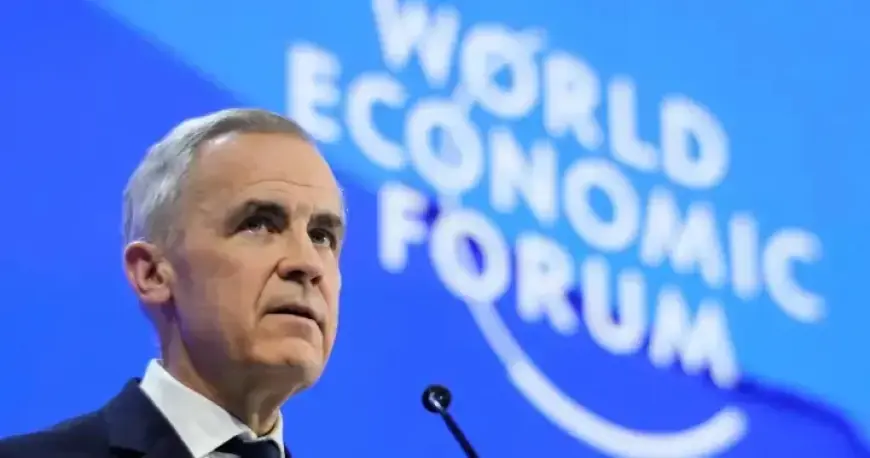
Prime Minister Mark Carney delivered a significant address at the World Economic Forum in Davos, Switzerland, addressing the evolving global landscape. He emphasized the importance of collaboration among middle powers like Canada amid rising geopolitical tensions involving major nations such as Russia, China, and the United States.
Key Themes from Carney’s Speech
Carney’s remarks were grounded in the context of a “new world order.” He highlighted the declining effectiveness of the traditional rules-based international systems, suggesting that compliance among nations is no longer a viable strategy for safety.
Historical Context
- Carney referenced Václav Havel’s essay, “The Power of the Powerless,” illustrating how compliance in the face of adversity perpetuates ineffective systems.
- He argued that countries like Canada benefited from the old order, which allowed them to pursue foreign policies aligned with their values.
The Current Shift
The Prime Minister noted a significant rupture from this established order, marked by crises in finance, health, and geopolitics. He stated that the integration has become a source of subordination as great powers exploit it for their advantage.
Middle powers, therefore, face a crucial decision: enhance strategic autonomy or risk becoming more vulnerable in an increasingly cutthroat landscape.
Canada’s Strategic Adaptation
Canada has recognized the urgent need to shift its strategic posture. Carney explained that the nation is embracing what he termed “value-based realism.” This approach balances a commitment to fundamental values with practical engagement in a complex international environment.
Policy and Investment Initiatives
- Reduction of taxes on incomes, capital gains, and businesses.
- Elimination of federal barriers to interprovincial trade.
- Investment of $1 trillion in energy, AI, critical minerals, and infrastructure.
- Doubling defense spending by the end of the decade.
Furthermore, Canada is actively forming strategic partnerships globally, including recent agreements with China and Qatar, and negotiating trade deals with India and various ASEAN nations.
Global Engagement and Resilience
Carney asserted that middle powers must forge cooperative strategies to address global challenges. Canada has pledged its commitment to NATO and supports Arctic sovereignty, particularly respecting Greenland’s rights.
He urged nations to focus on shared strengths rather than fortifying individual defenses alone. Collaborative resilience is more efficient than everyone erecting their own barriers.
Embracing New Realities
Carney’s final remarks centered on honesty in recognizing the shift away from the past order. He underscored the need for middle powers to stop pretending that the rules-based system is intact and to take action to forge new pathways towards cooperation.
In conclusion, Carney emphasized that Canada has numerous assets—natural resources, educated citizens, and financial capabilities. The nation’s commitment to sustainability, alongside its understanding of the current global arena, positions it to lead effectively in this new paradigm.
Canada is prepared to pursue a collaborative future with any nations ready to embrace this path. By pulling the sign from the window, Canada chooses a confident and open approach to international relations.