

























Northern Lights Illuminate Canadian Skies on Monday Night

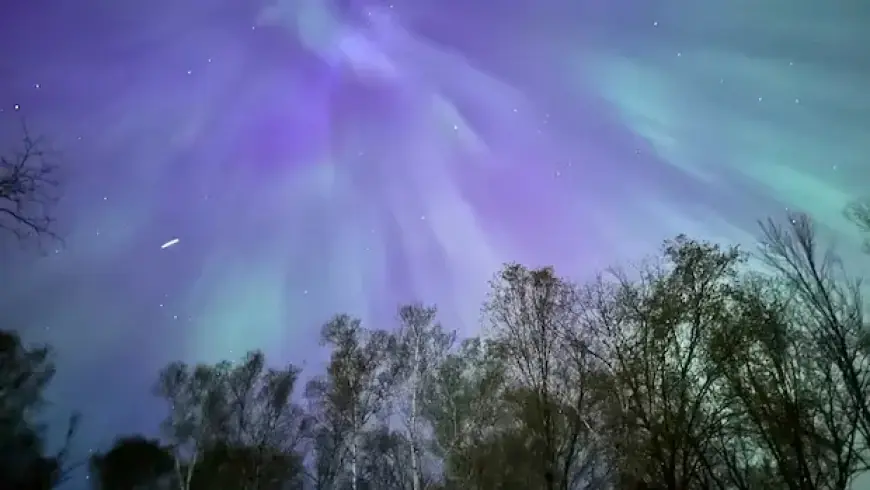
The northern lights, or aurora borealis, captivated skywatchers on Monday night, thanks to a potent solar event. A significant X 1.9 solar flare erupted, leading to a subsequent coronal mass ejection (CME). This CME is expected to create stunning light displays across the skies.
Northern Lights Forecast
According to the U.S. Space Weather Prediction Center (SWPC), the CME is projected to arrive at Earth between late January 19 and early January 20, 2024. These solar phenomena result in geomagnetic storms, which are disturbances in the Earth’s magnetosphere.
Understanding Geomagnetic Storms
Geomagnetic storms are classified on a scale from G1 (minor) to G5 (extreme). The SWPC has predicted a G4 storm for this event, indicating severe conditions. Past storms, such as those in May and October 2024, reached G5 status, lighting up skies even in the Caribbean.
Viewing Opportunities
- Best viewing locations: Northern regions typically see auroras, but under rare conditions, they can be observed farther south.
- Ideal conditions: Look for clear skies, away from light pollution, to enhance your chances of witnessing the aurora.
- Tools for tracking: Utilize apps like Aurora Alerts and Aurora Forecast to check real-time visibility in your area.
The visibility of the northern lights depends on the alignment of the auroral hole and the timing of the geomagnetic storm. This time of year may not be optimal due to frequent cloud cover, although the ongoing solar activity may increase visibility chances.
Tips for Optimal Viewing
For the best experience, it’s advisable to find a dark location free of clouds. You don’t have to face North exclusively, but it can help your chances of seeing a moderate storm’s effects.
Prepare to be amazed, as cosmic activity has set the stage for a remarkable night of celestial beauty over Canadian skies. Stay alert and enjoy the magic of the northern lights!