100-Car Pileup Shuts Down I-196 in West Michigan as Whiteout Snow Triggers Chain-Reaction Crashes

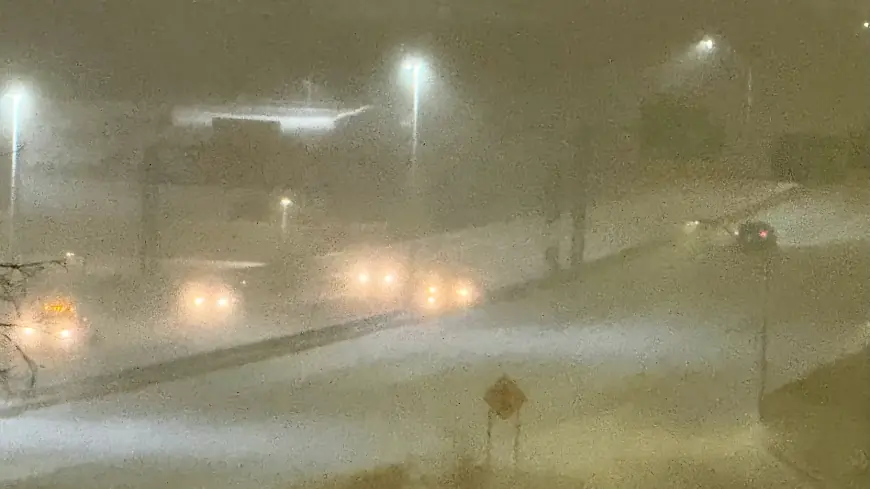
A massive multi-vehicle crash involving roughly 100 cars has shut down a key stretch of Interstate 196 in West Michigan on Monday, January 19, 2026, after fast-moving winter weather created near-zero visibility and treacherous road conditions. Officials say numerous injuries have been reported, but none were believed to be fatal as of the latest updates, and the highway is expected to remain closed for several hours while crews work to clear damaged vehicles and restore safe travel.
What happened in the 100-car pileup
The pileup unfolded late Monday morning, starting around 10:19 a.m. local time (ET), as drivers encountered sudden whiteout conditions on I-196 near the Hudsonville–Zeeland area. Authorities described a chain of crashes and slide-offs that quickly escalated across multiple lanes, with the crash scene stretching for miles in the worst-hit section.
In addition to passenger vehicles, several semi-trucks were involved, including jackknifed rigs that can block lanes and amplify the severity of chain-reaction collisions. Emergency personnel from multiple agencies responded to triage injuries, coordinate traffic control, and begin the slow process of vehicle removal.
Closures, detours, and how long the shutdown could last
Both directions of I-196 were closed between the Hudsonville area and Zeeland area exits, cutting off a busy connector that many drivers rely on for commuting and regional travel. Officials urged drivers to avoid the corridor entirely and to postpone non-essential travel until conditions improve.
Because a pileup of this scale requires careful injury assessment, vehicle-by-vehicle recovery, and roadway inspection, reopening typically takes hours rather than minutes. Beyond towing and debris removal, responders must also ensure emergency access, prevent secondary crashes, and manage stranded motorists safely.
Rescue response and help for stranded motorists
With temperatures low and visibility poor, officials focused not only on crash response but also on protecting people stuck on the highway. Buses were brought in to transport stranded motorists from the freeway to a nearby warming location, where drivers could regroup and arrange rides. Those still waiting in the affected area were advised to remain inside their vehicles until directed to board transport—an approach that reduces the risk of exposure and keeps people out of active recovery zones.
This kind of logistics effort matters in major winter pileups: once traffic is immobilized, fuel levels, cold exposure, medical issues, and the inability of tow trucks to reach every vehicle quickly can turn a crash scene into a public safety situation.
Why 100-car pileups happen so fast in whiteout conditions
Large pileups are rarely caused by one dramatic impact. Instead, they’re usually a cascade triggered by three overlapping factors:
-
Sudden visibility collapse: Lake-effect snow bands and blowing snow can reduce visibility from clear to near-zero within seconds.
-
Speed mismatch: Even a small number of drivers maintaining highway speed can collide with slowing or stopped traffic ahead.
-
Traction loss and “no escape” lanes: Ice and compacted snow reduce braking effectiveness, and crowded lanes leave few options to steer away safely.
Once a first crash blocks a lane, the risk spikes for drivers approaching the scene—especially if they crest a hill or round a curve into a wall of blowing snow.
What to watch next as cleanup continues
Officials have indicated the situation is still developing, which means the confirmed vehicle count, injury totals, and closure timeline may change as crews finish accounting for everyone involved and removing vehicles across the full impact zone.
Drivers in the broader region should expect lingering delays even after lanes reopen, especially if ongoing snow squalls and strong winds continue to create intermittent whiteouts. The safest plan is to delay travel where possible, monitor local alerts, and assume conditions can deteriorate quickly—even if roads look manageable at the start of a trip.