






















Syrian Military Advances as Kurdish-Led SDF Accepts US-Backed Sharaa’s Terms

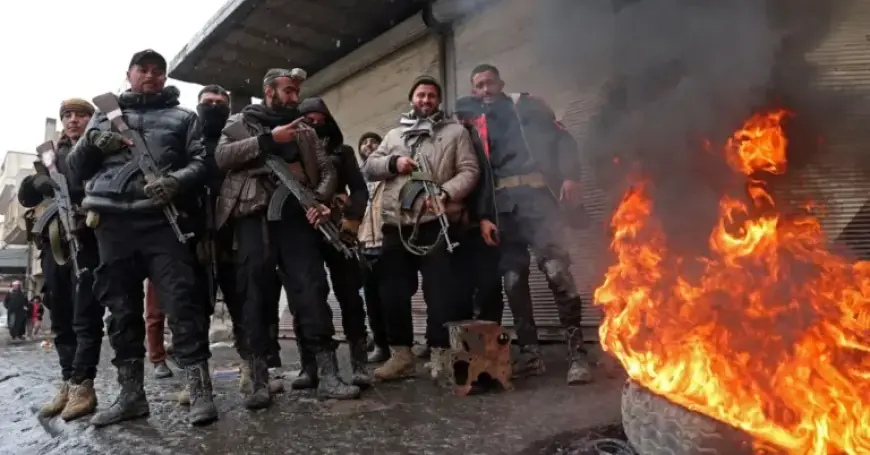
Recent developments in Syria have marked a significant turning point as the Syrian military continues its rapid advancements against the Syrian Democratic Forces (SDF). This escalation has led to the near-total capture of Raqqa, previously held by the SDF and recognized as the Islamic State’s former capital.
Syrian Military Advances and SDF Ceasefire Agreement
On a pivotal day, Syrian President Ahmed al-Sharaa announced a comprehensive agreement that effectively signals the SDF’s capitulation. This arrangement, reportedly endorsed by SDF commander Mazlum Kobane, leans heavily in favor of the Syrian government. Although Kobane was expected to sign the document in Damascus in the presence of U.S. envoy Tom Barrack, he ultimately did so remotely.
Tom Barrack praised both parties for their efforts, stating they were working towards “renewed dialogue and cooperation toward a unified Syria.” Despite the apparent collaborative spirit, the underlying visions of the two leaders differ drastically. Sharaa advocates for a centralized government, while the SDF prioritizes its autonomous structures established over the years.
Key Terms of the Agreement
- The agreement establishes a comprehensive ceasefire across all frontlines between the SDF and Syrian government forces.
- Immediate military and administrative handover of Raqqa and Deir ez-Zor governorates to the Syrian government is mandated.
- Control of all border crossings, oil fields, and gas fields will also shift to Damascus.
- SDF military and security personnel are expected to integrate into Syrian defense structures.
- The administration of ISIS prisons will transition to the Syrian central government.
This capitulation represents a significant concession for the SDF, which had aimed to maintain key divisions and brigades. The rapid advance of government forces—securing control of territories in just 48 hours—has raised questions about the SDF’s strategic position. The loss of U.S. backing, perceived as a betrayal by many Kurds, has further complicated their situation.
Adding to the complexities, the SDF had relied on control of ISIS facilities as leverage with the U.S.-led coalition. The agreement notably fails to endorse self-rule or guarantee ethnic rights for the Kurdish population, though it recognizes Kurdish as a “national” language and celebrates the Kurdish New Year.
Implications for Future Governance and Regional Stability
Should this agreement be fully implemented, it may signify the end of the SDF’s aspirations for political autonomy in the region. Observers highlight that enforcement of many terms could take considerable time and remain uncertain.
The agreement also aligns with Turkish objectives, as it demands the dismantling of the SDF and addresses concerns related to the Kurdistan Workers Party (PKK). This political shift has potentially profound implications for regional stability, creating new dynamics in the already volatile landscape of Syria.
| Key Players | Positions |
|---|---|
| Ahmed al-Sharaa | President of Syria, supports centralized governance |
| Mazlum Kobane | Commander of the SDF, promotes autonomy and equality |
| Tom Barrack | U.S. envoy, advocates for cooperation and dialogue |
The unfolding situation reflects the ongoing struggle for power in Syria and highlights the complexities of international involvement in the region. As the Syrian military solidifies its control, the future of the SDF appears increasingly precarious.