Jim Cornelison Brings Soldier Field to Its Feet as Bears Tap Chicago’s Signature Anthem Voice

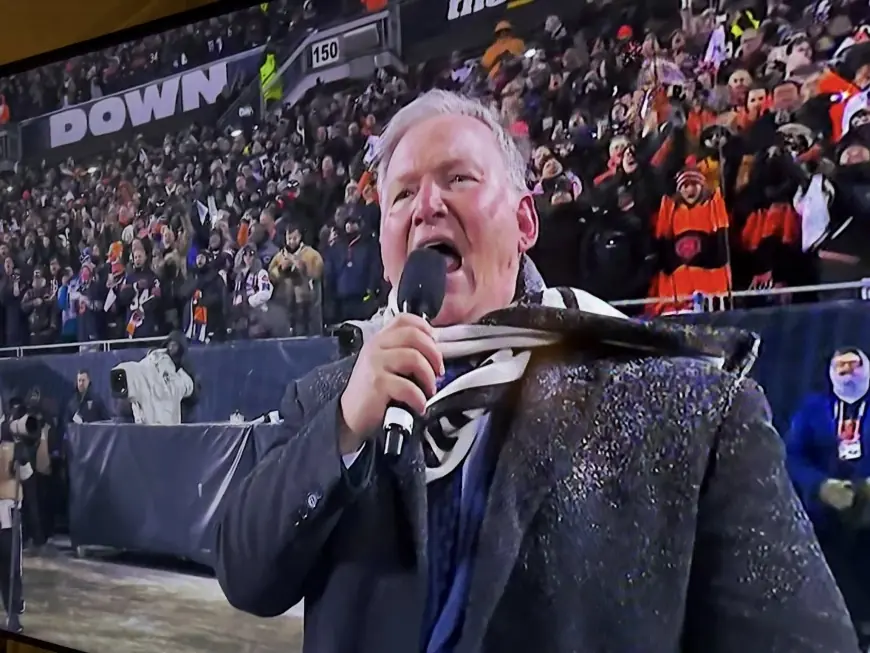
CHICAGO — Jim Cornelison turned a pregame tradition into a headline on Sunday, January 18, 2026, delivering a soaring rendition of the national anthem at Soldier Field before the Bears’ playoff matchup with the Los Angeles Rams. The performance spread rapidly across social media within minutes, amplified by a national television audience and a stadium reaction that felt more like a goal celebration than a routine kickoff ceremony.
For longtime Chicago sports fans, the moment was instantly recognizable: Cornelison’s big, operatic tenor and dramatic pacing have become part of the city’s sports identity. For newer viewers, Sunday served as an introduction to a voice that has been a defining feature of major Chicago events for years.
Jim Cornelison and the Bears National Anthem Moment That Went Viral
Cornelison’s appearance came at a perfect intersection of timing and stakes. A playoff crowd already primed for tension and emotion responded loudly, and the broadcast made the performance accessible far beyond Soldier Field. Clips circulated widely with fans praising the power, control, and intensity of the delivery.
It wasn’t just the singing that made it trend. It was the symbolism: bringing in a performer widely associated with Chicago’s most famous anthem tradition signaled that this wasn’t simply a football game, but an event meant to feel distinctly local and larger-than-life.
Why Jim Cornelison Is So Closely Linked to Chicago Sports
Cornelison is best known as the longtime anthem singer at Chicago Blackhawks home games, where his performances have become a ritual for generations of fans. His style — resonant, theatrical, and designed to fill an arena without losing clarity — has made him a natural fit for high-attendance, high-pressure sports settings.
While he is most closely associated with hockey, Cornelison has also been a familiar face (and voice) at other major Chicago sports moments, including Bears games at Soldier Field. That crossover explains why searches for “Jim Cornelison Bears,” “Bears national anthem,” and variations of his name spiked immediately after Sunday’s pregame.
The Voice, the Training, and the Career Behind the Performance
Cornelison’s sound is shaped by classical vocal training and a career that extends beyond stadium ceremonies. He has performed in opera settings and built a reputation as a dramatic tenor — a category of voice known for volume, endurance, and emotional force.
That foundation is a key reason his anthem performances stand out. Rather than relying on pop-style embellishment, Cornelison tends to lean into sustained notes, clean phrasing, and a measured build that matches the scale of a packed stadium.
A Bigger Trend: When the National Anthem Becomes Part of the Game
Sunday’s moment fits a growing reality of modern sports coverage: pregame ceremonies can become “content” on the same level as highlights. In an era when fans clip and share everything in real time, a standout anthem performance can shape the tone of a game, set the emotional temperature, and even become one of the day’s most discussed moments — especially in the playoffs.
Teams understand that effect. Selecting a performer with local significance can be a subtle way to rally a crowd and reinforce identity. For the Bears, tapping Cornelison wasn’t just booking a strong singer; it was choosing a symbol of Chicago sports tradition at a time when every detail feels amplified.
What Comes Next for Jim Cornelison After a National Spotlight
Cornelison’s viral moment is likely to increase demand for appearances at major events, especially as postseason sports continue across multiple leagues. In Chicago, he already occupies a rare position: a performer whose presence is immediately associated with “big-game atmosphere.”
Whether Sunday leads to more NFL playoff invitations or additional high-profile ceremonies, the takeaway is the same. Jim Cornelison didn’t just sing the anthem at Soldier Field — he delivered a performance that helped define the day’s mood, and reminded audiences why Chicago treats his voice like part of the home-field advantage.