‘The Pitt’ Skillfully Explores AI in Medicine in ‘8:00 AM’

In the latest episode of The Pitt, titled “8:00 AM,” the show delves into the intersection of generative AI and healthcare. As audiences tune in, they see an exploration of AI’s advantages and its limitations in medical practice.
The Narrative of “8:00 AM”
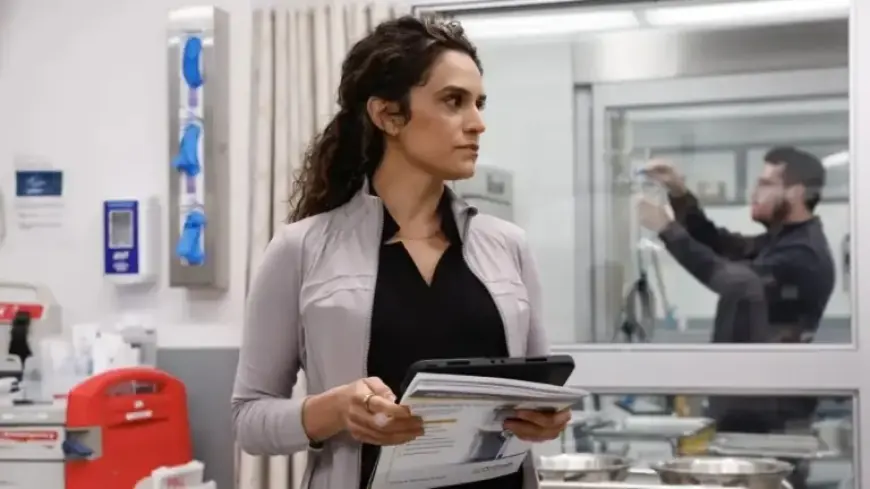
While the episode features various intriguing medical cases, one pivotal storyline includes the character Dr. Baran Al-Hashimi, portrayed by Sepideh Moafi. Dr. Al-Hashimi attempts to introduce an AI application in the Emergency Room (ER) aimed at streamlining patient care. The application promises to summarize patient visits efficiently, drastically reducing time spent on charting. An enthusiastic medical student notes that this could potentially save ER doctors 80 percent of their charting time.
Furthermore, Dr. Al-Hashimi asserts that this technology can enhance patient interaction, allowing physicians to devote 20 percent more time to patients. However, the technology quickly falters, showcasing a mix-up in medication documentation.
Accuracy of Generative AI in Healthcare
Dr. Al-Hashimi claims that generative AI boasts 98 percent accuracy. However, this statistic, while optimistic, requires scrutiny. Research has shown that AI transcription can be highly accurate in controlled environments. A systematic review published in the BMC Medical Informatics and Decision Making journal indicated that some studies reached accuracy rates of 98 percent. Yet, in realistic settings like crowded ERs, these accuracy rates may plummet to as low as 50 percent.
Recent advancements in large language models (LLMs) are promising, but they still have notable inaccuracies. For instance, the release of the GPT-5.2 model showed a 10.9 percent hallucination rate, raising concerns over the reliability of AI in medical situations. Although this rate improves when the model accesses the internet, the question remains—would patients trust AI tasked with their health if it risks being inaccurate?
The Role of Empathy in Medicine
A significant theme in this episode is the irreplaceable human element of care. Conversations among characters, including Dr. Robby played by Noah Wyle, emphasize the importance of intuition and emotional understanding in healthcare. Empathy plays a crucial role in patient interactions, and it’s evident that generative AI cannot replicate these soft skills.
Potential Benefits of AI in Healthcare
While concerns about AI’s limitations are valid, the technology is not necessarily aimed at replacing doctors. Instead, it serves as a tool to enhance the diagnostic capabilities of healthcare professionals. Notably, in radiology, the implementation of AI has resulted in improved productivity without sacrificing accuracy. For example, a project at Northwestern University saw radiologists’ productivity increase by 40 percent with the aid of customized generative AI tools.
Conclusion
The ongoing narrative in The Pitt highlights an evolving relationship between AI and medicine, exemplified by Dr. Al-Hashimi’s character. While the potential of generative AI in healthcare is significant, the need for human oversight and empathy remains crucial. Viewers can catch Season 2 of The Pitt, streaming now on Filmogaz, with new episodes airing every Thursday.