Review: ’28 Years Later: The Bone Temple’ Explores Sympathy for the Devil

Alex Garland returns to the zombie genre with “28 Years Later: The Bone Temple,” the latest installment of the acclaimed franchise. Known for his work on films like “Ex Machina” and “Annihilation,” Garland crafts a narrative that mixes horror with philosophical questions about human morality.
Exploration of Good and Evil
In “The Bone Temple,” Garland dives deep into themes of morality and the nature of humanity. The story unfolds in a post-apocalyptic setting, following the aftermath of a viral outbreak that began with “28 Days Later” in 2003. The previous sequel, “28 Weeks Later,” released in 2007, explored humanity’s failure to learn from past mistakes. The franchise, now a trilogy, delves into human existence and questions whether people are inherently good or evil.
Plot Overview
- Setting: Continues from “28 Years Later.”
- Protagonists: Dr. Kelson (Ralph Fiennes) and a young character named Spike (Alfie Williams).
- Antagonist: Jimmy Crystal (Jack O’Connell), a charismatic but sinister leader.
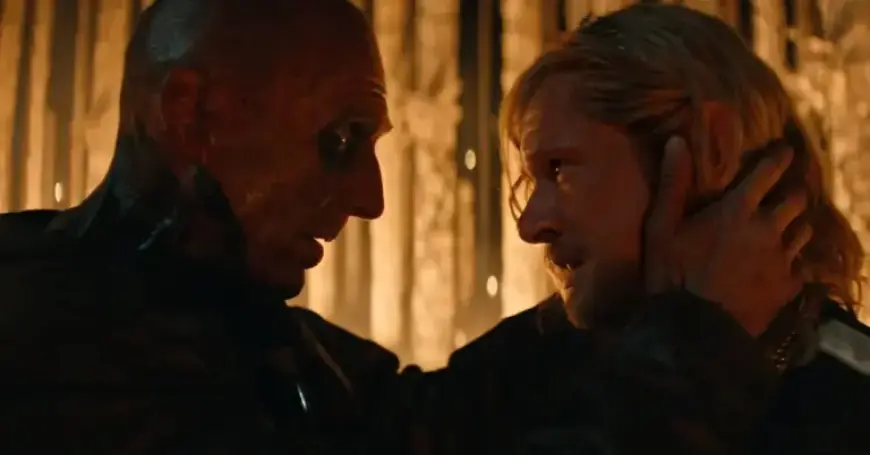
The narrative intertwines two main threads. One follows Dr. Kelson as he develops an unlikely friendship with Samson (Chi Lewis-Parry), an “alpha” infected male he believes may be redeemable. The other centers on Jimmy Crystal, who leads a group that embodies chaos and violence. His character is loosely inspired by the infamous British television personality, Jimmy Savile, known for his charitable facade that concealed horrific abuses.
Violence and Symbolism
In contrast to its predecessor, “The Bone Temple” opts for a visceral approach filled with gore and intense scenes. Directed by Nia DaCosta, the film abandons visual tricks in favor of pure horror elements. Characters navigate a world where concepts of charity are grotesquely twisted by violence.
Character Dynamics
- Jimmy Crystal: Represents a dark parody of benevolence, claiming to be the son of the devil.
- Dr. Kelson: A scientist struggling with his beliefs while trying to save humanity.
The interactions between these characters raise pressing questions about the capacity for goodness in a chaotic world. As they face off, the escalating tension prompts viewers to consider the essence of morality.
Metaphors and Philosophical Themes
Garland infuses the script with rich metaphors, such as references to the Garden of Eden and the Passion of the Christ. These themes suggest a possible rebirth or a new beginning in a world ravaged by horror. Characters grapple with existential dilemmas, pondering whether humanity is worth saving.
Future of the Franchise
Fans of the series can look forward to more, as “The Bone Temple” is intended to be the middle entry in a planned trilogy. With excitement surrounding a sequel, the franchise continues to evolve, questioning the human condition in a world turned upside down by the rage virus.
“28 Years Later: The Bone Temple” is rated R for graphic content, including violence and strong language. The film runs for 1 hour and 49 minutes and is currently playing in theaters.