NTSB Identifies Faulty Aircraft Part in Last Year’s UPS Crash

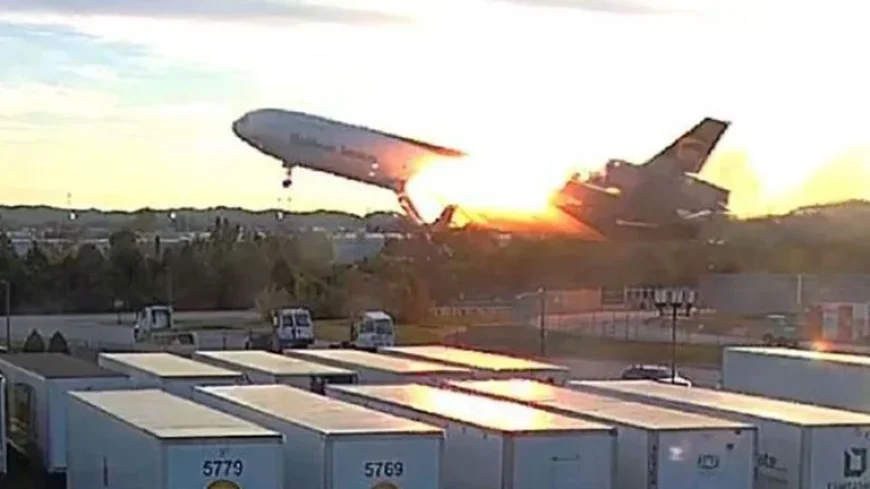
Investigators have identified a faulty aircraft part involved in the tragic UPS cargo flight crash in Louisville last November. This incident resulted in the loss of 15 lives, including three pilots onboard and 12 individuals on the ground.
NTSB Investigation Update
The National Transportation Safety Board (NTSB) reported that the failure was linked to a 3-inch-wide metal housing surrounding a bearing. This component is essential to the mount securing the left engine to the wing of the MD-11F. The investigation revealed signs of metal fatigue and cracking in the housing.
Crash Details
The UPS flight 2976 met with disaster shortly after takeoff on November 4, 2022. The aircraft crashed approximately half a mile from the Louisville Muhammad Ali International Airport, creating a debris field that extended over a petroleum recycling facility and a UPS warehouse. This resulted in a massive fireball and thick black smoke that was visible for miles.
Critical Findings
- The bearing race was found split into two halves, causing the left engine to detach from the wing.
- Fatigue cracks were identified in the hardware attaching the engine to the wing.
- The aircraft failed to gain altitude beyond 30 feet.
The NTSB had earlier issued a preliminary report indicating that the critical mount responsible for the left engine’s attachment failed just moments after the flight’s takeoff. This failure contributed to the inability of the plane to rise above a minimal height shortly after leaving the runway.
Boeing’s Historical Context
A service letter from Boeing dating back to 2011 warned airlines about potential failures in the engine bearing races on three different MD-11 aircraft. Despite this alert, Boeing concluded that the problem would not compromise safety in flight. Visual inspections of the bearing housing were recommended at normal intervals of five years.
Next Steps in the Investigation
As investigations continue, the NTSB is analyzing data from the flight data recorder in conjunction with a performance study. This analysis will provide insights into the aircraft’s failure to climb higher during takeoff. A full report detailing the probable causes is anticipated within the next 18 to 24 months.
The NTSB emphasizes its commitment to improving safety without assigning blame in its findings. Continuous updates are expected as the investigation progresses, ensuring transparency in the process.
Filmogaz will continue to monitor and report on the developments in this significant investigation.