



















Cal’s Fortunes Rise Amid Recent Success

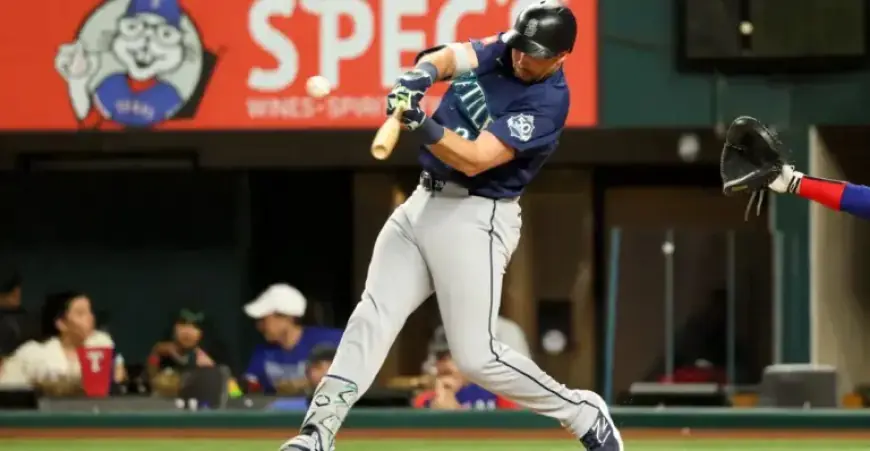
The Seattle Mariners again won the American League West this season. Their catcher, Cal Raleigh, however, began the year in a pronounced slump.
Early career and recent context
Raleigh struggled badly in his first big-league cup of coffee in 2021. He slashed .180/.223/.309 across 148 plate appearances and 47 games. That season produced a 46 wRC+ and a 35.1% strikeout rate.
He returned in 2022 and developed into a core player for Seattle. He later produced an MVP-caliber campaign in 2025. Expectations for him now are high.
Start of this season: signs of trouble
Through his first 55 plate appearances this year, Raleigh hit .143/.236/.245. He posted a 51 wRC% with a 38.2% strikeout rate. He had hit only one home run in that span.
Those numbers represent a small sample. Still, they are concerning compared with his recent production.
Comparable hot stretch
Last June, Raleigh produced elite numbers. He carried a 191 wRC+ and a 1.088 OPS that month. His strikeout rate that stretch fell to 18.6%.
What the data show about his swing
Statcast and Baseball Savant track detailed bat and swing metrics. Key measures include Attack Angle, Attack Direction, and Swing Path Tilt. Swing Path Tilt is gauged in the final 40 milliseconds before contact.
Raleigh’s average bat speed remains roughly steady at 74.7 mph. That figure aligns with his previous season’s level. Thus, raw bat speed does not explain the slump.
Tilt and uppercut tendencies
Over the last two years, Raleigh’s swing tilt averaged about 33–35 degrees. In 2023 it sat nearer 31 degrees. The league average tilt is roughly 32 degrees.
At the start of this season, his tilt increased to about 38–40 degrees. That steeper uppercut makes elevated pitches harder to handle. Teams responded by throwing more high fastballs and cutters inside.
Context from other hitters
Players vary widely in tilt. On the low end are Nick Fortes at 19 degrees, Junior Caminero at 23 degrees, and Yandy Díaz at 24 degrees. On the high end sit Riley Greene at 43 degrees, Freddie Freeman at 42 degrees, and Andy Pages at 41 degrees.
There is no universal “correct” tilt. Success depends on body type, approach, and pitch location.
Contact rates and plate discipline
Raleigh’s in-zone contact declined this year. He made contact on 67.1% of in-zone offerings, down from 81.2% last season. On pitches over the heart of the plate, his contact fell from 84.9% to 69.0%.
He also chased more often and whiffed on more strikes. Those issues compound problems created by an overly uppercut path.
Early adjustments and outlook
Coaches and analysts say Raleigh has already begun flattening his swing. Recent games show incremental movement back toward prior tilt norms. That change should help on elevated offerings.
Improvements in timing, pitch selection, and contact quality are still needed. If Cal’s fortunes rise amid recent success, it will follow those corrective steps.
| Period | PA | Slash | wRC+ | K rate |
|---|---|---|---|---|
| First MLB stint (2021) | 148 | .180/.223/.309 | 46 | 35.1% |
| Early this season | 55 | .143/.236/.245 | 51 | 38.2% |
| Hot month (June, last year) | — | — | 191 | 18.6% |