
















One Word Reveals European Leaders’ True Sentiments on Trump

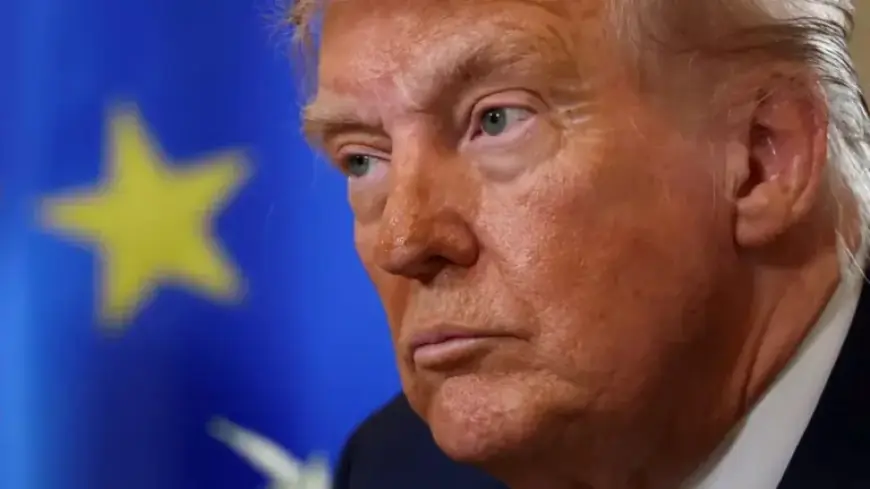
Diplomacy has become a daily balancing act for many European leaders. They must manage relations with the White House while avoiding direct confrontation.
The war in Iran has intensified those strains. It has made the diplomatic tightrope far harder to walk.
Language as a safety valve
One word has come to capture European leaders’ true sentiments about Trump: unpredictable. That term is clinical and depersonalised by design.
EU foreign policy chief Kaja Kallas said the bloc now factors U.S. unpredictability into planning. European Council president Antonio Costa warned the transatlantic relationship has changed. European Commission president Ursula von der Leyen warned that limits had been breached and described the effect as a kind of shock therapy.
Strait of Hormuz episode
German defence minister Boris Pistorius was questioned recently about confusion over U.S. demands around the Strait of Hormuz. He said Europe would welcome greater predictability, clarity and strategic foresight, and made clear that this expectation applies beyond that single episode.
The episode involved contradictory U.S. signals. Allies were at one point called “cowards,” then told they were not needed, and later asked for help securing the waterway.
Private appraisals and blunt remarks
Behind closed doors, European diplomats describe a policymaking environment that is hard to read and harder to influence. One senior official warned there is no low-risk scenario with Trump. Another said the situation changes daily, making effective strategy uncertain.
Public comments have been measured but pointed. French President Emmanuel Macron contrasted European predictability with states that can inflict harm without warning. Poland’s Prime Minister Donald Tusk stressed the need for trust and respect, not domination. Belgium’s Bart De Wever called Trump a bully and said placatory tactics can backfire.
A leaked account said Slovak Prime Minister Robert Fico privately questioned Mr. Trump’s mental fitness and called him dangerous. The report was later downplayed by the governments involved, illustrating the limits of frank public criticism.
Political fallout and calculations
In Britain, Keir Starmer gained political ground after resisting pressure to join a U.S.-led campaign in Iran. That stance won him domestic approval.
Nato Secretary-General Mark Rutte, who once used a familiar nickname for Mr. Trump, now faces a difficult trip to Washington. This follows a recent presidential threat to withdraw the United States from the alliance.
Practical shifts in policy
Europe’s response is threefold. Publicly, capitals emphasise continuity and cooperation while using calibrated language.
Privately, officials acknowledge a crisis of reliability. In practice, they are building fallbacks. This includes higher defence spending, tighter intra-European coordination, and contingency planning for scenarios where Washington cannot be counted on.
Filmogaz.com analysis: the interplay of coded language, strategic silence, and contingency measures shows how European leaders manage a fraught relationship. Their one-word shorthand says much about where trust now stands.