





















Vietnam’s Leader Expands Influence as New Prime Minister Elected

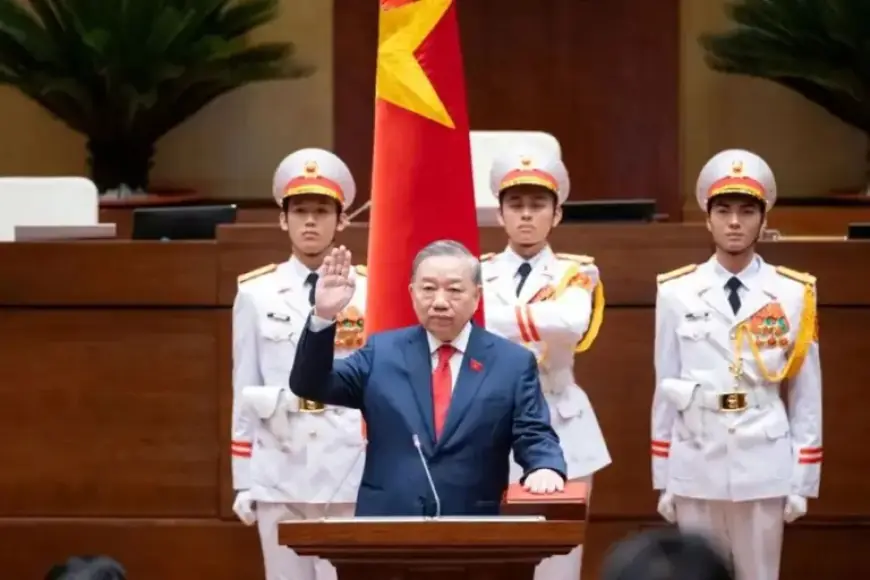
Vietnam’s legislature on April 7 elected Communist Party Secretary General To Lam as state president. The move gives him both the top party and state posts for the next five years.
Parliament vote and mandates
The National Assembly session endorsed the party nomination unanimously. All 495 deputies present backed To Lam, with five members absent.
Officials said nominations for senior state roles were finalised in late March. Later the same day, lawmakers unanimously approved Le Minh Hung as prime minister.
Consolidation of authority
Holding the party and presidency doubles To Lam’s official mandate. Analysts say the development shows a leader expands influence in Vietnam’s political system.
Critics warn the concentration of power could weaken collective leadership. Supporters argue it may speed policy decisions and improve implementation.
Policy priorities and economic plan
In a televised address, To Lam promised a growth model driven by science, technology, innovation and digital transformation. He listed stability and sustainable development as top goals.
Lam has promoted both private conglomerates and state-owned enterprises. Foreign investors welcome political stability, but some experts fear favouritism and asset risks.
Foreign policy stance
Lam has pursued a balanced international approach often described as “Bamboo Diplomacy.” He aims to deepen ties with major powers while widening partnerships.
New prime minister: Le Minh Hung
Le Minh Hung, 55, served as central bank governor from 2016 to 2020. He became the youngest person to hold that role.
Hung replaces Pham Minh Chinh, 67. In his address to deputies, Hung vowed to pursue sustainable growth and support the party’s ambitious targets.
Background and connections
Hung has kept a low public profile in recent years. He has no formal security background, but his family has deep ties to public security.
Officials say Hung aims to help deliver strong economic performance. He pledged to work toward annual growth goals of about 10 percent through 2030.
The dual appointments mark a clear shift at the top of Vietnam’s leadership. Observers will watch how the new configuration affects governance and policy outcomes after the new prime minister was elected.