
























Why Has High-Speed Rail Stalled in Our Country?

The future of high-speed rail in the United States faces significant challenges, particularly with a stalled project connecting Los Angeles and San Francisco. Despite the popularity of high-speed rail in other countries, the U.S. has struggled to make this vision a reality.
High-Speed Rail: A Promised Vision
The concept of high-speed rail in America caught fire in 2008 when California voters approved a plan for a train that would reduce travel time between Los Angeles and San Francisco to less than three hours. The initial budget was estimated at $33 billion with a completion target set for 2020.
Current Status of the Project
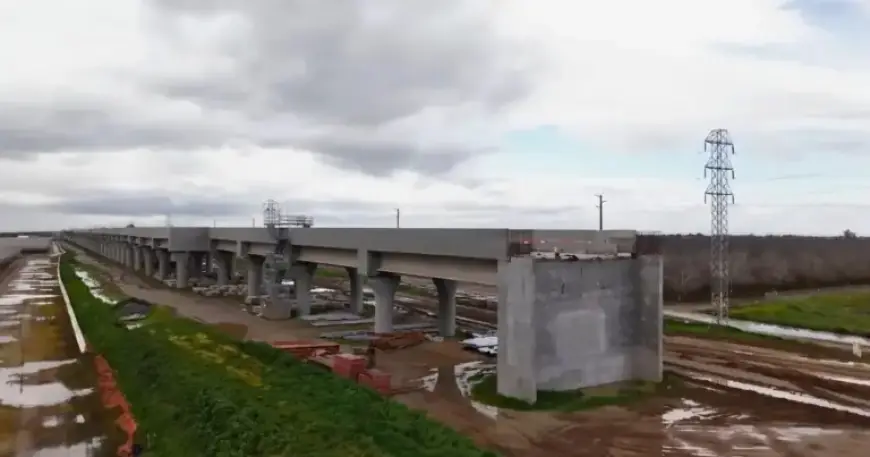
As of now, California’s high-speed rail initiative is significantly behind schedule and has faced substantial cost overruns. The California High-Speed Rail Authority is currently focused on a shorter segment, connecting Bakersfield and Merced—a distance that is only one-third of the original route. This segment may not open until 2033 at the earliest.
- Original Project: Los Angeles to San Francisco
- Adjusted Route: Bakersfield to Merced
- Projected Opening: 2033
Political and Financial Hurdles
Several political figures, including Congressman Vince Fong, have criticized the project as an example of government mismanagement. He expressed concern that initial projections lacked practical grounding, leading to a situation where, as of 2026, no trains or tracks had been laid.
Environmental regulations, land negotiations, and financial issues have compounded delays and costs. The current estimate to complete the entire rail system is around $126 billion, significantly surpassing the project’s original budget.
Challenges Facing High-Speed Rail
- Land Acquisition: Approximately 3,000 parcels needed for track placement.
- Public Funding Shortages: Future funding sources remain uncertain, raising doubts about completing the entire project.
- Environmental Regulations: Extended review processes lead to further delays and increased costs.
The Role of Private Companies
As governmental efforts lag, private companies like Brightline West are stepping in. Brightline aims to build a high-speed rail connection from Los Angeles to Las Vegas, with speeds expected to reach up to 200 miles per hour. Scheduled to begin service in 2029, this project seeks to provide a viable alternative to car travel between these major cities.
Brightline’s Approach
- Route: LA to Las Vegas
- Projected Speed: 200 miles per hour
- Expected Start: 2029
America’s Infrastructure Dilemma
While several nations boast successful high-speed rail networks, the U.S. continues to debate its feasibility. Political divisions, public funding challenges, and cultural attachment to car travel hinder progress. Industry experts express skepticism regarding whether the nation can adopt and sustain a high-speed rail system in the foreseeable future.
This ongoing dilemma raises fundamental questions about the United States’ willingness to invest in and prioritize public transportation infrastructure. As global counterparts embrace high-speed rail, the U.S. risks falling further behind unless a paradigm shift occurs.
Future Prospects
Improving the chances of a successful high-speed rail project in the U.S. will likely require public-private partnerships and a renewed commitment from federal and state governments. Without significant changes to the current approach, the vision of high-speed rail may remain a distant dream.