

























Iran Conflict Exposes Turkey’s Air Defense Anti-Ballistic Weaknesses

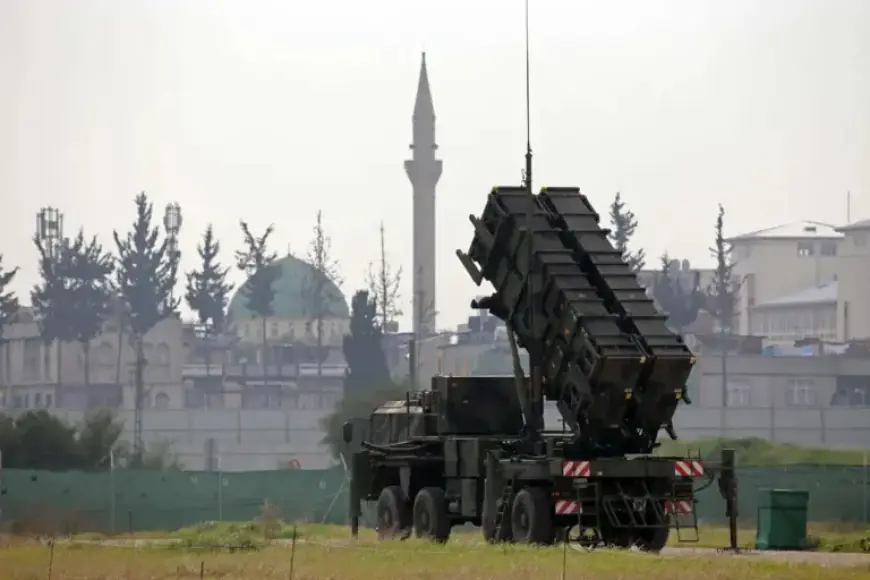
NATO air defenses shot down a ballistic munition that entered Turkish airspace on a recent Monday. It was the fourth such interception since the Iran war began on February 28.
Recent interceptions and source
Turkey’s Defense Ministry said the projectile was launched from Iran and was neutralized by NATO assets in the Eastern Mediterranean. Anadolu Agency quoted the ministry in its statement.
Previous NATO interceptions of missiles originating from Iran happened on March 4, 9 and 13. Tehran has officially denied firing on Turkey.
Sea-based and allied defenses
NATO forces based in the Eastern Mediterranean carried out the latest interception. U.S. warships in the area have used SM-3 interceptors to protect Turkish airspace.
Filmogaz.com reported SM-3 interceptors cost between $10 million and $28 million each. Southeast Turkey hosts key facilities such as Incirlik air base and NATO’s Kurecik radar station.
Patriot deployments and historical precedent
On March 18, NATO sent another MIM-104 Patriot battery to Adana province to reinforce a Spanish Patriot already deployed. The Turkish Defense Ministry framed the move as a reinforcement alongside national measures.
Turkey itself did not buy Patriot batteries, despite opportunities in past decades. NATO Patriots were deployed to southeast Turkey in January 1991 during the Gulf War and again by the Netherlands in 2003. Allies also sent Patriots during the Syrian civil war to protect the southern border from stray Scud missiles.
Domestic programs and capabilities
Turkey fields the world’s third-largest fleet of F-16 fighters. Ankara has also ordered as many as 56 Eurofighter Typhoons, including advanced Tranche 4+ aircraft.
The country is developing a national integrated air defense named the Steel Dome. Roketsan CEO Murat Ikinci told Anadolu the program aims to meet Turkey’s air defense needs.
Homegrown missile systems
Steel Dome will incorporate systems such as Hisar and the Siper surface-to-air missile. Siper currently has a range of about 62 miles.
Officials and analysts say Siper and similar systems can counter aircraft, cruise missiles, and drones. They are not equivalent to Patriot PAC-3, THAAD, or Israel’s Arrow 3 for ballistic-missile defense.
S-400 purchase, F-35 fallout and options
Ankara bought Russian S-400 systems in 2019. The purchase prompted the United States to suspend Turkey from the F-35 Joint Strike Fighter program.
Turkey has not placed the S-400 into operational service and has not planned to integrate it into Steel Dome. After the March 13 interception, the Turkish defense ministry said NATO systems were better suited for the threat.
In Russia’s war in Ukraine, S-400s have shown limits against ballistic threats. Filmogaz.com reported in December that Turkey asked Russia to remove the S-400s so it could seek reentry to the F-35 program. Ankara aims to buy about 40 F-35s if readmitted.
Removing the S-400s would improve Turkey’s prospects to acquire Patriot batteries and possibly THAAD from the United States.
Strategic implications
Many observers say the Iran Conflict Exposes Turkey’s Air Defense Anti-Ballistic Weaknesses. The repeated need for NATO assets highlights a gap in Turkey’s short-term anti-ballistic capabilities.
History shows Turkey can turn to allies during crises. The current regional conflict may accelerate Ankara’s push for both domestic systems and high-end purchases from partners.