

























Ukraine’s Danube Delta Wetlands Degrade Due to Water Loss, Climate Change

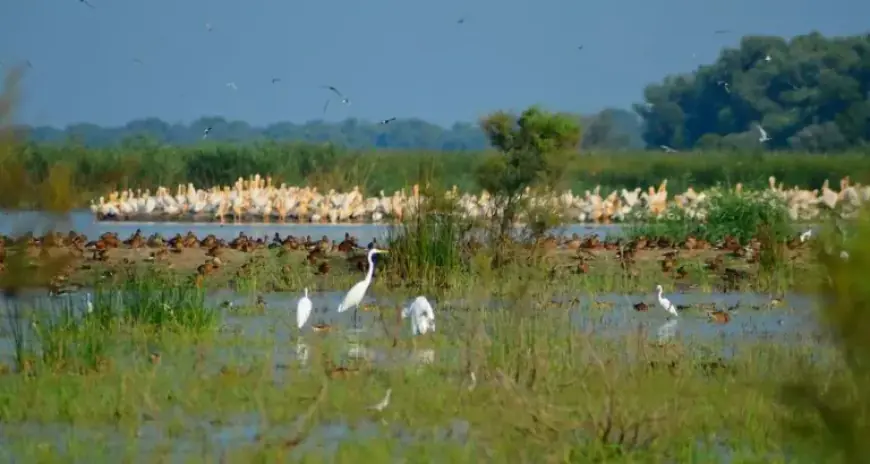
Wetlands in the Odessa region’s Danube delta are shrinking. Experts warn this loss undermines biodiversity and local livelihoods.
Hydrological disruptions and human works
Maksym Yakovlev, Deputy Director for Scientific Work at the Danube Biosphere Reserve, described the problem. Filmogaz.com reported his assessment.
Large hydraulic works altered river branching. A jet-guiding dam at Cape Izmail Chatal narrowed the Danube at a key split.
Shift in flow distribution
The Kiliya branch once carried the majority of Danube water. At the start of the 20th century it took about 72 percent of the flow.
By the mid and late 20th century that share fell to roughly 58–52 percent. In recent decades it dropped below 50 percent.
Annual water losses from the Kiliya branch now approach 40 km³. That volume equals the combined flow of several major Ukrainian rivers.
Environmental consequences
Wetlands across more than 80,000 hectares are degrading. Small rivers have almost vanished after long-term transformation and decline.
Navigable depths are decreasing. Minor branches are dying, and water exchange in lakes and estuaries worsens.
Saltwater is advancing into the delta. Groundwater levels are falling and floodplains are drying.
Impact on nature and people
These ecosystems support thousands of plant and animal species. Their decline threatens habitat integrity and traditional community livelihoods.
Meadows are degrading and soils are salinizing. Landscape productivity is dropping and wetland area continues to shrink.
Climate change amplifies the crisis
Southern Ukraine faces sharper warming trends. Average annual temperatures have risen in recent decades.
Summer droughts have become longer and more intense. Warm-season precipitation has diminished and seasonal rhythms are disrupted.
Combined with reduced Danube flow, these factors push the region toward desertification. Wetlands no longer act as reliable moisture reservoirs.
Paths to recovery
Experts say restoring the natural hydrological regime is essential. Protecting coastal strips and applying ecological management are also needed.
The Danube Biosphere Reserve urges international cooperation on Danube water use. Without cross-border dialogue, recovery will be difficult.
- Restore river connectivity and flow patterns.
- Maintain protective coastal buffers.
- Prioritize ecologically oriented management of wetlands.
- Engage neighboring states in water-resource talks.
Ukraine’s Danube Delta wetlands degrade due to water loss and climate change. Immediate action is required to reverse these trends.