

























“Explore ‘Palestine ’36’: A Sweeping Tale of Complex, Underseen History”

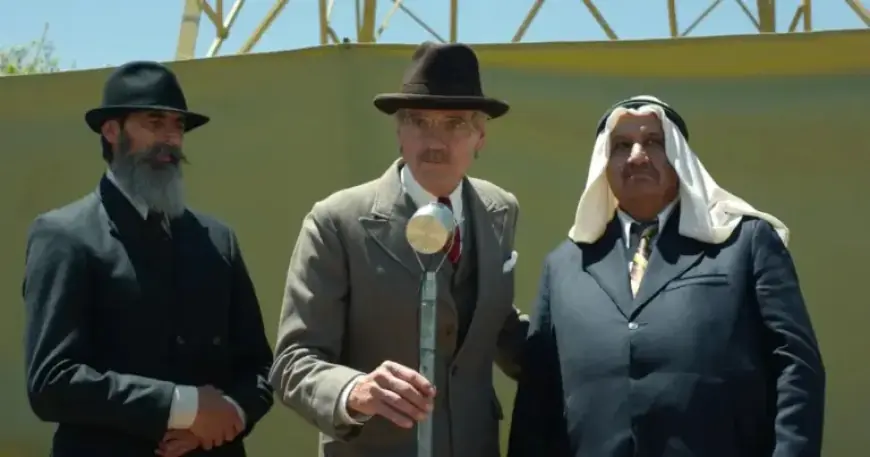
Explore a sweeping, complex, underseen history through Annemarie Jacir’s new historical drama. The film dramatizes the 1936–1939 Arab Revolt against British rule. It mixes newsreel footage with fiction to sketch a broad social and political canvas.
Story and structure
The narrative follows a village-born man who moves between Jerusalem and his rural home. His double life exposes tensions between urban elites and dispossessed farmers. A labor strike escalates into armed resistance as loyalties shift.
Principal cast and characters
The lead role is played by newcomer Karim Daoud Anaya. He portrays Yusuf, an ambitious young man pulled between two worlds. Key supporting roles include a wealthy Palestinian employer and his journalist wife.
- Dhafer L’Abidine — wealthy businessman
- Yasmine Al Massri — journalist and wife
- Robert Aramayo — Capt. Wingate, enforcing British rule
- Jeremy Irons — High Commissioner Wauchope, colonial authority
Performances and tone
Performances anchor the film’s sweeping ambition. The lead delivers a restrained central presence. Jeremy Irons embodies the imperial face of the mandate with quiet menace.
Direction and visual approach
Jacir uses archival newsreels to open the story. That choice gives the drama historical texture. Much of the film was shot on-site, making it one of the last features to access the original locations.
Cinematography and pacing
The movie aims for epic scope rather than intimacy. Its broad strokes convey passion and grievance. At times, many intersecting storylines reduce narrative focus.
Historical context and omissions
The script centers the Palestinian experience under British mandate. British officials are shown as a repressive colonial force. The film largely omits Jewish characters, showing only a distant kibbutz in the landscape.
Critical perspective
Some viewers may wish for deeper contextual detail. The ensemble cast and multiple threads can leave questions. Still, the film’s emotional clarity and historical insistence feel overdue.
Release and technical details
The film runs 1 hour and 59 minutes. It is in Arabic and English, with subtitles. It is not rated and opens Friday, March 27 at Laemmle Royal and Laemmle NoHo 7.
Filmogaz.com coverage recommends the drama to viewers interested in underexplored chapters of the mandate era. The film’s scope and ambition should spur more cinematic reckonings with the past.