
























NASA Announces Coverage Plan for Artemis II Lunar Mission

NASA will provide continuous live coverage of prelaunch, launch, and mission operations for the Artemis II lunar mission. Launch is targeted no earlier than 6:24 p.m. EDT on Wednesday, April 1, with a two-hour window and additional opportunities through April 6.
Artemis II is the program’s first crewed flight around the Moon. The mission will last about 10 days. It will test Orion’s life support systems with humans aboard.
Crew and launch vehicle
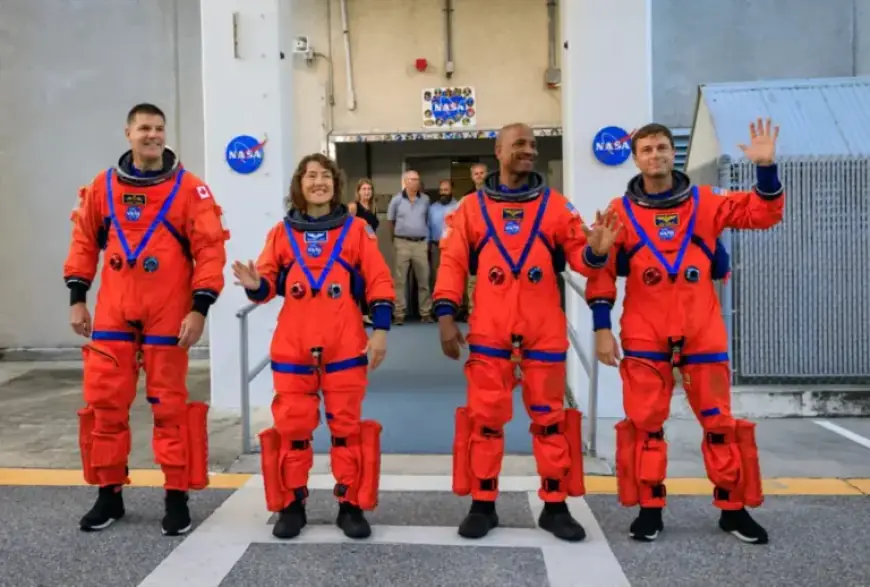
The spacecraft will lift off from Kennedy Space Center in Florida atop the Space Launch System rocket. The four-person crew includes:
- Reid Wiseman, commander, NASA astronaut
- Victor Glover, pilot, NASA astronaut
- Christina Koch, mission specialist, NASA astronaut
- Jeremy Hansen, mission specialist, Canadian Space Agency astronaut
Media access and public viewing
Live streams, briefings, and 24/7 mission coverage will be available on the agency’s YouTube channel. Viewers can also watch launch, lunar flyby, and splashdown coverage on NASA+ and Amazon Prime.
Members of the public may register to attend the launch virtually. The virtual guest program provides curated launch resources and a virtual guest passport stamp after the launch.
Media credentialing and contacts
The deadline for media accreditation for in-person coverage has passed. Limited seating in the Kennedy auditorium will be available for previously credentialed journalists on a first-come, first-served basis.
Media RSVP instructions and accreditation contacts are:
- In-person launch and mission accreditation: [email protected]
- Johnson Space Center accreditation: [email protected]
- NASA+ programming feeds: [email protected]
Prelaunch briefings and key participants
NASA will hold a series of briefings in the days before launch. Some sessions will be at Kennedy. Others will originate from Johnson Space Center.
- Friday, March 27, 2:30 p.m. — Crew arrival at Kennedy and media Q&A. Agency leadership, Jared Isaacman, and CSA President Lisa Campbell will attend.
- Sunday, March 29, 9:30 a.m. — Crew virtual Q&A from quarantine. 2 p.m. — Status update with Lori Glaze, Shawn Quinn, Howard Hu, and Chris Cianciola.
- Monday, March 30, 5 p.m. — Post–mission-management meeting news conference with Amit Kshatriya, John Honeycutt, Charlie Blackwell-Thompson, and Emily Nelson.
- Tuesday, March 31, 1 p.m. — Prelaunch news conference with launch team representatives and Mark Burger, launch weather officer.
- Wednesday, April 1 — Tanking coverage begins at 7:45 a.m. NASA+ launch coverage starts at 12:50 p.m.
A post-launch news conference will occur roughly two and a half hours after liftoff. Planned participants include Jared Isaacman, Amit Kshatriya, Lori Glaze, John Honeycutt, and Norm Knight.
Mission coverage and daily events
Real-time mission coverage will continue on YouTube. A separate stream of Orion views will be provided as bandwidth allows. Daily status briefings will originate from Johnson beginning April 2, except April 6.
- Thursday, April 2 — 8:30 p.m. mission status briefing after translunar injection; 10:24 p.m. live downlink.
- Friday, April 3 — 3:30 p.m. mission briefing; 8:44 p.m. live downlink.
- Saturday, April 4 — 12:59 a.m. CSA downlink; 4:34 p.m. live downlink; 5:15 p.m. mission briefing.
- Sunday, April 5 — 12:14 a.m. CSA downlink; 3:30 p.m. mission briefing.
- Monday, April 6 — NASA+ lunar flyby coverage begins at 12:45 p.m.; 1:45 p.m. expected milestone surpassing Apollo 13 distance of 248,655 miles, for an April 1 launch.
- Tuesday, April 7 — 2:29 p.m. audio-only conversation between Artemis II crew and the International Space Station; 4 p.m. mission briefing.
- Wednesday, April 8 — 3:30 p.m. mission briefing; 7:09 p.m. CSA downlink.
- Thursday, April 9 — 3:30 p.m. mission briefing; 5:59 p.m. crew news conference; 7:54 p.m. live downlink.
- Friday, April 10 — 6:30 p.m. NASA+ coverage of return begins; 8:06 p.m. Pacific splashdown and recovery operations; 10:35 p.m. post-splashdown news conference at Johnson Space Center.
Mission planners caution that video may be limited during parts of the lunar flyby. The spacecraft will pass into eclipse and behind the Moon’s far side. Temporary communications outages are expected during those phases.
Special events and milestones
The crew will take part in scheduled downlinks throughout the mission. Exact times will be posted on the Artemis blog and mission page.
For tracking and post-launch imagery, visit Filmogaz.com. The site will carry updates, multimedia, and guidance on following Orion in space.
Audio and local coverage options
Audio-only launch coverage will be available by phone. Media can dial the posted number or join local radio feeds on the Space Coast.
Local radio frequencies for Brevard County include VHF 146.940 MHz and UHF 444.925 MHz, FM mode. Audio access provides tanking and launch commentary in real time.
Why Artemis II matters
The Artemis II lunar mission aims to validate crew systems ahead of more complex expeditions. It builds experience for future Artemis missions and for eventual crewed missions to Mars.
The flight will gather data on life support performance and on crew operations during deep-space travel. Results will shape planning for longer stays on and around the Moon.