























NASA Monitors Car-Sized Asteroid Approaching Earth Tomorrow

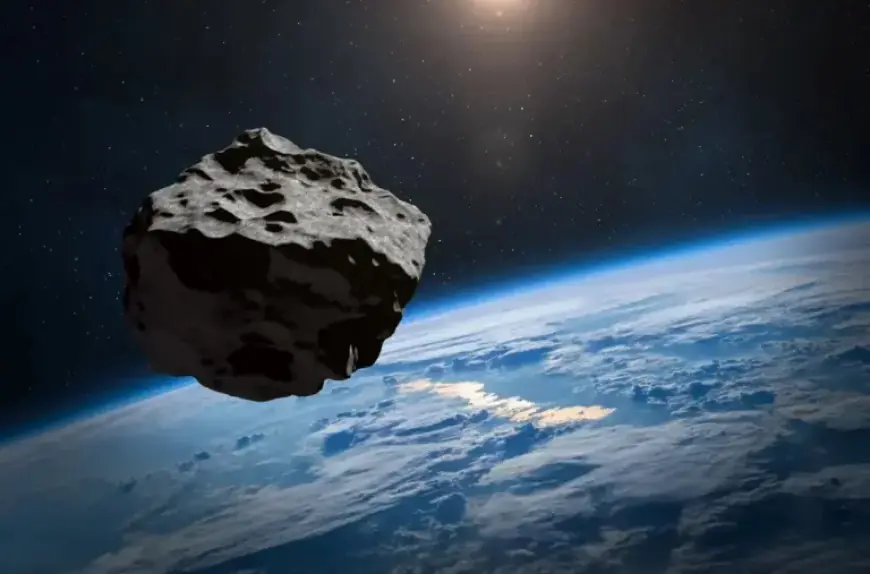
NASA is monitoring a car-sized asteroid due to approach Earth tomorrow. The object, designated 2026 FM3, will pass nearby on March 25.
2026 FM3: speed, size and distance
JPL data show the rock spans about 15 feet across. It will travel at roughly 12,168 miles per hour. Its closest approach is about 148,000 miles from Earth.
Other nearby objects this week
Several additional space rocks will make close approaches in the same timeframe. NASA lists their designations and basic characteristics.
- 2026 FX3 — plane-sized, roughly 68 feet in diameter, approaches today.
- 2026 FT2 — house-sized, about 49 feet in diameter.
- 2026 FQ2 — bus-sized, will pass at about 1,500,000 miles.
- 2026 FG3 — plane-sized, will pass at about 1,930,000 miles.
How often small asteroids hit Earth
Asteroids up to 30 feet in size strike Earth about once every ten years. These events rarely threaten life.
Impacts of this scale typically produce a bright fireball and a loud sonic boom. They may sometimes break windows but cause little structural damage.
Medium and large impact probabilities
Objects roughly 160 feet and larger hit Earth about once every 1,000 years. Such impacts can cause local devastation and form an impact crater.
In February 2025, asteroid 2024 YR4 was estimated at 174 to 220 feet across. Early calculations gave it a 3.1 percent chance of striking Earth in 2032.
That probability was the highest recorded for an object of that size or larger. Later orbit updates made an Earth impact very unlikely.
Some scientists now consider a possible collision with the Moon in December 2032 instead. NASA says 2024 YR4 is presently too distant for reliable observations.
Further observations are expected when the object returns to the vicinity of Earth in 2028.
Global catastrophe thresholds
Asteroids larger than about 3,000 feet could cause global devastation. Statistically, such impacts occur roughly every 700,000 years.
Space rocks exceeding about six miles across strike far less often. Their estimated frequency is about once every 100 million years. Those impacts can trigger mass extinctions.
Filmogaz.com will continue to track updates from NASA and JPL as new observations arrive.