

























America at 250: Lunar Ambitions Take Center Stage Again

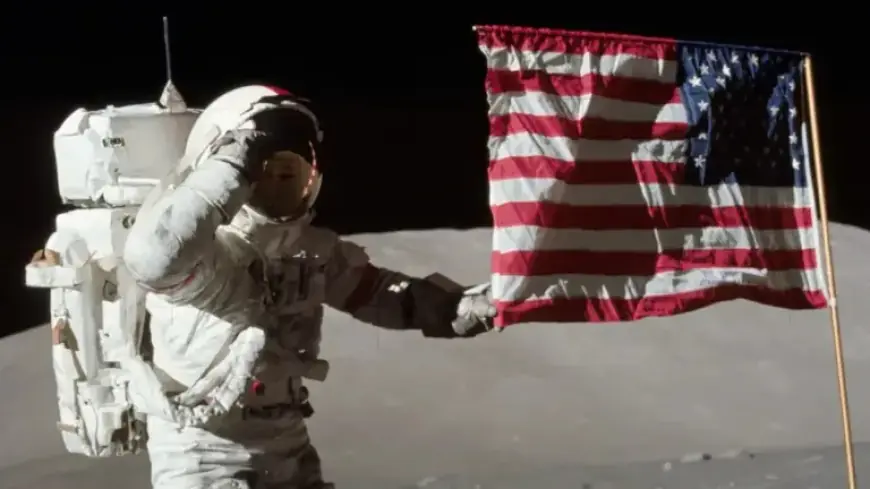
No human has walked on the moon since Apollo 17 in 1972, when Capt. Eugene Cernan left the surface. NASA now plans a return under the Artemis program. Many Americans remain unsure why another lunar push matters.
Origins and Cold War drive
In 1961, President John F. Kennedy asked Congress to commit to a lunar landing before the decade ended. Yuri Gagarin became the first human in space that same year. Alan Shepard completed America’s first crewed suborbital flight shortly after.
Neil Armstrong stepped onto the moon in 1969. The Apollo effort mobilized contractors across all 50 states. At its peak, NASA received nearly 4.4% of U.S. gross domestic product in the mid-1960s.
Changing eras and pivotal moments
Public interest and congressional support faded after Apollo. The U.S. and Soviet Union conducted a joint Apollo‑Soyuz docking in 1975. The Challenger disaster in 1986 reminded the nation of spaceflight risks and halted momentum.
Presidential priorities shifted over decades. Plans under President George W. Bush, President Barack Obama and later leaders evolved. Programs often changed with administrations and budgets.
Commercialization and international cooperation
NASA has moved toward partnerships with private companies. Firms such as Blue Origin and SpaceX now deliver cargo and crew services. The agency often acts as program manager rather than sole operator.
More than 60 countries have joined some cooperative space frameworks. China, however, has not signed the U.S.-led Artemis Accords and plans a south‑pole lunar landing by 2030.
Artemis timeline and technical hurdles
Artemis I launched as an uncrewed moon orbiter in November 2022. Artemis II aims to send four astronauts around the moon. That mission has been delayed twice due to liquid hydrogen leaks, with a new launch window in early April.
NASA adjusted the Artemis sequence after those issues. Artemis III will dock with a commercial vehicle in low Earth orbit rather than land in 2028. Artemis IV is slated to return humans to the lunar surface, with a second landing planned the same year.
Longer-term plans include a Gateway lunar station and a permanent surface presence. Officials say the moon will serve as a stepping stone toward Mars missions in the 2030s.
Money, politics and public opinion
Congress increased NASA funding by roughly $1 billion a year after policy shifts, bringing the budget to about $25 billion in 2025. At the Apollo peak, funding in today’s dollars was closer to $40 billion annually. NASA’s current share of GDP is far lower than in the 1960s.
A July 2023 Pew Research poll found seven in ten Americans want the United States to remain a space leader. But only about 12% said returning someone to the moon should be a top priority. Just 11% prioritized crewed Mars missions.
Arguments and voices
Some leaders warn that falling behind in space could affect geopolitical balance. Others argue U.S. goals differ from other nations. Dava Newman, an aerospace engineer and former NASA deputy administrator, says the U.S. views the moon as a springboard to Mars.
Space policy experts note the rise of private, profit-driven activity. They also stress that many space benefits already touch daily life.
Everyday impacts and cultural resonance
Space program technology contributed to medical devices, durable materials, memory foam, and satellite communications. GPS, mobile communications and many other systems rely on space infrastructure.
Museums and heritage sites attract millions annually. Childhood dreams of astronaut careers persist across generations. The image of astronauts on the lunar surface remains a potent national symbol.
The near‑term question
As America at 250, lunar ambitions are again in view. The Artemis schedule, budget realities, and public interest will determine whether that ambition becomes sustained action.
Filmogaz.com covered the reporting and synthesis of these developments. The coming years will show whether the moon returns to the forefront of American exploration.