
























News: Rubio Orders Silence After Huckabee’s Biblical Land Remarks Trigger Regional Outcry

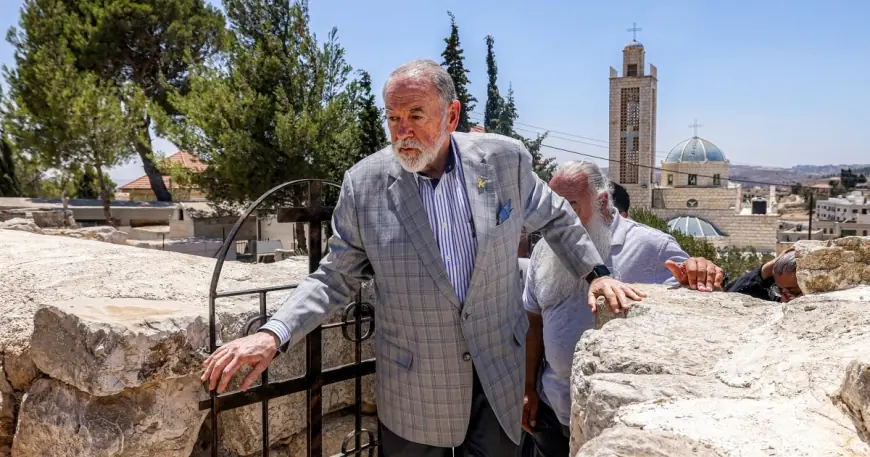
Secretary of State Marco Rubio has instructed U. S. chiefs of mission in the Middle East to refrain from public statements that could inflame regional tensions, a directive issued as diplomats and leaders reacted to Ambassador Mike Huckabee’s comments about Israel’s biblical claim to territory. The move matters now because it came amid last-ditch nuclear negotiations in Geneva and has already drawn a strong diplomatic backlash across the Arab and Muslim world.
Marco Rubio memo and diplomatic discipline
The unclassified cable signed by Rubio ordered that “Chiefs of Mission and embassies at addressee posts must refrain from public statements, interviews, or social media activity that could in any way inflame regional audiences, prejudice sensitive political issues, or complicate US relationships. ” It stressed that chiefs of mission are expected to avoid commentary that could heighten tensions or create confusion about U. S. policy and that discipline in public messaging is essential.
The memorandum was circulated on 23 February and reached the U. S. ambassador to Israel, Mike Huckabee, two days after his remarks drew condemnation across the Middle East; the timing left little doubt about the directive’s intended target. Rubio is expected to travel to Israel on Monday to meet Prime Minister Benjamin Netanyahu. A State Department spokesperson declined to comment on the memo.
Mike Huckabee News: interview content and responses
Huckabee’s comments came during a two-hour interview on The Tucker Carlson Show that was posted on YouTube, in which he discussed the biblical covenant in Genesis and the boundaries promised to Abraham’s descendants. When asked whether it would be acceptable for Israel to take over countries including Syria and Lebanon, he said, “It would be fine if they took it all, but I don’t think that’s what we’re talking about here today, ” and added that “they’re not asking to take all that. ”
Huckabee later said a viral clip did not capture the full context of the exchange and wrote on X that the discussion had been “very twisty and frankly confusing, ” noting he had been asked as a former Baptist minister about Christian Zionist theology. A U. S. Embassy spokesperson said Huckabee’s comments were taken out of context and that there is no change to U. S. policy on Israel. Huckabee was nominated as ambassador in 2024 by President Donald Trump, has described himself as a Christian Zionist, opposes a two-state solution, and has denied the existence of an illegal Israeli occupation of the West Bank.
Regional reactions from Arab states, Saudi Arabia, Egypt and Iran
Huckabee’s remarks prompted a joint statement from the foreign ministries of more than a dozen Arab and Muslim countries, including Qatar and Saudi Arabia, expressing “strong condemnation and profound concern” and offering a “categorical rejection of such dangerous and inflammatory remarks. ” The statement said the comments contradicted the vision put forward by President Donald J. Trump and the Comprehensive Plan to End the Gaza Conflict.
The League of Arab States called the remarks “extremist and lacking any sound basis” on X. Saudi Arabia’s foreign ministry described them as “extremist rhetoric” and urged the State Department to provide clarification; Egypt described the comments as a “flagrant breach” of international law. Iran warned that the remarks could further “embolden” Israel in its “illegal measures against Palestinians as well as its constant aggression against the nations of the region. ”
Yair Lapid’s endorsement of broad expansion as far as Iraq
Israel’s main opposition leader, Yair Lapid, told a news conference on Monday that he supports Israeli expansion “as far as Iraq, ” grounding his view in Zionist and biblical foundations. Quoted by Kipa News, Lapid said he supports “anything that will allow the Jews a large, broad, strong land and a safe haven for us – our children and our children’s children. ” He added that “Zionism is based on the Bible” and that “the borders are the borders of the Bible, ” while acknowledging that “Israeli security and policy considerations” could impede such efforts, though he did not elaborate.
Israel’s far-right finance minister, Bezalel Smotrich, a longtime proponent of Israeli expansion, was also mentioned in regional commentary.
U. S. envoys in Geneva, nuclear deals and potential military decisions
The memo instructing diplomats to limit public commentary arrived as U. S. envoys Steve Witkoff and Jared Kushner conducted talks in Geneva this week intended to persuade Iran to relinquish its capacity to produce a nuclear weapon. The latest round of talks, held on Thursday, appeared largely unsuccessful; Witkoff and Kushner returned to Washington disappointed. In evening-long negotiations they pushed Iran to destroy its three main nuclear enrichment sites at Fordow, Isfahan and Natanz—sites that had been targeted in last year’s bombing campaign—and to deliver its remaining enriched uranium stockpile to the United States.
The envoys insisted any agreement must be permanent, without the sunset provisions that had been part of the 2015 Joint Comprehensive Plan of Action, from which President Trump withdrew during his first term. Iran has rejected proposals to stop enrichment or to ship enriched uranium abroad. Trump’s decision on whether to authorize further airstrikes will hinge in part on whether Witkoff and Kushner conclude Tehran is stalling for time; White House officials have expressed alarm that Huckabee’s comments could harden Iran’s position. One administration official said, “The president is starting to get pissed with Huckabee for interfering with his negotiation. ”
The overlap of public diplomatic restraint, a high-profile ambassador’s theological assertions about territory, and faltering nuclear talks has produced fresh tensions across the region and within U. S. policy circles, with immediate consequences for messaging and for decisions that could affect military and diplomatic options.