

























Satellite Imagery Shows Workshop Destruction at Votkinsk After Long-Range Flamingo Strike; Zelensky Says All Fired Missiles Hit Their Targets

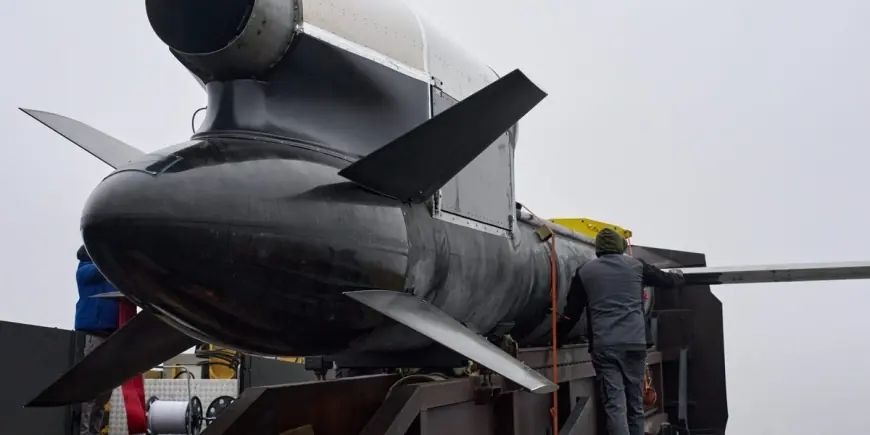
Satellite Imagery released in the wake of a long-range Ukrainian strike appears to show extensive damage to a Russian military industrial plant in Votkinsk, an industrial town in the Udmurt Republic. The images and subsequent public statements matter because they tie directly to Ukraine’s use of domestically made Flamingo cruise missiles and the potential disruption of production lines for multiple Russian missile systems.
Satellite Imagery Reveals Workshop Destruction at Votkinsk
Open-source satellite imagery later published by Ukrainian groups appears to show damage to one workshop at the Votkinsk plant, including a gaping hole in its roof and signs of fire damage. The facility is known to produce several strategic munitions, with contextual reporting identifying Iskander ballistic missiles, Oreshnik missiles, and the submarine-launched Bulava missile as products tied to the site. The images have been presented alongside broader analysis using satellite imagery, open-source intelligence, fact-checking and data analysis to piece together the sequence of events.
Zelensky and the Flamingo Missiles: Range, Claims, and Production
Ukrainian the strike hit the Votkinsk plant, which lies roughly 860 miles from the Ukrainian border. The Ukrainian president has stated that locally produced Flamingo cruise missiles flew nearly 900 miles and described precise strikes at a range of 1, 400 kilometers, calling the operation a success for domestic defense industry development. He declined to disclose the total number of missiles or drones launched in the operation, and noted that while some Flamingo missiles were intercepted by Russian air defenses and others were not, he considers that all missiles that were launched reached their targets.
The Flamingo has been compared to the Tomahawk in terms of mission profile, and has been described as cheaper per unit and capable of long ranges; one comparison in recent coverage cited a longer-range figure of 1, 900 miles for the system. The ground-launched Flamingo also takes up to 40 minutes to prepare for launch. Efforts to scale production are underway: the manufacturer FirePoint hoped to produce up to seven missiles a day by the end of 2025, and officials have acknowledged that production was affected by a recent Russian strike, with calls to increase quantity depending on funding and component availability.
Local and Russian Responses: Hospitals, Interceptions, and Official Silence
Russian authorities have not issued an official confirmation that the Votkinsk factory was hit. Alexander Brechalov, governor of the Udmurt Republic, said that an unspecified facility in the region had been attacked and that three people were sent to hospital. Brechalov did not say whether Flamingo missiles were used and warned of drone threats over the region.
In parallel coverage of the operation, Russia’s defense ministry communicated that it shot down 77 Ukrainian drones on Saturday, while not mentioning Ukrainian missile threats. Kyiv described the night’s activity as one of its largest long-range waves of drones and missiles, and officials characterized the operation as involving interceptions, non-intercepted missiles, and direct hits.
Broader Context: Waves of Attacks, Military Movements and Information Operations
The Votkinsk strike took place on the night of February 21, in the context of one of Kyiv’s largest long-range attacks in recent operations. That same reporting cycle noted additional developments: verified images showed a shopping centre on fire in the Ukrainian city of Zaporizhzhia following a wave of strikes overnight; there were continued efforts to document the strike using satellite imagery and open-source techniques; and information operations were in motion, including the use of AI to amplify a false claim that a Mexican cartel had captured a woman who helped authorities track down its leader.
Separately, attention has been drawn to international military movements in the same reporting period. The aircraft carrier USS Gerald R Ford was observed leaving port in Greece and departing the Greek island of Crete, appearing to head toward the eastern Mediterranean and the Middle East as part of a broader US military build-up near Iran. Aviation footage also circulated showing three F-22 fighter jets taking off from a Suffolk air base on Tuesday; enthusiasts filmed the jets leaving RAF Lakenheath and heading toward Israel, and recent coverage noted that some of those fighters were on their way to Israel and that some had already arrived. An expert assessed that the F-22s filmed could form part of an air dominance posture aimed at deterrence in the region.
What Comes Next
Key uncertainties remain unclear in the provided context, including full official confirmation of damage from Russian federal authorities and independent on-the-ground assessments of the operational impact on production lines. Ukrainian officials and industry representatives have signaled efforts to increase Flamingo production, but that expansion depends on funding and component availability. The satellite imagery and ongoing open-source analysis will continue to be central to tracking both the physical damage at Votkinsk and the broader operational implications of long-range Flamingo launches.
The feed publishing these updates posts work throughout the day and invites readers to engage; Thomas Copeland, a live journalist, has been among those highlighting the satellite imagery and the evolving picture on the ground.