















Nfl Combine Workouts Force Patriots to Prioritize Edge Rushers and Inside Youth — Five Takeaways

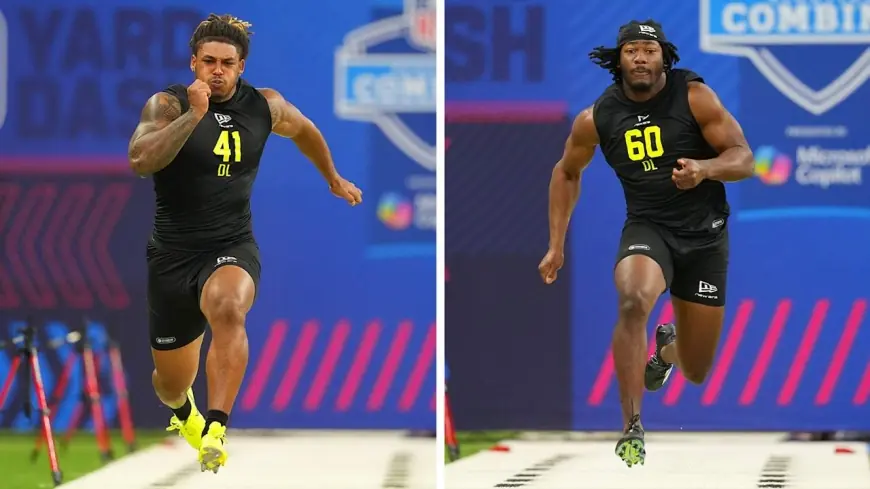
Here’s why this matters: the nfl combine shifted from front-office talk to live evaluations inside Lucas Oil Stadium, and what Patriots leaders signaled earlier in the week now has an immediate impact on roster planning. EVP of Player Personnel Eliot Wolf identified edge rusher as a need, while coach Mike Vrabel confirmed multiple meetings with prospects — a sequence that focuses pressure on New England’s edge room and inside linebacker depth heading into draft season.
Nfl Combine implications for the Patriots’ defensive front — who feels it first
Patriots decision-makers made their priorities clear before the workouts, which changes how teams and agents frame visits and measurements at the site. Edge rushers are first in line: the team’s current mix and impending free-agent decisions mean the position group is the immediate focus. Inside linebackers and interior defensive linemen also moved up the agenda as potential youth additions behind a veteran core.
From presser to practice: meetings, measurements and Lucas Oil’s Thursday night energy
During a Tuesday morning press conference in Indianapolis, Eliot Wolf identified edge rusher as an area of need. That set the tone for Thursday night, when attention turned to on-field workouts inside Lucas Oil Stadium. Head coach Mike Vrabel said New England met with "a bunch" of EDGE prospects in Indy. Potential first-rounders Cashius Howell (Texas A& M) and Zion Young (Missouri) confirmed they met with the Patriots in Indy. The live sessions and meetings sharpened which body types and skill sets the team will prioritize.
How draft positioning and class depth change evaluations
New England holds the 31st overall pick in the first round coming off its Super Bowl trip. Because the edge rusher class is deep, the Patriots could still land an impact defender late on day one or early on day two. The challenge is clarity: there isn’t much separating the late-day-one and early-day-two cluster, so the choice becomes selecting a preferred flavor of skill set, body type and culture fit. As noted, even an intriguing crop will produce hits and misses — not every prospect will pan out.
Roster context: veterans, free agents and the inside linebacker question
The Patriots’ inside linebacker room currently lists veterans Robert Spillane, Jahlani Tavai and Christian Elliss. Wolf said New England would like to add youth behind those players. LB Jack Gibbens is a restricted free agent this offseason, which factors into how much youth the team seeks in the draft or free-agent market. The club also views interior defensive linemen who threaten the passer as valuable; nose tackle Khyiris Tonga is set to be an unrestricted free agent when the 2026 league year begins in March.
- Last offseason moves and player types: the team targeted Harold Landry III (6-2, 252lbs) and K'Lavon Chaisson (6-3, 254lbs) in free agency, and drafted Bradyn Swinson (6-3, 255lbs) in the fifth round.
- Undrafted success: second-year edge Elijah Ponder (6-1, 258) is cited as a useful find within the team’s preferred ~255-pound speed-rusher mold.
- Medical and availability notes: Harold Landry III is coming off a knee injury in 2025; K'Lavon Chaisson is slated to be an unrestricted free agent.
- Personnel meetings: in Indy, the Patriots engaged with multiple EDGE prospects, including meetings later confirmed by Cashius Howell and Zion Young.
Here's the part that matters: the combination of depth at edge rusher and the Patriots’ late first-round slot reframes the team’s draft calculus — they can chase a specific profile rather than being forced into an early reach.
First takeaway in practice: length and the recurring arm-length conversation
The first of the five listed takeaways returned to one recurring evaluative tool: arm length. The piece referenced last year’s debate around Will Campbell and noted the current focus on arm lengths for potential first-round edge rushers. It also included an incomplete sentence about historical focus — the provided context reads as an unfinished thought about how, outside of height, weight and athletic testing, the historical emphasis was on quarterback hand size and arm length; the passage ends mid-phrase in the provided context.
Key short signals to watch that would confirm shifts in New England’s draft plan:
- An early selection or trade-up for an edge prospect before the 31st pick would signal prioritization of a specific skill set.
- Significant medical concerns surfacing for targeted veterans would increase the chance the Patriots use day-two capital on the position.
- Pre-draft visits or private workouts scheduled for inside linebackers would suggest a stronger push for youth behind Spillane, Tavai and Elliss.
It’s easy to overlook, but the combination of past offseason signings, the current free-agent statuses and the team’s draft slot creates a narrow set of realistic pathways for roster change. The real question now is how aggressively the Patriots will convert those meetings and measurements into picks that match the ~255-pound mold they appear to favor.
Writer’s aside: roster-building rarely reads cleanly; even with depth at a position, the nuance of medical history, scheme fit and special-teams value will determine which prospects actually move into the roster picture. The provided context leaves some threads unfinished, meaning details may evolve as workouts and team evaluations continue.