

























Crew Health Fallout: Nasa Astronaut Medical Emergency Triggers Coordinated Crew-11 Return and Temporary Station Slowdown

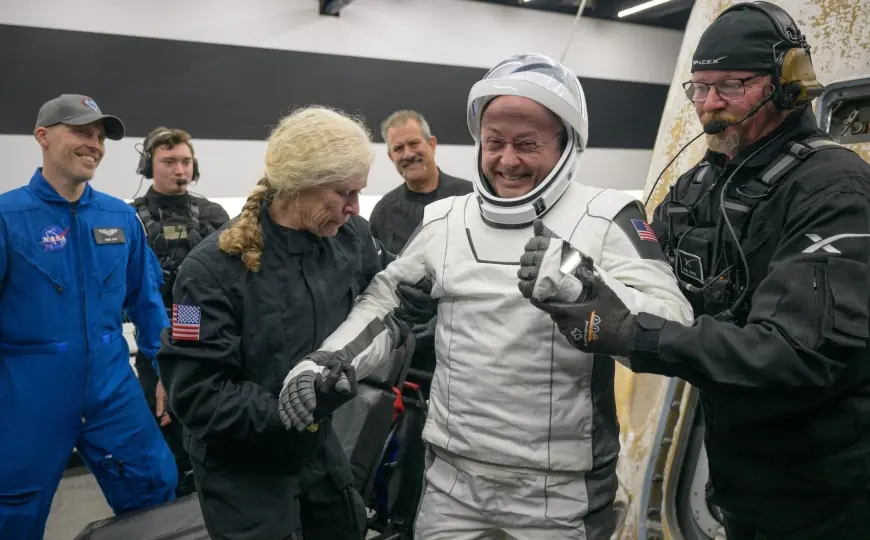
Who felt the effects first were the astronauts and the station's daily work: a nasa astronaut medical emergency on Jan. 7 set in motion a carefully coordinated early return for Crew-11, left only a skeleton team aboard the orbital complex, and forced short-term pauses in spacewalks and science. The incident shifted operational priorities from research tempo to medical assessment and post-flight care for the affected crew member.
Immediate impact on the station and crew — Nasa Astronaut Medical Emergency
The event prompted the first medical evacuation in the space station's 25-year history. After the Jan. 7 incident, only three crew members remained on board—described as one American and two Russians—while station leaders paused spacewalks and reduced research output. Four new astronauts joined the outpost in February and normal service has since resumed.
After the return, a senior official described the situation in orbit as a "serious situation, " while also noting the crew member had been safe and stable since the incident.
What unfolded aboard the International Space Station
On Jan. 7, while aboard the station, astronaut Mike Fincke experienced a medical event that required immediate attention from his crewmates. Their prompt response, together with the guidance of flight surgeons, quickly stabilized his status. Following further evaluation, mission managers determined the safest course was an early return for Crew-11 so advanced medical imaging—capabilities not available on the station—could be used.
The move was characterized as "not an emergency but a carefully coordinated plan. " The decision led to a splashdown off the coast of San Diego on Jan. 15 after what was described as a five-and-a-half-month mission.
It's easy to overlook, but the agency shared the information at the request of Mike Fincke; he provided an account of the event and the subsequent steps taken.
Crew composition, acknowledgments and medical follow-up
Crew-11 included Mike Fincke alongside fellow astronauts Zena Cardman, Kimiya Yui and Oleg Platonov. Fincke specifically expressed deep gratitude to his Expedition 74 crewmates—Zena Cardman, Kimiya Yui, Oleg Platonov, Chris Williams, Sergey Kud-Sverchkov and Sergei Mikayev—along with the broader agency teams, vehicle partners, and the medical professionals at Scripps Memorial Hospital La Jolla near San Diego who cared for him after splashdown.
Fincke said he is doing very well and is continuing standard post-flight reconditioning at the Johnson Space Center in Houston.
Operational timeline and recovery steps
- Jan. 7: Medical event aboard the International Space Station that required immediate crewmate response.
- Jan. 7–Jan. 15: Stabilization on orbit and evaluation that led to a planned early return so the astronaut could receive advanced imaging.
- Jan. 15: Splashdown off the coast of San Diego after a five-and-a-half-month mission.
- February: Four new astronauts joined the station and normal service resumed.
The decision-making chain emphasized access to diagnostic resources not available in orbit and a controlled return rather than an emergency evacuation.
Aftermath, follow-up signals and practical implications
Here's the part that matters: the episode shifted operational priorities and highlighted how in-orbit medical events can ripple through station staffing and research schedules. The real question now is whether routine operations and research will sustain no further interruptions as the new crew settles in and post-flight medical follow-up concludes.
- The event reduced on-orbit personnel and paused extravehicular activity, immediately slowing some research output.
- Affected groups include the remaining on-board crew, mission planners who reprioritize tasks, and medical teams tasked with post-flight diagnostics and reconditioning.
- Signals that will confirm recovery of normal operations include no additional staffing gaps, resumption of spacewalks without delay, and completion of advanced imaging and post-flight care for the returned astronaut.
- The agency framed the move as a planned, coordinated early return rather than an emergency, which shaped the splashdown timeline and care pathway.
What’s easy to miss is how the distinction between "not an emergency" and a historic medical evacuation changed the public narrative and the operational cadence for weeks afterward; the language used influenced messaging about safety and stability without altering the need for thorough medical follow-up.