




















Arlene Fraser: New Documentary Revisits the 1998 Disappearance and 14-Year Legal Aftermath

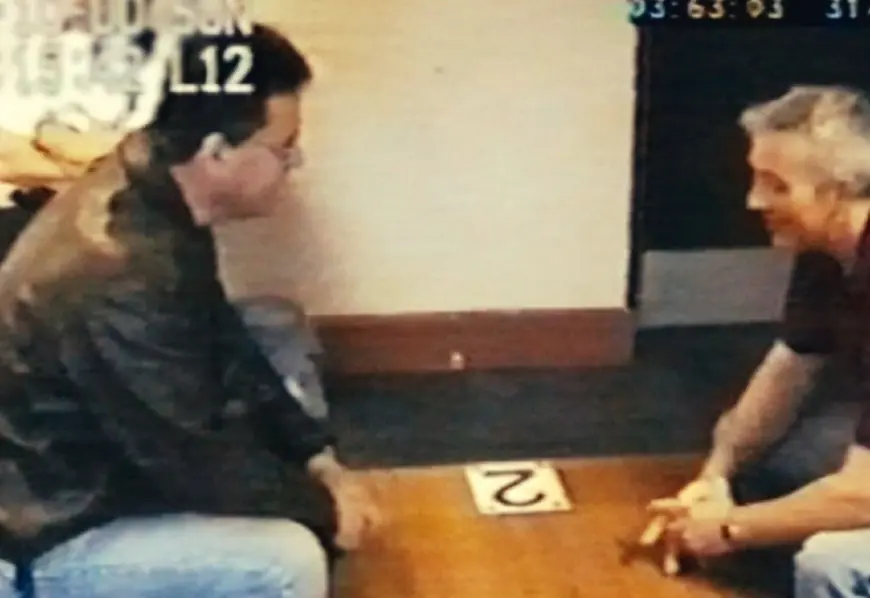
The documentary Murder Case: The Hunt for Arlene Fraser's Killer revisits the sudden disappearance of arlene fraser and the complex investigations and trials that followed. The film assembles archive footage and first-hand testimony to trace a case marked by scant physical evidence, a striking timeline of events and a protracted legal process.
Elgin bungalow: an ordinary home, an uncanny scene
When police entered Arlene Fraser’s bungalow in Elgin in April 1998 they found no obvious signs of a struggle: a bicycle on its side in the yard, a vacuum cleaner plugged into a hall socket, an ironing board left out and washing hanging on the line. Medication for Crohn's disease remained inside. Investigators described a dwelling that did not look like a crime scene and that offered no forensic trail—no body, no weapon, no forensic traces, no CCTV and no eyewitnesses.
Timeline: 28 April 1998, the 09: 41 call and the 2am knock
Arlene phoned her children’s school at 09: 41 on 28 April 1998 to check when her son would need collecting; when the school phoned back about 10 minutes later there was no answer. She also failed to show for a planned 11: 00 meeting with a friend. At about 02: 00 the following morning police notified her sister, Carol Gillies, who described being woken by a knock and told that her sister was missing. Police officer Mark Cooper, on night shift, received the initial report and later deployed a full inquiry team in Elgin as the absence of clues deepened concern.
Nat Fraser: past abuse, motive and a strong alibi
Suspicion quickly focused on Arlene’s husband, Nat Fraser. Five weeks before the disappearance he had placed his hands around her neck until she lost consciousness and was subsequently accused of attempted murder. The marriage had been fractious; Arlene was due to meet a solicitor that day to discuss a £250, 000 divorce. Despite anomalies that many found troubling—including a dispassionate, prepared statement Nat read at a press event—his alibi at the time was strong enough to halt progress in the investigation.
Moray Women’s Refuge and expert testimony on domestic abuse
Arlene had stayed at Moray Women’s Refuge in 1990 and again in 1992 before returning to Nat on both occasions. Lorna Creswell, co‑founder of the refuge, described how women often feel they have no alternative and return to abusive partners. Dr Emma Plant of the Moray Violence Against Women and Girls Partnership noted that isolated incidents of strangulation are rare and that violence is typically about control; when control is threatened, lethal outcomes become a risk. What makes this notable is how those patterns of abuse intersect with the near-total absence of physical evidence in this case.
Family, children and community reactions
Arlene met Nat in 1985 and they married soon afterwards. Their first child, Jamie, was born in 1987 and their second, Natalie, in 1992. Isabelle Thompson, Arlene’s mother, said she was over the moon with her grandchildren. Neighbours and police noted that Arlene was not the sort to go out socialising and abandon her children, a point that intensified fears when the family home presented no sign that she had left voluntarily. Carol Gillies made the 200‑mile journey from Erskine when she learned of the disappearance and later said this was the final chance before the truth could be lost forever.
Convictions, 14 years of litigation and questions that remain
Nat Fraser was twice found guilty of Arlene Fraser’s murder during a tortuous 14‑year legal process. Yet almost 30 years after the disappearance, Arlene’s body has never been recovered. Nat will soon become eligible for release from prison, and the family has urged changes in law to prevent parole unless he reveals the location of her body. The Mary Celeste comparison—used by investigators to describe the empty bungalow—underscores how the lack of a body and the paucity of physical evidence left the case dependent on testimony, motive and legal argument rather than forensic closure.
The documentary, presented in two episodes and airing on Scotland, stitches together archival material and testimony from those who lived through the events to present both the eerie immediacy of the discovery and the long, unresolved aftermath. The broader implication is that violent patterns within intimate relationships can be painfully visible to those close to the victim even when criminal evidence is essentially absent.