



















Lakers Vs Suns: Late-game collapse deepens Lakers’ slump after Doncic’s 41 in 113-110 loss

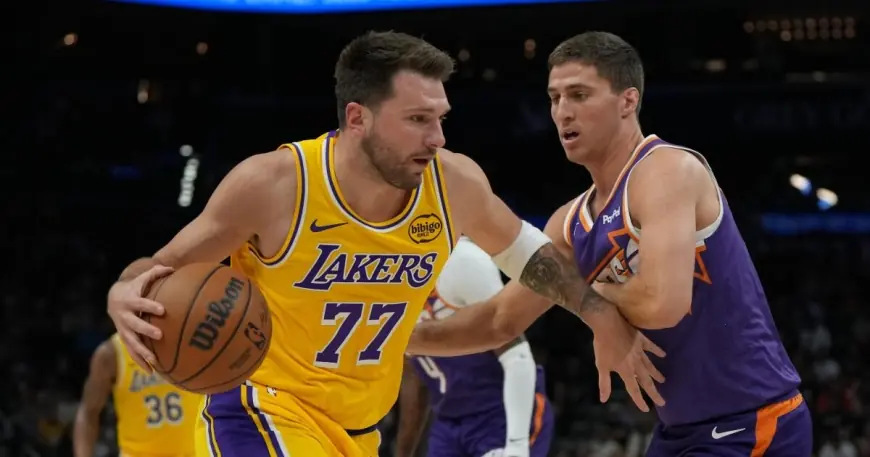
The Lakers felt the immediate cost: morale, momentum and another entry on the list of last-second heartbreaks. In the Lakers Vs Suns matchup, Phoenix escaped 113-110 when Royce O'Neale hit a three with nine-tenths of a second left; Austin Reaves missed a corner three at the buzzer. The defeat is the third straight for the Lakers this season and a continuation of recent finishes lost in the final second.
What the loss does to the Lakers now
Here’s the part that matters: these are not isolated misses but a pattern. The Lakers have dropped their last two games in the final second and now have a three-game losing streak for the third time this season. The cost shows up in locker-room frustration and a reputational hit in late-game moments — the kind of situations the roster had been known for handling. A two-time national college coach of the year and 2019 NCAA champion said that helping the Lakers in any way he can is exciting, an outside gesture that contrasts with the club’s internal tension.
Lakers Vs Suns — the decisive sequence and final plays
Phoenix’s game-winner began when Grayson Allen split the defense and drove into the paint; Luka Doncic and LeBron James collided and fell, creating a passing lane to Collin Gillespie, who fed a swing pass to a wide-open Royce O'Neale. O'Neale’s three dropped cleanly with 0. 9 seconds remaining. On the Lakers’ final possession, Marcus Smart inbounded while James and Maxi Kleber set a double-screen to free Austin Reaves; Reaves took a cross-court pass and his corner three bounced off the rim as time expired.
How key players performed and critical stats
- Luka Doncic finished with 41 points, eight rebounds and eight assists after sparking a fourth-quarter comeback with back-to-back threes.
- LeBron James added 15 points, six rebounds and five assists and tied the game with a tip-in, with 22. 7 seconds left.
- Austin Reaves was 5-for-12 from the field and 2-for-5 from three on the night and described the miss simply as having "just missed, " while calling team frustration very high.
- Grayson Allen had 28 points and six assists off the bench; Collin Gillespie scored 21 for Phoenix.
- Final score: Suns 113, Lakers 110. Team records moved to Lakers 34-24 and Phoenix 34-26.
Why Phoenix could do it despite injuries
Phoenix connected on 22 of 50 attempts from three-point range even though they were missing multiple rotation pieces: Devin Booker (right hip strain), Dillon Brooks (left hand fracture) and Jordan Goodwin (left calf strain). Doncic pointed out that Phoenix launched 50 threes and made a lot of them, noting the Lakers had stretches of physical defense but other stretches where they did not match that intensity and the Suns took over.
Immediate fallout, stakeholders and signals to watch
The immediate stakeholders are obvious: players coping with mounting frustration, coaches under pressure to tighten late-game coverage, and fans watching a team that has lost close endings repeatedly. The loss follows a weekend blowout at the hands of the Boston Celtics and a one-point home defeat to the Orlando Magic earlier in the week when Luka passed up a three and the eventual hurried LeBron attempt came up short. These three recent games (Sunday blowout, Tuesday one-point loss, Thursday buzzer loss) form a short timeline of rapidly escalating late-game issues.
The real question now is whether the Lakers can correct rotations in crunch time and limit opponent three-point volume — early confirmation would be tighter closeout defense on spot-up shooters and different late-possession planning that avoids the collisions and passing breakdowns that produced the final Phoenix look.
What’s easy to miss is how small execution details — a missed rotation, a failed screen, a single contested pull-up — compound into a loss that feels much bigger than three points.
The Lakers remain an otherwise clutch team this season (an NBA-best 16-5 in clutch situations before this stretch), but consecutive final-second defeats and a third straight loss compress margin for error. That pressure will shape how rotation minutes are allocated and whether schematic tweaks are prioritized before the next game.