

























Total Lunar Eclipse Blood Moon to Paint Skies Red on March 3; How and Where to Watch

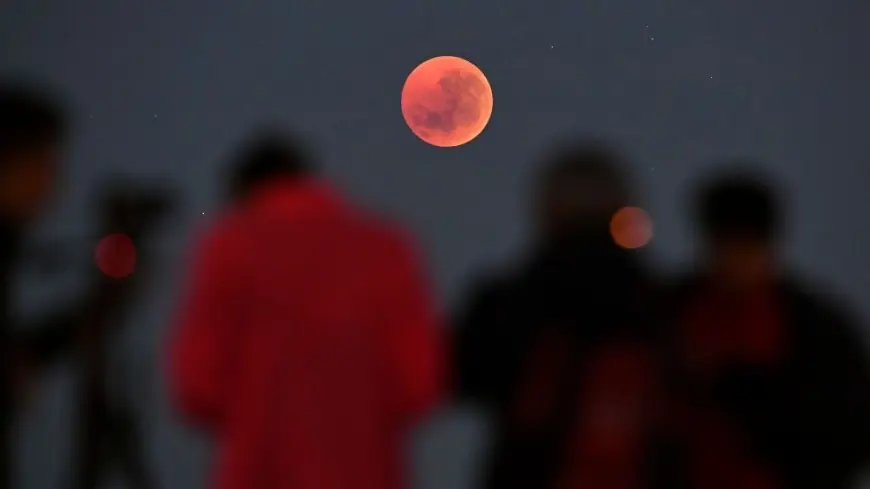
A Total Lunar Eclipse Blood Moon will transform the moon into a coppery red in the early hours of March 3, 2026, offering a long-lasting spectacle for observers across North America, Australia, New Zealand and eastern Asia. The timing matters because totality is lengthy: it will last 58 minutes, from 6: 04 a. m. EST (1104 GMT) to 7: 02 a. m. EST (1202 GMT), creating viewing opportunities for billions within the eclipse path.
March 3 timing and totality
The eclipse unfolds as Earth moves between the moon and the sun, casting the lunar surface into shadow; light that reaches the moon is filtered through Earth’s atmosphere and takes on an orange‑ruddy hue, the familiar “blood moon” coloration. Totality—the interval when the moon is fully immersed in Earth’s shadow—will run 58 minutes, from 6: 04 a. m. EST (1104 GMT) to 7: 02 a. m. EST (1202 GMT). The moon will tint red for nearly an hour as the alignment holds.
Observers should note that visibility depends on local circumstances. In New York, the moon will slip into totality and take on a blood‑red cast, but maximum eclipse will occur after moonset and therefore will not be visible from that city. The event will be visible across the night side of Earth on March 3.
Total Lunar Eclipse Blood Moon: Where to look — North America, Australia, Pacific and east Asia
The best views are expected from the western half of North America, Australia and the Pacific. The March 2026 eclipse will be visible across large swaths of North America, Australia, New Zealand and eastern Asia; billions of people lie within the eclipse path, though exactly what viewers see will depend on their location and horizon.
To maximize contrast, astronomers advise getting to a dark site with clear skies. Unlike solar eclipses, lunar eclipses are completely safe to watch with the naked eye. As the shadow sweeps across the lunar disk, observers will see a gradual shift from a bright silver moon to a deep red—an effect likened to seeing all the phases of the moon at high speed.
Minnesota viewing and comments from the Minnesota Astronomical Society
Minnesotans are specifically advised to set alarms for 5 a. m. on March 3 to catch the event. Those who wake early can see a striking scene: a yellow sun rising into blue skies while a red moon sets on a darkened western horizon. John Zimitsch, vice president of the Minnesota Astronomical Society, emphasized the experience of seeing it in person, noting that “the ancients had no idea the physics and what was going on. They just saw the moon turning... this orange ruddy [color]. That’s where the ‘Blood Moon’ comes from. ”
Zimitsch encouraged viewers to look up and be present: “Look up. Put down your cellphone. You can go online and you’re going to be able to see pictures, but seeing astronomical events in person is a wonderful thing. ” He added, “There’s something inside of us that draws us to these astronomical events. Maybe it’s just primitive, ” and cautioned that when observing the eclipse “no one’s using photoshop or AI when you’re actually looking at it. It’s real. ” Kyeland Jackson is listed as a general assignment reporter in the materials provided.
NASA context and the schedule of future total lunar eclipses
Officials at NASA note that the last total lunar eclipse visible to the Americas occurred in March 2025; the prior total lunar eclipse before that happened three years earlier. Astronomers project the next total lunar eclipse will fall on New Years Eve 2028, but the next total lunar eclipse visible in the Americas is not expected until June 2029.
Because lunar eclipses occur several times a year while total eclipses are less frequent, opportunities to see a full blood‑red moon remain relatively rare compared with partial or penumbral events.
Justice Department action, local legal notes and an unavailable site entry
Separately included material notes that the Justice Department announced it had ended an investigation into Mary Moriarty’s office over a policy that considered race in charging decisions; Moriarty’s office called the investigation a “stunt. ” The materials also state that Minnesota’s chief federal judge said he has found another 113 orders that Immigration and Customs Enforcement has violated since late last month. In a separate item, a hospital official said a fifth person was injured and was in critical condition.
One submitted item in the packet was marked “Site Not Available” and contained no content.
How to follow updates
For those seeking live updates, a lunar eclipse live blog is being offered to track developments and timing for specific locations. Observers should plan for clear, dark conditions and consult local timing guides to confirm when the moon will enter and exit totality in their area.
What makes this notable is the combination of long totality and a wide geographic footprint: the 58‑minute interval and visibility across major population centers promise both dramatic views for those prepared and a broad audience able to witness the phenomenon in person.