

























Nasa Astronaut Medical Emergency Prompts Historic Early Return of Crew-11 from ISS

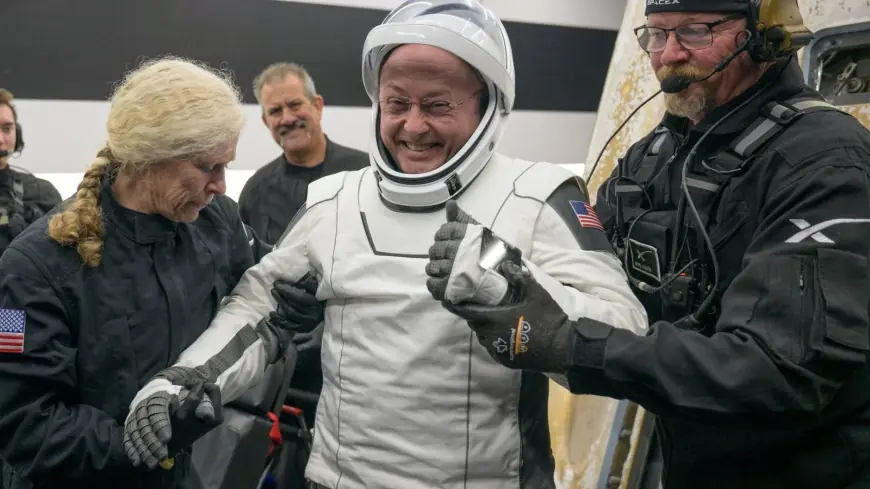
NASA has published new details about a nasa astronaut medical emergency that occurred on Jan. 7, triggering the first medical evacuation in the International Space Station’s 25-year history. The agency says the incident led to a carefully coordinated early return for four Crew-11 members so one crewmember could receive advanced imaging not available on the station.
Mike Fincke’s Jan. 7 account and condition
A veteran astronaut, Mike Fincke, said he experienced a medical event on Jan. 7 while aboard the ISS that “required immediate attention” from his crewmates. He credited the quick actions of fellow crew members and the guidance of NASA flight surgeons for stabilizing his condition. Fincke, 58, said he is doing very well and is continuing standard post-flight reconditioning at NASA’s Johnson Space Center in Houston.
Fincke’s statement, shared by NASA at his request, thanked his Crew-11 colleagues and teams at NASA and SpaceX, and singled out medical professionals at Scripps Memorial Hospital La Jolla near San Diego for their role in his care. He described spaceflight as an “incredible privilege” and noted how the episode underscored human vulnerability in orbit.
Nasa Astronaut Medical Emergency and the decision to return Crew-11
After further evaluation, NASA determined the safest course was an early return for the four-person Crew-11—not an emergency but a carefully coordinated plan to make use of advanced medical imaging not available on the space station. Top NASA officials and the agency’s chief health and medical officer opted to bring the astronauts back about a week after the incident.
Crew-11—composed of Mike Fincke, NASA astronaut Zena Cardman, Japanese astronaut Kimiya Yui and Russian cosmonaut Oleg Platonov—undocked from the ISS on Jan. 14 in the same SpaceX Dragon capsule that had delivered them. After a nearly 11-hour journey, the capsule splashed down in the Pacific Ocean off the coast of San Diego in the early morning hours of Jan. 15, concluding an approximately five-and-a-half-month mission.
Operational ripple effects aboard the International Space Station
The medical event and subsequent early return had immediate operational consequences. NASA canceled a planned Jan. 8 spacewalk and paused other extravehicular activities. The evacuation temporarily left the ISS with only three crew members on board—one American and two Russians—and prompted a reduction in research output. Normal operations resumed after four new astronauts joined the station in February.
Fincke’s statement also acknowledged the wider Expedition 74 team: Zena Cardman, Kimiya Yui, Oleg Platonov, Chris Williams, Sergey Kud-Sverchkov and Sergei Mikayev. He extended thanks to fellow Expedition members and named specific colleagues—Chris Williams, Sergey Kud-Sverchkov and Sergei Mikayev—who remained aboard the station at the time.
Medical response, privacy and post-landing assessments
NASA emphasized that the early return was intended to enable diagnostic imaging and follow-up care on Earth. The agency had initially described the situation as stable while withholding further detail because of medical privacy considerations. At a post-landing briefing, NASA Administrator Jared Isaacman called the episode a “serious situation” in orbit but said the affected crew member had been safe and stable since the event.
Fincke specifically thanked the medical teams at Scripps Memorial Hospital La Jolla and the broader NASA and SpaceX teams involved in the recovery. The decision to seek advanced imaging on Earth—rather than attempting further diagnosis on the station—was the proximate cause for the early return and the cascade of operational adjustments that followed.
Timeline and lasting significance
The sequence of events is concrete: a medical event on Jan. 7, a canceled spacewalk on Jan. 8, undocking on Jan. 14, and splashdown off San Diego on Jan. 15 after nearly 11 hours in transit. What makes this notable is that it represented the first time in the ISS’s 25-year history that a mission was cut short for medical reasons and an entire crew was returned early to access Earth-based diagnostics.
Fincke’s public statement and NASA’s disclosure at his request provide a rare window into the agency’s medical decision-making and the trade-offs that arise when health needs intersect with long-duration human spaceflight operations.