













Arlene Fraser: Murder Case review and the long hunt for justice

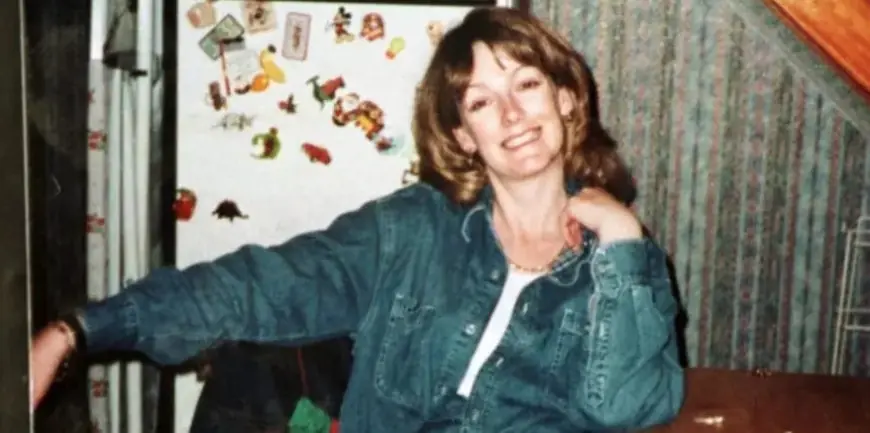
The two-part documentary revisits the disappearance of arlene fraser and the tangled investigation and trials that followed, arguing a sober reflection on violence against women while leaving key questions unresolved. It returns a case that has haunted a family and a region for decades to the public eye.
Police scene at Arlene Fraser’s home in Elgin, Moray
When police arrived at Arlene Fraser’s house in Elgin, Moray in April 1998 they found a household set as if time had stopped: a bicycle on its side in the yard, a vacuum cleaner still plugged into a socket in the hall and washing on the line. On the Tuesday morning she vanished, Arlene had stood in her dressing gown to wave her two children off to school; by the time officers came she had gone.
Morning timeline: 28 April 1998, a 9. 41am call and a missed 11am meeting
The nightmare began on 28 April 1998. Arlene phoned her son’s school at 9. 41am to check when she needed to pick him up; when the school rang back 10 minutes later they got no answer. She also failed to attend a planned meeting with a friend at 11am, leaving a tight window of events that detectives have continued to probe.
Domestic abuse history: refuge stays, a black eye at the wedding and a near-fatal assault
Before her marriage to Nat Fraser, Arlene was described as friendly and popular; Nat attended their wedding with a black eye, seen at the time as an amusing misfortune. The documentary lays out a pattern of trauma: Arlene stayed at Moray Women’s Refuge in 1990 and again in 1992, each time returning to Nat. Lorna Creswell, co‑founder of the refuge, observes that many women "don’t see themselves with an alternative or the confidence to move on. " By April 1998 Arlene had been moving on — she was due to meet a divorce lawyer — but five weeks earlier Nat had placed his hands around her neck until she lost consciousness and he was facing an attempted murder charge. Dr Emma Plant of the Moray Violence Against Women and Girls Partnership warns emphatically that "there is no such thing as an isolated incident of violence against women, " and frames domestic abuse as a struggle for control that can end in murder when that control is threatened.
Investigation difficulties: no body, no weapon, rings on a peg and searches
Investigators faced a striking absence of hard evidence: there was no body, no weapon, no forensic trace and no incriminating witness testimony from the day Arlene vanished. Nine days after she disappeared, her gold wedding, engagement and eternity rings — which she was known to wear constantly — were found on a peg in her bathroom, a detail investigators viewed as consistent with someone having had access to her body. Massive searches across the Scottish Highlands and a reward of £20, 000 failed to recover her remains. During later proceedings a former friend of Nat's testified that Nat had said the body had been burned and the ashes scattered.
Alibi, prosecutions and Nat Fraser’s current status
Despite an obvious chief suspect in Nat Fraser, his alibi on the morning of the disappearance was described as cast-iron: he was out on his rounds as a fruit and veg wholesaler, making sure he was visible to as many customers as possible. That alibi stalled initial action; anomalies such as his dispassionate reading of a prepared press statement — "Arlene, if you’re watching this, then please get in touch" — did not secure a conviction at once. Nat was not arrested and charged until 2001, three years after the disappearance, following a prolonged investigation by Grampian Police. He was first convicted of Arlene’s murder in 2003, but that conviction was quashed in 2011 after a Supreme Court ruling. The Crown pushed for a retrial in 2012, where a second jury found him guilty; the judge, Lord Bracadale, described the killing as "calculated" and imposed a life sentence with a minimum term of 17 years. As of 2026 Nat Fraser remains incarcerated at HM Prison Addiewell in West Lothian; now in his 70s, he has spent more than a decade behind bars for the second time and continues to maintain his innocence from his cell, having lost several appeals and taken his case to the European Court of Human Rights.
Family campaign and the unanswered questions that remain
Arlene’s family have lived in agonising limbo for decades. Her sister, Carol Gillies, has campaigned persistently for the truth and has said, "We just want to find her. We want to be able to put her to rest. " The documentary reconstructs the investigation and the trials — or rather, the trials — replaying twists and surprises while making clear that concrete details refused to emerge, leaving many questions unresolved about who killed Arlene and how the apparent anomalies around the case should be weighed.