









Bridgerton’s New Center: Why Francesca’s Loss and a Surprise Lady Whistledown Twist Matter for Fans

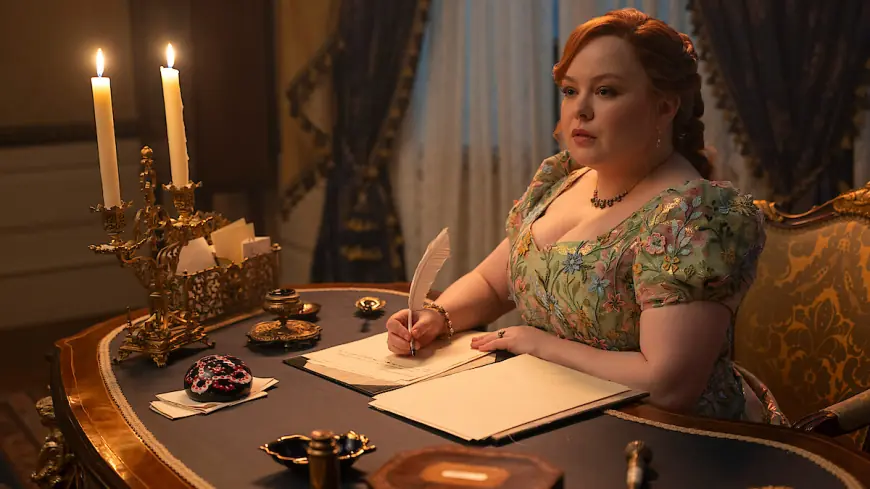
This article contains spoilers for Season 4, Part 2 of bridgerton. This is read by an automated voice. Please report any issues or inconsistencies here. For viewers, the latest turn — a sudden death that reshapes one Bridgerton sister’s arc plus a mysterious new Lady Whistledown revelation — recalibrates how the series balances grief, invented backstory and serialized surprise. Fans who follow both the show’s choices and the original novels will feel the shift first.
Bridgerton’s audience impact: grief, mystery and a tone reset
Here’s the part that matters: Francesca’s immediate grief and the emergence of a new Lady Whistledown change who the story centers on and how intimate scenes are handled. Longtime viewers who expected a direct adaptation from the novel now face a version of the character created largely by the show’s writers. Readers of the novel known as "Francesca’s book" will notice the divergence quickly; the on-screen drama spends time inside a newly imagined marriage, then follows Francesca’s response when John Stirling dies in Part 2 of Season 4.
Key plot elements and casting shifts embedded in the turn
Hannah Dodd, an English actress aged 30, first auditioned intensely for the role of Daphne in Season 1 and lost the part to Phoebe Dynevor. A few years later she filmed a self-tape for a very secretive project and only after several months learned the project was Bridgerton. She met with the show’s creative team and within a week was attending piano lessons as part of preparation.
Dodd was cast as Francesca for Season 3, replacing Ruby Stokes, who had played Francesca in the first two seasons and departed because of scheduling issues. Francesca made her debut in Season 3, entering the Ton and forming an unexpected connection with John Stirling, the Earl of Kilmartin, played by Victor Alli. By the start of Season 4 the couple are married and settled in his London home; in Part 2, John dies, and that death is the immediate trigger for the new emotional center on Francesca.
How creators shaped Francesca and handled sensitive material
The showrunner, Jess Brownell, spoke from Los Angeles about seeing hundreds of performers before casting Dodd late in the process. Brownell emphasized Dodd’s subtlety: an ability to play shyness without seeming weak and to suggest an inner strength that needed to bloom on-screen. Brownell also explained that Francesca begins Season 3 shy and reserved but will go through significant events that require fierceness to survive.
Alongside those casting and character notes, the creative team workshopped language choices for explicit moments. Hannah Dodd and Jess Brownell discussed developing a word to stand in for orgasm in season four, shaping how intimate scenes register tonally without relying on more direct terminology.
Fan-facing differences from the novel and immediate signals for viewers
- The novel When He Was Wicked (commonly called "Francesca’s book") places John’s death at the start: John is alive for only around ten pages before a time jump in the book; the show instead stages the marriage and the immediate aftermath on-screen.
- Almost all of Francesca’s on-screen story so far has been imagined by the writers rather than lifted from the pages of the novel.
- Hannah Dodd felt pressure joining a tight ensemble but said the cast welcomed her and helped establish chemistry.
Timeline (compact):
- Season 3: Francesca debuts into the Ton and meets John Stirling (Victor Alli).
- By Season 4 start: Francesca and John are married and living in his London home.
- Part 2 of Season 4: John dies, and the series moves into Francesca’s immediate grief.
- Public appearances tied to the season included a world premiere in Paris and a screening in London where the showrunner and cast were present.
If you’re wondering why this keeps coming up: creators intentionally expanded Francesca’s screen life beyond the book so the audience can experience her grief in the present tense, rather than jump ahead as the novel does. The real question now is how the show’s invented beats — including a new Lady Whistledown mystery flagged in recent coverage — will alter viewer expectations about fidelity and surprise.
It’s easy to overlook, but the choice to invent much of Francesca’s early marriage both raises the emotional stakes on-screen and hands writers flexibility to surprise the audience; that flexibility is exactly what produced the new Lady Whistledown twist that has become the current talking point.
Writer’s aside: The faster the show leans into invented material, the more the series will be judged on internal logic and emotional payoff rather than book faithfulness—a higher bar for scenes of grief and secrecy.