





















Jeff Galloway, Olympian Who Transformed American Distance Running, Dies at 80

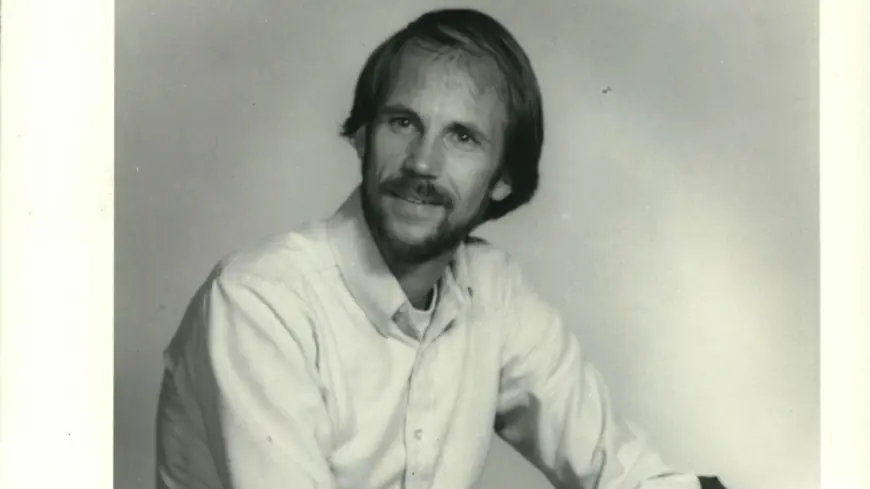
jeff galloway, a member of the 1972 U. S. Olympic team who popularized the run-walk-run strategy for elite and everyday runners, died Wednesday at age 80 after suffering a hemorrhagic stroke. His daughter-in-law, Carissa Galloway, said he died at a hospital in Pensacola, Florida; the family announced the emergency neurosurgery on Feb. 20 and invited the public to express support in the hours that followed.
Jeff Galloway’s Hemorrhagic Stroke and Pensacola Hospital
Galloway’s death came after an emergency neurosurgical procedure tied to a hemorrhagic stroke, a condition his family disclosed publicly on Feb. 20. In the final days, throngs of people posted videos online hoping for his recovery and thanking him for advice that had taken them to countless race starting lines.
1972 U. S. Olympic Team and the 10, 000 Meters
Galloway was a competitor in the 10, 000 meters on the 1972 U. S. Olympic team. That Olympic experience preceded the coaching and outreach that would define his later career and the development of a training method he introduced two years after those Games.
Run-walk-run Method Begun at Florida State University in 1974
In 1974, Galloway agreed to teach a running class through Florida State University, a program that marked the birth of his run-walk-run approach. He created the program in part to draw customers to Phidippides, his new running store. He said none of the initial participants had done any running for at least five years, so he began with walking interspersed with a few one-minute jogs and adjusted walk breaks so no one was "huffing and puffing" even at the finish.
Galloway argued that walk breaks reduced injury risk, conserved energy and kept confidence afloat—principles he refined by tailoring the ratios of running to walking to pace per mile and individual needs. What makes this notable is how a simple structural change in training lowered the mental and physical barriers that kept many people from starting or finishing races.
1980 Houston Marathon: Water Stations and a 2: 16: 35 Finish
Galloway tested his concepts in competitive settings. At the 1980 Houston Marathon he walked through every water station and posted a 2: 16: 35 finish, faster than his prior run-only marathon performances. That result became a cited example for his claim that intermittent walking could conserve energy and improve outcomes over 26. 2 miles.
More Than 230 Marathons, runDisney Role and Continued Ambitions
Over his lifetime Galloway logged more than 230 marathons. He survived heart failure in 2021 and publicly maintained that, even in his 80s, he wanted to demonstrate people could accomplish uncommon athletic feats safely; he said his mission at age "80-plus" remained proving that possibility. He shared his philosophies through books, websites and retreats, served as the official training consultant for runDisney and often joined runners at those events.
Voices of Runners and an Enduring Reach
Coaches and participants credited Galloway with changing who felt welcome in the sport. Jim Vance, an elite endurance sports consultant in San Diego, described Galloway as a "pioneer" who removed the mental barrier to entry and reframed running as something peaceful rather than a suffer-fest. Admirers online included Karen Bock-Losee of Jacksonville, Florida, who said she is 70 and, after discovering Galloway running at age 60, went on to complete several half marathons. Susan Williams recounted an encounter during the 2011 half marathon in Murray, Kentucky: as she struggled near the finish Galloway passed her, turned back when she cramped and coached her across the line.
WSB-TV Channel 2 - Atlanta Website Access Notice
Separately, an access notice carried on WSB-TV Channel 2 - Atlanta stated the website was unavailable for users outside the United States and that access could not be granted from another country. The notice appeared as a blocking message when attempts were made to view that site from abroad.
Galloway’s methods reshaped recreational and competitive distance running by offering a practical alternative to nonstop running; that shift in approach helped expand participation and gave thousands a path to finish 5K and 10K events with confidence and, as he liked to note, smiles on their faces.