
























Eric Slover: Unclear in the Provided Context as Trump Awards Medal of Honor to 100-Year-Old Veteran and Rep. Al Green Is Ejected

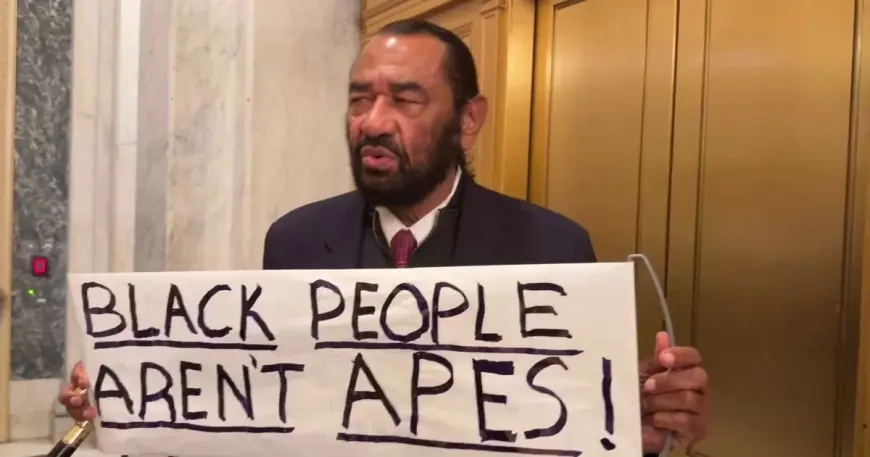
President Trump presented the Medal of Honor to 100-year-old retired Navy captain E. Royce Williams during the State of the Union, and Rep. Al Green was ejected from the House chamber for holding a sign that said "Black people aren't apes" — developments that shaped both the ceremonial and confrontational moments of the evening; eric slover is unclear in the provided context. These actions mattered because one altered a decades-long recognition process for a classified Cold War engagement while the other underscored immediate partisan tensions on the Capitol floor.
E. Royce Williams' Medal of Honor presentation
During the address, the president moved to formally bestow the Medal of Honor on E. Royce Williams, who is 100 years old. First lady Melania Trump placed the medal around Williams' neck as he stood. The presentation marked the first time a president has awarded the nation's highest military decoration during a State of the Union address, and Mr. Trump called Williams earlier this month ahead of the ceremony.
1952 dogfight off the Korean Peninsula
Williams' decoration recognizes actions in a secret mission during the Korean War. In 1952, he and another American pilot encountered seven Soviet MiG-15 fighters; the engagement stretched for roughly a half-hour and has been described as the longest aerial engagement in U. S. Navy history. Williams struck one MiG, and after his fellow pilot pursued that aircraft he fought alone against the remaining jets, shooting down three more—four in total—while maneuvering through what military accounts later described as hundreds of rounds of incoming fire.
Secrecy, later recognition and the Navy Cross
Soviet involvement was kept top secret at the time, which led to the records of the clash being classified for decades. Williams has said he was instructed to keep the airborne clash a secret and that for years he spoke of it to no one, not even his wife. Details only surfaced years later after archival materials and military histories were opened, and in recent years the U. S. military published detailed descriptions of the encounter. Three years ago Williams was awarded the Navy Cross; last year lawmakers waived the requirement that the Medal of Honor be awarded within five years of the act of valor, clearing the path for the president to bestow the decoration now.
Rep. Al Green's ejection over a sign
Separately, on Feb. 25, 2026, Rep. Al Green was ejected from the House chamber after holding a sign that read "Black people aren't apes. " He remained in possession of the sign when he later spoke to reporters in the Capitol and told them that President Trump "got the message" on the placard. The ejection was an immediate disciplinary response to the display on the House floor and prompted Mr. Green to frame the action as having landed its intended political point.
Lawmakers' waiver and Rep. Darrell Issa's advocacy
Republican Rep. Darrell Issa of California, whose district includes Williams' home, pressed for the retired pilot to receive the Medal of Honor. Lawmakers authorized the president last year to bestow the medal by waiving the longstanding five-year limit on awarding the decoration. Issa wrote earlier this month that the "heroism and valor he demonstrated for more than 35 harrowing minutes almost 70 years ago" had unquestionably saved lives, framing the legislative move as corrective recognition for a cloaked Cold War confrontation.
Eric Slover: unclear in the provided context
The name Eric Slover appears in the headline requirements for this piece, but eric slover is not mentioned in the assembled material and any details about that person are unclear in the provided context. No facts about Eric Slover's identity, role, or connection to the events described are available in the information used to produce this report.
What makes this notable is that both the Medal of Honor ceremony and the House ejection unfolded on the same public stage of national attention: one resolved a multidecade secrecy issue through legislative waiver and executive action, while the other produced an immediate policing of decorum that the lawmaker cast as delivering a message to the president.