























Nvda Posts Record $68.1 Billion Quarter as Blackwell and Networking Drive Growth

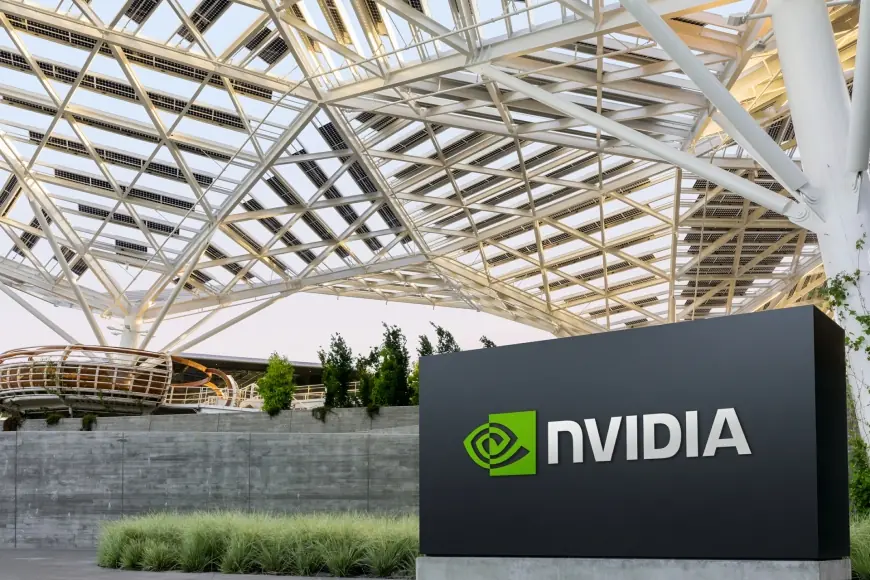
nvda posted record fourth‑quarter revenue of $68. 1 billion for the period ended January 25, 2026, a jump of 73% year‑over‑year and 20% sequentially. The results sharpen attention on the company’s central role in supplying compute for agentic AI, hyperscaler upgrades and a rapidly expanding sovereign‑AI market.
Nvda Fourth Quarter and Fiscal 2026 Results
The company closed fiscal 2026 with revenue of $215. 9 billion, up 65% from a year earlier. For the quarter, GAAP gross margin was 75. 0% and non‑GAAP gross margin was 75. 2%; for the full fiscal year, GAAP and non‑GAAP gross margins were 71. 1% and 71. 3%, respectively. Quarterly GAAP earnings per diluted share were $1. 76 and non‑GAAP earnings per diluted share were $1. 62; for fiscal 2026, GAAP and non‑GAAP EPS were $4. 90 and $4. 77. Colette Kress, executive vice president and chief financial officer, highlighted record operating income and robust free cash flow for the period, and CFO commentary is available for investors. A conference call with analysts and investors was scheduled for 2 p. m. Pacific (5 p. m. Eastern) on the day the results were released; a listen‑only webcast will be recorded and available for replay until the company’s next quarterly call.
Data‑center Revenue and Blackwell Ramp
Data‑center sales were the dominant driver in the quarter, totaling $62 billion—up 75% year‑over‑year and 22% sequentially. NVIDIA added $11 billion in data‑center revenue versus the prior quarter, and on a full‑year basis data center generated $194 billion, an increase of 68% from the prior year. Leadership cited sustained strength in Blackwell and the Blackwell Ultra ramp as the primary engine of that growth; Grace Blackwell systems represented roughly two‑thirds of data‑center revenue in the quarter. Demand pressures have left earlier product families scarce in public cloud inventory: even Hopper products and much of the six‑year‑old Ampere‑based lineup are sold out in the cloud. Performance‑per‑watt improvements were presented as a key procurement driver—third‑party assessments referenced GB300 NVL72 achieving up to 50× performance per watt and 35× lower cost per token versus Hopper, while ongoing CUDA optimization delivered up to five‑times better performance on GB200 NVL72 within four months. Jensen Huang framed the moment as an agentic‑AI inflection, saying Grace Blackwell with NVLink is the king of inference and that forthcoming products will extend that leadership.
Networking, NVLink and Spectrum‑X Growth
Networking emerged as a larger pillar, generating $11 billion in the quarter—more than 3. 5× year‑over‑year growth. Management linked that expansion to scaled adoption of NVLink, Spectrum‑X Ethernet and InfiniBand; both scale‑up and scale‑out technologies grew double digits sequentially, with NVLink 72 scale‑up switches cited as the primary year‑over‑year driver. Jensen Huang described networking as an extension of the company’s rack‑scale AI infrastructure approach, noting the switching required to tie multiple nodes together and saying NVLink has "turbocharged" the networking business.
Cash Flow, Share Returns and Dividend
Fourth‑quarter free cash flow was $35 billion and free cash flow for fiscal 2026 totaled $97 billion. The company returned cash to shareholders in the form of share repurchases and dividends—fiscal 2026 saw $41. 1 billion returned, a figure also summarized elsewhere as $41 billion. As of the end of the fourth quarter, $58. 5 billion remained available under the company’s share repurchase authorization. NVIDIA will pay a quarterly cash dividend of $0. 01 per share on April 1, 2026, to shareholders of record on March 11, 2026.
Outlook, Guidance and Accounting Changes
Management guided first‑quarter revenue to $78 billion, plus or minus 2%, and said the projection assumes no China data‑center compute; the company expects roughly 75% gross margins for the quarter. The company also indicated that beginning in the first quarter of fiscal 2027 it will include stock‑based compensation expense in non‑GAAP financial measures, noting that stock‑based compensation is a foundational component of its compensation program to attract and retain talent. For the full year fiscal 2027, GAAP and non‑GAAP tax rates were expected to fall between 17. 0% and 19. 0%, excluding discrete items and material tax‑environment changes. Reconciliations between GAAP and non‑GAAP measures were presented to aid comparability; those reconciliations adjust reported GAAP measures to exclude stock‑based compensation expense and acquisition‑related and other costs, with other adjustments noted but unclear in the provided context.
What makes this notable is the combination of outsized, concentrated data‑center demand and rapid networking scale‑up: that mix pushed record quarterly revenue, large free cash flow generation and a clear shift in how the company will present non‑GAAP expenses going forward, reinforcing the financial and strategic momentum behind its AI infrastructure push.