




















Samsung S26 Ultra: What the Galaxy S26 Launch Revealed About Price, Privacy Display and How It Compares to iPhone 17

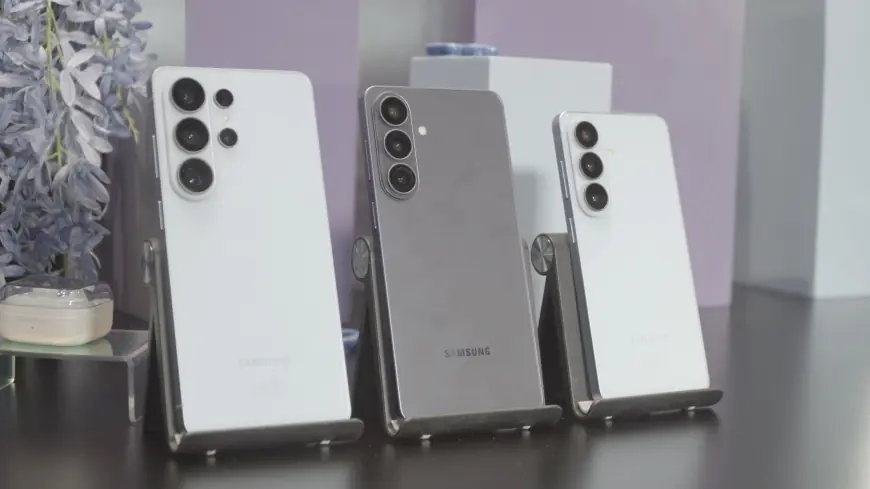
The Samsung S26 Ultra sits at the center of a launch that combined heavy pre-release leakage with a few genuine surprises: a built-in hardware privacy display, upgraded Bixby intelligence, and a blanket move to 256GB base storage — even as prices edge higher because of a global memory chip shortage. These shifts matter for buyers weighing features, cost, and how Samsung stacks up against the iPhone 17.
Pricing and storage changes for the Galaxy S26 line
Price adjustments across the Galaxy S26 range are a prominent outcome of the launch. One detailed breakdown lists U. K. prices as: the base Galaxy S26 at £879, the Galaxy S26 Plus at £1, 099 and the Galaxy S26 Ultra at £1, 279. In the U. S., that same breakdown puts the Galaxy S26 base unit at $899. 99 (up from $799. 99 for the Galaxy S25), the Galaxy S26 Plus at $1, 099. 99 (up from $999. 99) and the Galaxy S26 Ultra unchanged at $1, 299. 99.
Another comparison rounds the U. S. numbers to $900 for the Galaxy S26, $1, 100 for the S26+ and $1, 300 for the S26 Ultra, and notes the S26 Ultra price is the same as the previous generation Ultra. Across all official notes, the lineup now starts each model at 256GB and the cheaper 128GB option has been removed.
The price increases are linked to a global memory chip shortage driven by demand from AI data centers, which has pushed component costs higher and is being reflected in retail prices. The baseline non-Ultra Galaxy S26 phones cost $100 more than the prior generation, a direct consumer-facing impact of those supply pressures.
Samsung S26 Ultra: the new hardware privacy display
The Samsung S26 Ultra is highlighted by a hardware privacy screen designed to blackout parts of the display at off angles. In the most aggressive mode the screen blacks out and turns opaque quickly as a viewer moves away from directly in front of the display. The privacy display can be limited to specific apps or notifications in settings so, for example, a password field or chosen app alerts can be hidden while the rest of the screen remains visible. This privacy feature is built into the hardware and was developed over five years.
The privacy display is positioned as a practical innovation likely to be used day-to-day rather than a novelty. The same privacy capability is noted as unique within the current smartphone field and is presented as a standout addition to the Galaxy S26 series.
Bixby and AI-focused software upgrades
Bixby has been upgraded to operate more like a natural language device expert, able to find or change settings without the user needing to know their names. A cited example shows Bixby responding to a prompt such as "My eyes are strained; what can you do?" by turning on Eye Comfort Shield, illustrating the intent to make device-level assistance more conversational and accessible.
Design, colors, materials and how the S26 compares to iPhone 17
Design changes are modest but notable. New Galaxy phones use aluminum frames rather than titanium, a choice that keeps devices lighter and reduces overheating risk while trading some durability. The Galaxy S26 comes in colors described as classic cobalt violet, sky blue, black and white, with silver and pink gold available direct order. The iPhone 17 lineup is offered in black, white, Mist Blue, Sage and Lavender, with the iPhone 17 Pro in Cosmic Orange cited as the most popular color. No Galaxy S26 variant was positioned as matching Apple’s bold orange tone.
Weight and screens: the Galaxy S26 is lighter than the iPhone 17 at 167g versus 177g. Both phones share a 6. 3-inch display size, but the Galaxy S26 regular model is listed at 2340 x 1080 resolution with about 411 PPI, while the iPhone 17 is listed at 2622 x 1206 with about 460 PPI. Both support refresh rates up to 120Hz.
At the flagship tier, the Samsung S26 Ultra maintains S Pen support with a slot in the phone base and uses a 3120 x 1440 resolution display stated at 500 PPI. The iPhone 17 Pro Max is listed with a 2868 x 1320 resolution and 460 PPI. The S26 Ultra is also singled out as the only current phone with the special Privacy Display that blacks out parts of the screen to guard onlookers from reading texts unless the viewer is directly in front of it.
Performance components and availability
All three Galaxy S26 phones are powered by the Snapdragon 8 Elite Gen 5 for Galaxy chip. Despite earlier rumors about Samsung using a self-made Exynos chip for lower-end models, the Snapdragon configuration remains in place. The manufacturer held press briefings in London where attendees could handle the new phones firsthand. The Galaxy S26, S26+ and S26 Ultra are scheduled to go up for preorder on February 25 and begin shipping on March 11.
Memory and market impact remain central to the narrative: Samsung opted not to lower memory specs despite supply pressure, eliminating the 128GB option and making 256GB the base for all models. That choice preserves on-device AI capability but contributes to higher entry prices in several markets.
Recent updates indicate these details reflect the launch disclosures and initial hands-on impressions; other specifics may evolve as buyers test devices in broader use.