

























Hurricane Melissa Reclassified At 190 Mph, Tying Strongest Atlantic Hurricane On Record

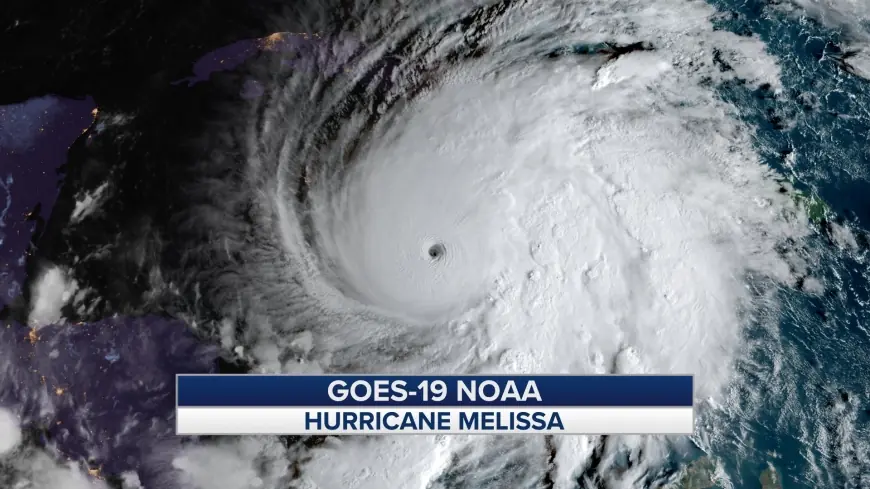
Hurricane Melissa is back in the headlines this week—not because it’s threatening land, but because a newly issued post-storm analysis upgraded the cyclone’s peak intensity and reshaped the Atlantic hurricane record book. The updated assessment released Wednesday, Feb. 25, 2026 (ET) places Hurricane Melissa’s maximum sustained winds at 190 mph, elevating it into a tie for the strongest Atlantic hurricane on record by wind speed and intensifying renewed discussion about storm measurement, risk planning, and what “worst case” looks like in the modern era.
Hurricane Melissa Upgrade: What Changed In The New Analysis
The updated classification comes from a comprehensive post-season review that re-examines satellite estimates, aircraft observations, surface data, and damage indicators to refine a storm’s best-track history. In Hurricane Melissa’s case, the review pushed the top wind estimate higher than the original operational intensity, upgrading the storm to 190 mph at peak.
That adjustment matters because it changes how Melissa is placed in historical context. Records for “strongest” storms are often defined by maximum sustained winds or minimum central pressure, and a single revision can move a hurricane into a different tier of rarity—especially at the upper end, where only a handful of systems ever reach Category 5 strength at or near record values.
Why Hurricane Melissa Matters Beyond The Record Books
Even as a historical revision, the Hurricane Melissa upgrade is not just trivia. It affects:
-
Engineering assumptions for wind loading and roof performance in hurricane-prone regions
-
Insurance catastrophe modeling that uses best-track data to estimate future loss potential
-
Emergency planning narratives that shape evacuation compliance and public trust
-
Scientific baselines for how often extreme intensities occur and how they are measured
The upgrade also reinforces a pattern emergency managers have been emphasizing for years: the difference between a “high-end” hurricane and an “extreme” hurricane is not incremental. At these wind speeds, structural failure rates climb rapidly, power outages become widespread, and recovery timelines can stretch for months.
Hurricane Melissa Timeline: From Caribbean Catastrophe To 2026 Re-Review
Hurricane Melissa’s most destructive phase unfolded during the 2025 Atlantic hurricane season, when it intensified into a Category 5 system in the Caribbean and went on to produce catastrophic impacts in the region before transitioning out over open water. The new 2026 review doesn’t change where the storm went, but it sharpens how powerful it was at its peak.
Key Hurricane Melissa Milestones (ET)
| Date (ET) | Milestone | Why It Matters |
|---|---|---|
| Late Oct. 2025 | Hurricane Melissa reaches Category 5 strength in the Caribbean | Start of the storm’s most dangerous phase |
| Oct. 28, 2025 | Hurricane Melissa makes catastrophic landfall in Jamaica | Defines the storm’s legacy for impacts |
| Oct. 29, 2025 | Hurricane Melissa strikes Cuba as an extremely dangerous hurricane | Expands the footprint of severe damage |
| Feb. 25, 2026 | Post-storm review upgrades Hurricane Melissa to 190 mph | Ties strongest Atlantic hurricane on record by wind speed |
What The 190 Mph Hurricane Melissa Finding Means For Preparedness
The biggest practical takeaway from the Hurricane Melissa revision is that planners and residents should treat “top-end” forecasts with more seriousness, not less. The most destructive storms often intensify rapidly or maintain extreme intensity longer than expected, compressing decision time for evacuations and final preparations.
When hurricanes reach the upper edge of Category 5, the usual household checklist—food, water, batteries—becomes secondary to a more blunt reality: location choice is the primary safety factor. If a high-end hurricane is forecast to impact your area, the safety difference between a well-built structure outside surge zones and a vulnerable structure in surge zones can be life-changing.
The Melissa upgrade also adds urgency to “whole system” preparation: resilient power, hardened communications, hospital continuity, and restoration logistics. Communities that plan for a 190 mph scenario—even if it’s rare—are often better positioned to handle a 140–160 mph event, which is far more common.
What Happens Next: How Hurricane Melissa Will Be Remembered
With Hurricane Melissa now tied to the strongest-wind category in Atlantic history, the storm’s legacy will likely settle into two tracks at once: a human-impact story across the Caribbean and a scientific benchmark used in future risk modeling.
Expect the updated record to ripple into how meteorologists, planners, and policymakers talk about “design storms,” especially for islands and coastal zones where evacuation options are limited and infrastructure is exposed. The recalibration of Hurricane Melissa’s peak wind also ensures the storm will be cited for years as a reference point—one that turns abstract numbers into a reminder of how quickly extreme hurricanes can rewrite assumptions.