














Larry Summers to Resign Harvard Posts Amid Epstein Files Review

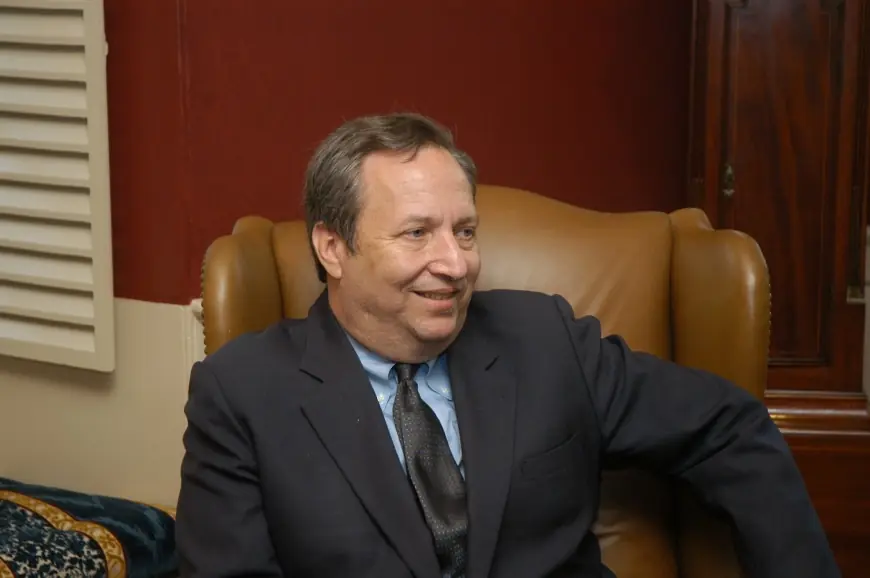
Former Harvard president Larry Summers will relinquish his University Professorship and resign from his academic and faculty appointments at Harvard at the end of the academic year, a university spokesperson said. The decision comes as the institution conducts a formal review of documents tied to Jeffrey Epstein that have generated renewed scrutiny.
Larry Summers: resignations, leave and roles relinquished
Summers will remain on leave until the end of the academic year and will not teach or take on new advisees, the university spokesperson confirmed. He also stepped down from his post as co-director of the Mossavar-Rahmani Center for Business and Government at the Harvard Kennedy School, a role he had held since 2011., Summers called the choice "difficult, " said he was "grateful to the thousands of students and colleagues" he has taught since arriving as a graduate student roughly 50 years ago, and added that, free of formal responsibility as President Emeritus and a retired professor, he looks forward to future research, analysis and commentary.
Harvard review, Justice Department records and a 2014 draft will
Harvard launched a formal review of documents related to Jeffrey Epstein as part of a broader re-investigation into the university's historical ties to the financier; the probe also covers other affiliates and donors implicated in the records. In late December, a tranche of Epstein-related documents released by the Justice Department showed Summers had been designated as a successor executor in a 2014 draft of Epstein's will, positioning him to oversee the estate if the primary executors were unable to serve. A spokesperson for Summers stated that he "had absolutely no knowledge" of being included in that early draft.
The emails that triggered the review were released by the U. S. House oversight committee and include correspondence stretching over years. The exchanges show Summers and Epstein trading messages about women, politics and Harvard-linked projects over at least seven years, with contact continuing as late as July 2019, the day before Epstein's final arrest.
Professional fallout: bans, departures and wider institutional reactions
As the emails came to light, Summers initially said he would continue teaching but then announced he would step back from public commitments and leave his teaching post as more correspondence was reviewed. In the weeks after the disclosures he stepped down or parted ways with several organizations, including, and OpenAI. The American Economic Association has imposed a lifetime ban on Summers. The news was first disclosed by the Harvard Crimson, the student newspaper.
The revelations have prompted similar moves elsewhere: Nobel laureate Richard Axel of Columbia University's Zuckerman Institute has also said he will resign from a teaching role, and Bill Gates apologized to staff at his foundation while insisting he did not participate in Epstein's crimes; none of the men has been charged with any criminal offense in connection with these disclosures.
Emails reveal tenor of relationship and historical Harvard ties to Epstein
Messages between Summers and Epstein portray a familiarity that extended into discussions of personal relationships; one exchange from 2018 shows Epstein calling himself Summers's "wingman, " and another 2019 message offers the financier giving advice about romantic gestures that had been rebuffed. Summers, who is 71, previously served as Harvard president from 2001 to 2006 and as U. S. Treasury secretary and White House national economic council director in other roles.
Epstein had donated more than $9 million to Harvard and affiliated programs between 1998 and 2008. He was appointed a visiting fellow in the university's psychology department, a post the university later judged inappropriate, concluding Epstein lacked the academic qualifications visiting fellows typically possess and that his proposed course of study was one he was unqualified to pursue. Harvard ceased accepting Epstein's donations after his 2008 guilty plea to child sex offenses.
Broader news items and related impacts
Alongside the Summers developments, other items appeared in today’s coverage: a headline noted coordination between Jeffrey Epstein and Gerald Chan on a proposed Tsinghua University campus in Boston; reporting also highlighted that Harvard faculty grades fell by nearly 7 percentage points in the fall, seven Harvard affiliates were named 2027 Schwarzman Scholars, public health faculty criticized the university's removal of FXB Center director Mary Bassett, and a discussion examined how double concentrations affect Harvard students.
National and international stories referenced in the same coverage include a new round of winter weather sweeping the northeastern United States with forecasters expecting 1 to 3 inches of snow; the National Weather Service warned of snow and black ice in New Jersey while New York hired thousands of emergency shovelers and used large amounts of salt to clear streets and sidewalks, and power was being restored for hundreds of thousands of customers in Delaware, Massachusetts and Rhode Island.
Rescue teams in Brazil continued searching for dozens of people after intense rains and floods killed at least 46 people, with workers retrieving bodies from debris and thick mud and authorities saying at least 3, 000 residents had been forced to evacuate. Mourners gathered for the funeral of an 11-year-old boy killed in the floods. Separately, a U. S. official speaking in Saint Kitts and Nevis defended actions tied to Venezuela's leadership, saying that "Venezuela is better off today than it was eight weeks ago, " and referencing a wider campaign of boat strikes that have, officials say, killed more than 150 people and an oil blockade that has severely affected Cuba's economy.