

























NASA Astronaut Mike Fincke Reveals He Triggered Historic Medical Emergency Evacuation From ISS

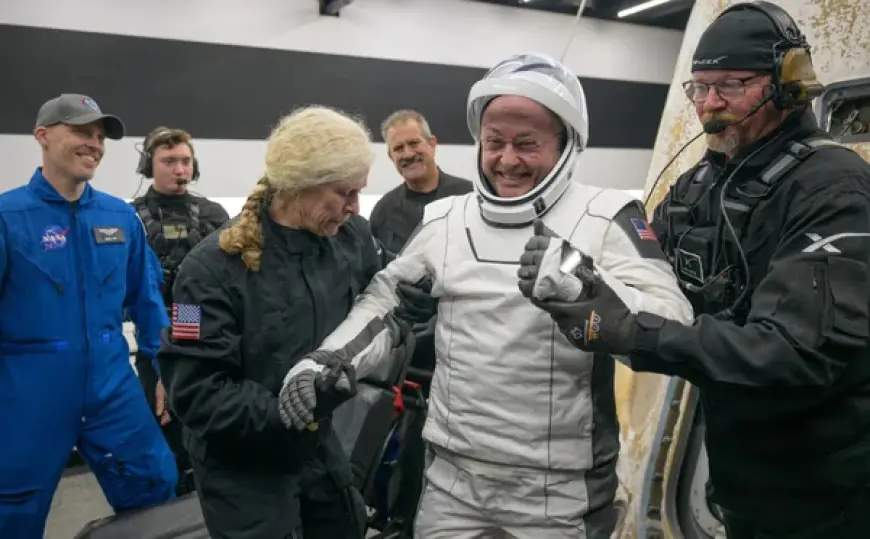
NASA astronaut Mike Fincke broke his silence on Wednesday, February 25, 2026 ET, publicly identifying himself as the crew member whose NASA astronaut medical emergency triggered the first-ever medical evacuation in the 65-year history of human spaceflight. The 58-year-old veteran astronaut confirmed the news through an official statement published by NASA, ending nearly seven weeks of speculation.
The NASA Astronaut Medical Emergency That Changed Space History
The NASA astronaut medical emergency occurred on January 7, 2026 ET, while Fincke and fellow NASA astronaut Zena Cardman were preparing for a scheduled spacewalk aboard the International Space Station. The incident required immediate attention from his crewmates and NASA flight surgeons on the ground, who quickly stabilized his condition using the station's onboard equipment.
The ISS is not equipped with the advanced medical imaging technology available in Earth-based hospitals. Once Fincke's condition stabilized, NASA officials determined the safest path forward was an early return to Earth rather than continuing the mission under those conditions.
NASA's First Medical Evacuation in History
The NASA astronaut medical emergency set off a rapid chain of institutional decisions. A planned spacewalk was immediately canceled. NASA then quickly coordinated a full mission departure, compressing weeks of preparation into days. The resulting evacuation made history — the first of its kind in 25 years of continuous crewed ISS operations and in 65 years of NASA human spaceflight overall.
Fincke, along with NASA astronaut Cardman, Japanese astronaut Kimiya Yui, and Russian cosmonaut Oleg Platonov, undocked from the ISS on January 14 ET. The SpaceX Dragon Endeavour capsule completed its nearly 11-hour journey, splashing down in the Pacific Ocean off the coast of San Diego on January 15 ET. All four crew members were immediately taken to Scripps Memorial Hospital La Jolla for evaluation.
Ultrasound Machine Played a Critical Role in the NASA Medical Emergency
Fincke previously revealed at a January 21 ET post-landing news conference that the ISS onboard ultrasound machine proved essential during the NASA astronaut medical emergency. Astronauts routinely use the device to monitor how their bodies change during long-duration missions in microgravity, which gave the crew familiarity with the equipment when it mattered most.
The exact diagnosis behind the NASA astronaut medical emergency has not been disclosed. NASA has a longstanding policy protecting personal medical information for its crew members, and Fincke chose to reveal only what he felt necessary to inform the public while maintaining his privacy regarding his specific condition.
Mike Fincke's Recovery and Return to Johnson Space Center
Fincke confirmed in his Wednesday statement that he is doing well and continuing standard post-flight reconditioning at NASA's Johnson Space Center in Houston, Texas. He praised his Crew-11 teammates, NASA flight surgeons, mission controllers, and the medical professionals who coordinated his care across multiple time zones and disciplines during the NASA astronaut medical emergency response.
Fincke is a retired U.S. Air Force colonel who became a NASA astronaut in 1996 and has now logged 549 days in space across four missions. He described spaceflight as an incredible privilege and acknowledged that the experience reminded him — and the world — of how profoundly human even the most elite astronauts remain.
ISS Operations After the NASA Astronaut Medical Emergency
Following the Crew-11 evacuation, the ISS operated with a skeleton crew of just three — one American and two Russian cosmonauts — for approximately one month. NASA suspended spacewalks and scaled back science research during that period. The situation was resolved on February 13 ET when SpaceX Crew-12 launched from Cape Canaveral and docked with the station on Valentine's Day, restoring the ISS to its standard staffing level.
The NASA astronaut medical emergency has prompted renewed discussion among space medicine experts about the limitations of in-space healthcare and the urgent need for more advanced diagnostic capability on long-duration missions, particularly as NASA's Artemis II moon mission approaches.