























Mexico Update: Security Unrest, New Labor Reform, and a High-Profile Political Spat

Mexico is moving through a fast-changing 48 hours marked by intensified security operations in the west, a major labor reform milestone in Congress, and an escalating dispute involving President Claudia Sheinbaum and tech billionaire Elon Musk. Here’s what’s driving headlines right now, with key moments timestamped in Eastern Time (ET).
| Time (ET) | What’s Happening in Mexico | Why It Matters |
|---|---|---|
| Feb. 22–23, 2026 | Retaliatory violence and roadblocks follow a high-impact cartel operation in western Mexico | Disruptions hit highways, local transit, and traveler movement in key tourism and business corridors |
| Tuesday, Feb. 24, 2026 | Mexico signals possible legal action after Musk posts about President Sheinbaum | Adds pressure to an already tense security and misinformation climate |
| Wednesday, Feb. 25, 2026 | Mexico’s Congress advances a 40-hour workweek plan with a gradual phase-in | One of the biggest labor-policy shifts in decades, with major implications for employers and workers |
| Wednesday, Feb. 25, 2026 | Several official travel-related security restrictions tied to the Feb. 22 events are lifted | Indicates partial normalization, while local risks remain uneven by region |
Mexico Security Operations and the Unrest Concentrated in the West
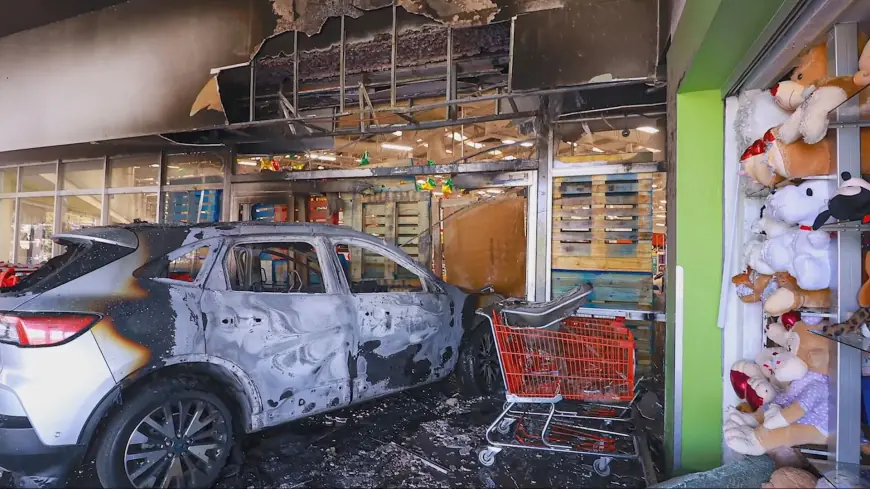
The biggest immediate story in Mexico has been the aftermath of a major security operation targeting organized crime leadership. In several areas—especially parts of Jalisco and neighboring corridors—retaliatory tactics have included coordinated roadblocks, vehicle burnings, and disruptions to daily transport.
The impact has been practical and visible: closed or delayed routes, short-term interruptions to local services, and heightened caution for residents and visitors. While conditions can normalize quickly in some zones, the on-the-ground picture has varied by city and by highway segment, with localized flare-ups creating stop-and-go disruptions rather than a single, uniform national shutdown.
Mexico Travel Conditions: What’s Normalizing and What’s Still Choppy
Travel conditions in Mexico are trending back toward normal in many places, but the country’s scale matters: pockets of disruption can sit alongside areas operating as usual.
Some official security-related restrictions connected to the Feb. 22 events have been lifted as of Wednesday, Feb. 25, 2026 (ET), signaling that certain corridors and urban areas are stabilizing. At the same time, authorities and security advisories have continued to emphasize local guidance where roadblocks or opportunistic crime can reappear quickly.
For travelers, the most relevant practical takeaways are route flexibility and timing. Daytime movement on major routes tends to be less risky than late-night travel in affected regions, and last-minute changes to intercity transport have been more common where security operations remain active.
Mexico Passes a Major Step Toward a 40-Hour Workweek
Mexico’s Congress has advanced a sweeping labor reform that sets the country on a path to reduce the standard workweek from 48 hours to 40 hours through a gradual phase-in ending around 2030.
This reform is a political win for the Sheinbaum administration and a big deal for the labor market. Supporters frame it as a quality-of-life shift that can modernize labor standards and improve work-life balance. Critics focus on higher labor costs, scheduling complexity, and the operational burden on small and mid-sized employers.
The fine print matters: phased implementation gives employers time to adjust staffing models, shift structures, and productivity planning—rather than forcing an immediate nationwide cut.
Mexico and Elon Musk: Legal Action Threat Raises Political Temperature
On Tuesday, Feb. 24, 2026 (ET), Mexico signaled it is reviewing potential legal steps after Elon Musk publicly linked President Claudia Sheinbaum to drug cartels. The comments prompted a sharp response from Mexico’s leadership and quickly became a broader debate about misinformation, reputational harm, and the risks of inflammatory claims during periods of heightened security tension.
This episode is landing at a sensitive moment. Mexico is simultaneously trying to project control and calm after unrest in parts of the west, while also pushing a worker-focused economic agenda. High-visibility social media claims can complicate both, especially when they circulate rapidly across borders.
Mexico’s Next 72 Hours: What to Watch
Three threads will shape what happens next in Mexico:
-
Security follow-through: Whether road disruptions fade fully—or reappear in clusters—will depend on enforcement pressure and how criminal groups attempt to show strength.
-
Workweek implementation details: Businesses will watch for clarity on timelines, overtime rules, sector-specific adjustments, and enforcement expectations.
-
Information environment: The Musk-Sheinbaum dispute amplifies the broader issue of coordinated misinformation and panic dynamics, particularly during security operations.
Mexico’s near-term direction looks like a mix of stabilization and policy momentum—paired with elevated sensitivity to security shocks and viral narratives that can move faster than official responses.