





















Samsung Galaxy S26 vs. iPhone 17: samsung's latest phones compared

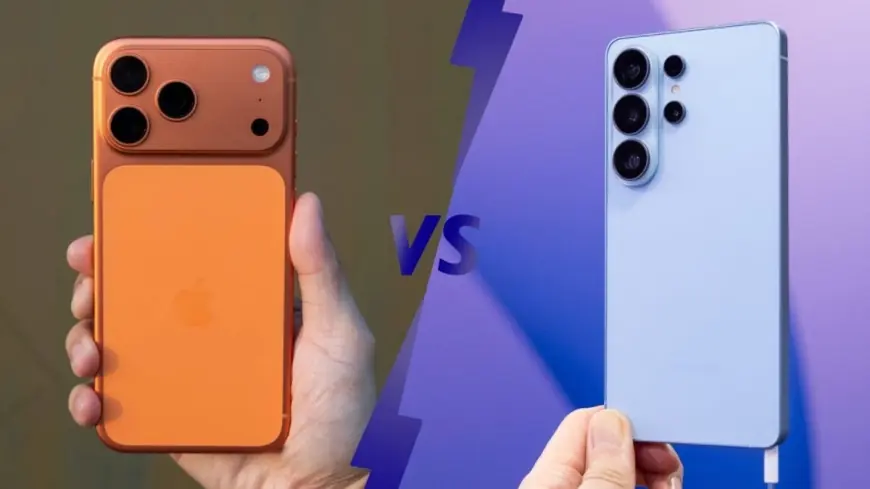
samsung’s new Galaxy S26 family and Apple’s iPhone 17 line offer minor visual changes but a few clear points of separation: price shifts, a unique hardware privacy feature on the Ultra, and a handful of spec differences buyers should weigh. This overview lays out the sequence of announcements, prices, specs and reactions tied to the new devices.
Pricing and availability
The baseline non‑Ultra Galaxy S26 phones cost $100 more than the previous generation: the Galaxy S26 starts at $900, the larger S26+ is $1, 100, and the flagship S26 Ultra is $1, 300, the same price as the Galaxy S25 Ultra. For Apple, the iPhone 17 Pro Max starts at $1, 200 for the same 256GB storage space, while a regular iPhone 17 starts at $800. The Galaxy S26, S26+, and S26 Ultra go up for preorder Feb. 25 and start shipping Mar. 11. The coverage that published these details also noted that all products featured were independently selected by editors and that purchases through links on the site may earn an affiliate commission.
Design, weight and materials
At a glance the phones resemble last year’s models. Instead of titanium on the Galaxy Ultra and the iPhone Pro from earlier years, the new phones use aluminum frames, a change that keeps them lighter with less chance for overheating but comes at the cost of durability. The Galaxy S26 is lighter than the iPhone 17 at 167g (0. 36 pounds) compared with Apple’s 177g (0. 39 pounds). One visible software and button distinction: Galaxy phones lack a programmable Action button, and the devices carry different logos on their backs.
Colors and finish options
The new Galaxy devices arrive in a classic cobalt violet purplish color plus sky blue, black, and white; silver or pink gold require ordering online. Apple’s regular iPhone 17 comes in black, white, “Mist Blue, ” “Sage, ” and “Lavender. ” The most popular color across the iPhone 17 line was the iPhone 17 Pro in “Cosmic Orange, ” a tone described as Apple’s pumpkin color; there is no Galaxy S26 model that seems as bold as that pumpkin tone.
Display and performance specs
Both the iPhone 17 and the Galaxy S26 have 6. 3‑inch displays, though they use different resolutions: the Galaxy S26 is 2, 340 x 1, 080 and the iPhone 17 is 2, 622 x 1, 206. The iPhone 17 lists a slightly higher PPI at 460 versus 411 on the Galaxy S26. Both support refresh rates up to 120Hz. The bigger differences show up at the top end: the Galaxy S26 Ultra maintains S Pen support that slots into the phone’s base and offers a 3, 120 x 1, 440 resolution screen with a stated 500 PPI. The iPhone 17 Pro Max, with a similar 6. 9‑inch display, lists 2, 868 x 1, 320 resolution and 460 PPI.
Despite earlier rumors about an in‑house Exynos chip for the lower‑end phones, all three Galaxy phones are powered by a Snapdragon 8 Elite Gen 5 for Galaxy chip. The coverage noted that phones are being squeezed by ballooning memory prices and that Samsung refused to downgrade any memory spec (which would also hamper the phone’s AI processing capabilities).
Samsung Ultra's Privacy Display
The defining hardware innovation at the recent Galaxy Unpacked event in San Francisco was the S26 Ultra’s Privacy Display, a pixel‑level privacy feature that prevents anyone beside you from seeing what’s on your screen. The Privacy Display blacks out parts of the screen to prevent onlookers from reading your texts from any angle other than directly in front of the phone. Privacy Display works in both portrait and landscape, with the pixels dispersing light in a way that will darken parts of the screen if you’re not looking at it straight on.
The feature is easy to turn on and off and can be applied selectively: you can choose whether to apply it to specific apps, to notifications, or for when you’re inputting PINs or passwords. Access from Quick Settings makes it easy to toggle on the go, for instance when you suspect someone on the bus is reading over your shoulder.
Reactions and industry view
Commentary around the announcement framed the Privacy Display as the one genuinely compelling reason to consider the Ultra. Ben Wood, CMO and chief analyst at CCS Insight, said: "Unlike a secondary‑market privacy screen protector affixed to the phone's display, it is not an 'all or nothing' solution. " He also said, "At face value, the Galaxy S26 Series devices differ little from [Samsung's] predecessors launched just over a year ago, " and added that "Without this capability, the Galaxy S26 Ultra would have been an extremely tough sell. " Wood further predicted, "I also expect this to become a benchmark feature over the next few years on all premium smartphones and other products, such as laptops. " The analysis noted that many people have reasons not to buy a new phone in 2026—existing phones last longer, devices are more similar year‑to‑year, and not everyone is swayed by another AI sales pitch—but that Privacy Display gives the Ultra a genuine edge and goes some way toward justifying the $1, 300 price tag. One summary line on upgrade timing observed: that is something to look forward to for an upgrade in 2027 or beyond, but for now the feature is an Ultra exclusive and "you’ll need to be feeling flush if you plan to be a Privacy Display early adopter. "
Buyers weighing the Galaxy S26 family against the iPhone 17 line will now balance price and storage choices, the S26 Ultra’s exclusive Privacy Display and S Pen support, material and color preferences, and those display and PPI differences when deciding whether to preorder or wait.