

























Eta enforcement leaves dual nationals scrambling for British passports and costly certificates

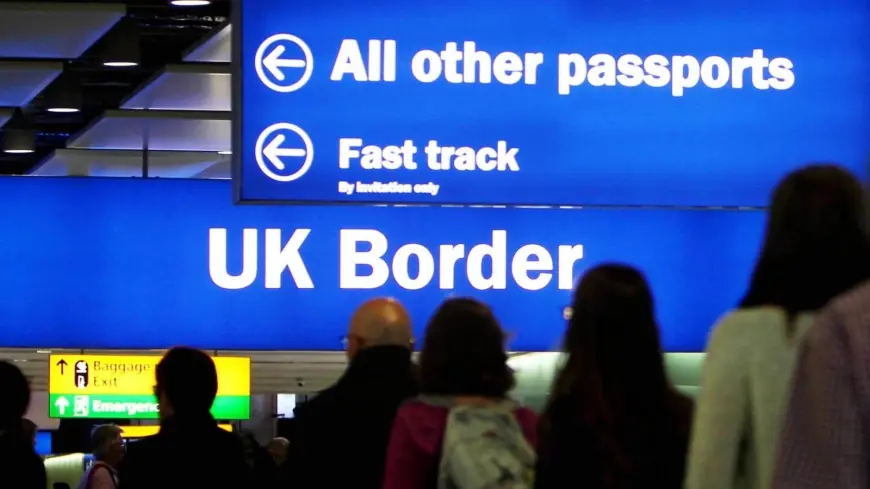
The UK has begun strict checks tied to its electronic travel authorisation, and the rollout is already affecting British dual nationals travelling on non‑British documents. The new eta regime, enforced from 25 February, requires carriers to verify travellers’ right to enter before departure, a change that is causing denials at check‑in and a rush for passports and certificates.
Eta enforcement and Home Office carrier checks
From 25 February international carriers must check that every passenger has valid permission or status to travel to the UK in the same way they currently check visa nationals. The Home Office has instructed airlines, ferries and trains to confirm appropriate documentation before allowing boarding; carriers may, at their discretion, accept some expired British passports as alternative documentation. The policy is part of a move towards a fully digital border system and the government intends the change to streamline the immigration process, speed up arrival checks and make the border more secure.
Scheme rollout, timelines and exemptions
The electronic travel authorisation scheme was launched in October 2023 and was not strictly enforced initially to give visitors time to adjust. In November the government set 25 February as the date when ETAs would become mandatory for most visa‑free travellers. Under the new rules, non‑visa nationals from 85 countries must have an ETA before travelling; an approved ETA allows multiple journeys, permits stays of up to six months and is valid for two years or until the traveller’s passport expires. British and Irish citizens remain exempt from applying for an ETA, and a small number of other exceptions exist, including those with settled status and children travelling from France on a school trip. Travellers who usually need a visa will still require that visa and will not need to apply for an ETA in addition. Passengers transiting through UK airports who do not pass through border security are not required to hold an ETA.
Dual nationals and Certificates of Entitlement
Dual nationals who do not hold a British passport must now present either a valid British passport or a Certificate of Entitlement to board. The Certificate of Entitlement links a person’s right to reside in the UK to a foreign passport; previously some dual nationals could travel on a foreign passport alone while risking delays at the border while Border Force confirmed their citizenship. Under the new enforcement, carriers cannot verify British citizenship without one of those documents, which may lead to delays or refused boarding.
Costs: ETA, passports and certificates
There are multiple fees creating a financial squeeze for affected travellers. Applying for an ETA currently costs £16, with a planned future increase to £20. A British passport application is priced at £94. 50, while a Certificate of Entitlement carries a much higher fee of £589. That price gap has pushed many dual nationals toward passport applications rather than paying for the certificate.
Individual impact: Florence Garland's cancelled trip
Dual British‑French citizen Florence Garland says she had to cancel a trip to France because of the changes. Ms Garland became a British citizen in November, but a typo on her certificate forced her to return the document for correction. The corrected certificate took two‑and‑a‑half months to be re‑issued, leaving her no time to apply for a British passport and meaning she could not travel back to the UK on her French passport. She described feeling let down and said she received no communication when she applied for citizenship or during the ceremony.
Public response and how to report denied boarding
Journalists and organisations are seeking accounts from British dual nationals who were prevented from boarding flights, ferries or trains because they lacked a British passport or Certificate of Entitlement proving their right to enter the UK. Submissions are requested through an online form that asks for as much detail as possible; the form accepts files up to 5. 7 MB. Contact details are helpful for follow‑up and will only be seen by the receiving organisation. Contributors are asked to obtain consent before supplying other people’s names, and technical help, terms of service and privacy policy information are available alongside the form.
What makes this notable is the convergence of administrative deadlines, fee differentials and tight re‑issue times: the decision to make ETAs mandatory from 25 February has directly translated into carrier refusal risk at check‑in, which in turn has forced some dual nationals to cancel travel or rely on slower, more costly documentation routes.