

























Who Will Be the Designated Survivor for President Trump's State of the Union?

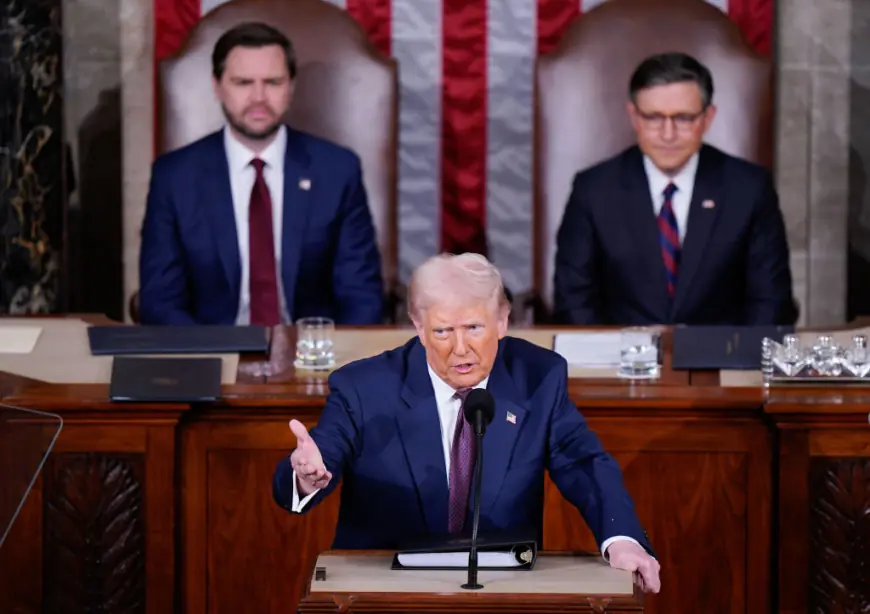
The question of who is kept away from the chamber matters because the State of the Union gathers the nation’s top leaders in a single room — and the practice was born from fears of an attack that could decapitate government. This year one Cabinet member will be absent as the designated survivor; the designated survivor for the President has not yet been revealed. Here’s why the role exists and which names have surfaced.
Why the practice matters now and where it began
The designated survivor is a continuity measure designed to preserve the presidential line of succession if a catastrophic incident incapacitated the President and other leaders in the Administration and Congress. The practice is not required by the U. S. Constitution and the Constitution does not spell out a selection process. It is believed to have started during the Cold War, when concern about a nuclear strike prompted new safeguards.
It's easy to overlook, but the routine combines ad hoc selections with formal legal backstops: the Presidential Succession Act gives a legal pathway for a designated survivor, provided that person meets constitutional eligibility.
Who can be named and how the selection works
The designated survivor is typically a government official in the presidential line of succession — most often a Cabinet member. To be eligible, the person must be a natural-born American citizen and at least 35 years old. There is no single official protocol for choosing the designated survivor; it is believed the President and/or the Chief of Staff typically make the pick.
In recent years congressional leaders have also started selecting lawmakers to serve as designated survivors, a practice some trace to the aftermath of 9/11. Those congressional designees are chosen so the legislative branch could continue functioning after a catastrophic incident; they are not tapped to succeed the President.
Event details and recent examples
- Veterans Affairs Secretary Doug Collins has served as a designated survivor for a State of the Union address and was also tasked with the role last year; when he served during a past joint session he did not attend and was escorted to a secure, undisclosed location for the duration.
- For the current State of the Union, one member of the Cabinet will not be in attendance because they will have been tapped to serve as the designated survivor, but the designated survivor for the President has not yet been revealed.
- California Representative Mike Thompson announced that he was chosen by House Minority Leader Hakeem Jeffries to serve as the Democrats’ designated survivor for the State of the Union on Tuesday; Thompson said he would watch the address from a secure, undisclosed location. Democrats have tapped Thompson each year since 2020, Thompson’s communications director, Lauren Ott, said.
- President Donald Trump delivered the longest-ever State of the Union on Feb. 24, 2026.
The continuity-of-government role and legal limits
Under the Presidential Succession Act, if a devastating event killed or incapacitated those ahead in the line of succession, the designated survivor — if constitutionally eligible — could be sworn in as President. While no designated survivor has ever assumed the presidency, the role remains part of broader continuity-of-government planning intended to keep constitutional leadership and core operations running after an attack or disaster.
Here’s the part that matters for practical planning: the identity of the designated survivor for the President is typically made public on the day of the speech after the individual has been safely relocated to a secure, undisclosed location.
Practical notes, timeline signals and what could confirm the next turn
- Cold War origins: the practice is believed to have begun during Cold War-era concerns over nuclear strike.
- Post-9/11 adaptation: legislative-designated survivors became more common after the 2001 attacks to protect congressional continuity.
- Recent pattern: some Cabinet members — including Veterans Affairs Secretary Doug Collins — have been assigned the role in consecutive years.
The real question now is whether the President’s designated survivor will be publicly named on the day of the address and who will be charged with the post if revealed. Expect the announcement only after the individual has been relocated to a secure, undisclosed location; that is the typical sequence.
What’s easy to miss is the mixture of informal selection and formal legal backup: the practice is driven by practical security planning rather than specific constitutional instruction.