




















Mexico right now: Security fallout in the west, travel disruptions easing, and a major workweek vote

Mexico right now is a country in two gears: a fast-moving security response in parts of western states after a high-profile cartel leader killing, and a high-impact domestic policy story in Mexico City as lawmakers push through a landmark reduction in the national workweek. The result is a live mix of localized disruptions, tightened security posture, and a parallel economic conversation about what “normal life” should look like for millions of workers.
Mexico right now: Retaliation risk and heavy security after a cartel boss killing
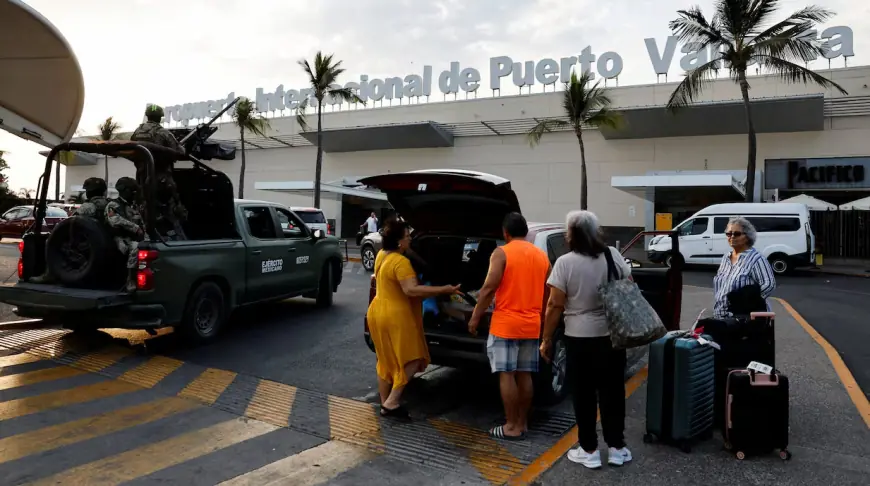
Mexico right now remains tense in pockets of Jalisco and neighboring areas following the killing of Nemesio “El Mencho” Oseguera, widely identified as leader of the Jalisco New Generation Cartel, during a military operation on Sunday, Feb. 22, 2026 (ET). In the immediate aftermath, multiple states saw retaliatory actions that included road blockades and vehicle arson, with security forces deployed to restore mobility and deter further attacks.
Even where roads have reopened, the situation is still fluid: the biggest short-term concern is “flash disruption”—brief, coordinated incidents that can snarl highways, close ramps, or trigger short sheltering advisories without warning.
Mexico right now: Travel and business operations are resuming, but not evenly
Mexico right now is not experiencing uniform shutdowns. Some airports and commercial hubs report operations near normal levels, while ground travel can still be unpredictable in affected corridors due to security activity and the lingering risk of copycat disruptions. The practical impact for residents and visitors is less about nationwide paralysis and more about route-by-route volatility.
Manufacturers and large employers have also adjusted operations in and around Guadalajara and other areas tied to the unrest, including temporary suspensions, travel restrictions for staff, or remote-work shifts designed to reduce exposure to road risk.
Mexico right now: Government messaging centers on control and upcoming global events
Mexico right now is also being framed through international optics. Federal messaging has emphasized that the security surge is being contained and that major host cities for upcoming global events will remain safe for visitors, even as authorities continue enforcement operations and deployments.
At the same time, officials face a trust challenge: when violence spikes quickly, online misinformation often accelerates public anxiety faster than official updates can calm it. That gap can shape behavior—school attendance, commuting patterns, and business hours—especially in the first 48–72 hours after a major security shock.
Mexico right now: A 40-hour workweek bill advances and could reshape daily life
Mexico right now is also focused on Congress after lawmakers approved legislation to gradually reduce the standard workweek from 48 hours to 40 hours by 2030. The plan’s phased timeline is designed to give employers time to adapt while delivering a major quality-of-life change to workers over several years.
The debate isn’t only about fewer hours. It’s also about how schedules, overtime rules, and enforcement evolve—details that will determine whether the shift feels like a true reduction in work time across sectors or a change that gets partially offset by overtime practices and staffing constraints.
Mexico right now: What to watch over the next 48 hours
Mexico right now will likely be defined by three near-term signals: whether security incidents taper or spread, how quickly transport corridors stabilize, and how the workweek reform progresses through remaining approval steps.
| What people are watching in Mexico right now | Why it matters in real life | What a “stabilizing” signal looks like |
|---|---|---|
| Road blockades / vehicle fires | Can instantly disrupt commuting and freight | Fewer incidents and faster clearances |
| Airport and highway continuity | Determines travel reliability and tourism flow | Near-normal schedules and fewer advisories |
| Troop and guard deployments | Indicates seriousness of containment efforts | Targeted posture replacing broad lockdown vibes |
| Workweek reform path | Impacts employers, wages, scheduling, compliance | Clear implementation calendar and sector guidance |
Mexico right now is a mix of localized security strain and big, structural policy change. For most of the country, daily life continues; for specific western corridors, conditions can change quickly, and the next two days will show whether disruption remains contained or becomes more widespread.