










State Of The Union: A Consequence-First Look at a 1 hour 48 minute Vintage Trump Performance

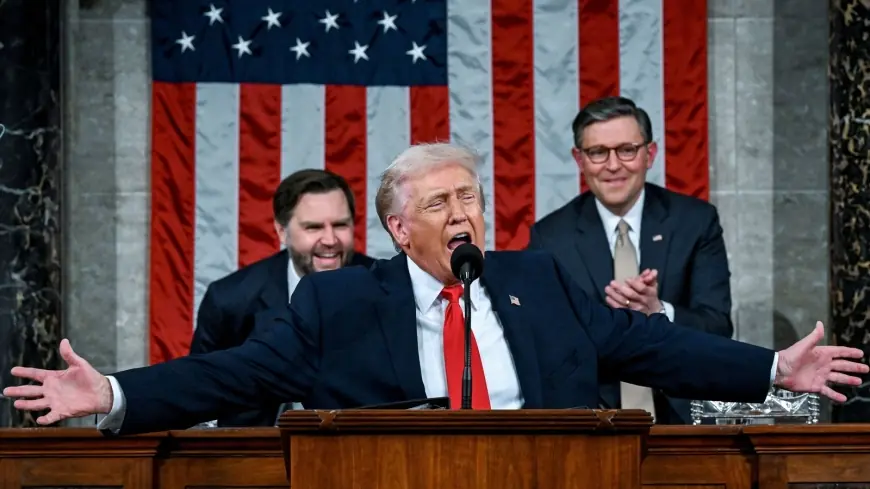
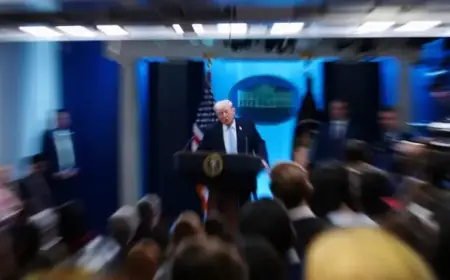
The State Of The Union mattered less as a breaking-news moment and more as a set of immediate consequences: tariff moves that were enacted under an unusual authority, a hardened posture on Iran that left open options, and political math that will play into midterm campaigns. The speech ran 1 hour and 48 minutes, recycling signature lines while shifting the battlefield to policy mechanics and Republican retention in November.
Immediate policy and political consequences
Here’s the part that matters for what changes next: the address sought to convert campaign rhetoric into executable steps and political momentum, but many of those steps already carry legal friction or uncertain public buy-in. The president pushed economic claims—pointing to Wall Street strength and strong job numbers—while acknowledging mixed growth over 2025. He framed affordability as a political liability he blames on his opponents, even as data in the speech noted food prices remain higher than the prior year by 2. 9 percent.
What’s easy to miss is that the policy measures named are not purely theatrical: a new tariff path and an explicit consumer-facing push on drug pricing ( a named website) were positioned as tangible outcomes but face legal and political tests that will determine whether they alter voters’ day-to-day costs before November.
State Of The Union: what was said and how it landed
The evening resembled a polished campaign production at times—tributes, awards and staged reunions were part of the program. The president invoked themes of a golden age, America-first notions and expanded domestic energy production, including the rallying phrase "drill baby drill, " while claiming credit for border immigration outcomes. For many viewers, the speech read as familiar material rather than a set of new policy announcements.
Politically, the address was presented as the first such speech of his second term and as the longest in modern history at 1 hour and 48 minutes, exceeding a prior record of 1 hour and 28 minutes set in 2000 by a former president. It also included a claim framed by some as a 'third term' argument, part of a broader effort to consolidate support as popularity has dropped in the polls and Republican defections loom ahead of the midterm elections in November.
Tariffs, the courtroom fallout and the Section 122 play
The president pushed a new tariff maneuver after the highest court reversed large portions of reciprocal tariffs announced previously. He announced a 15% tariff implemented by presidential proclamation under a law identified as Section 122, said to allow tariffs for up to 150 days before Congress must intervene. He characterized congressional action as unnecessary at the proclamation stage and suggested the tariffs would replace income tax in his framework.
- Tariff rate named: 15%
- Authority invoked: Section 122
- Duration before congressional role: 150 days
At the same time, the speech followed a major judicial setback: the high court had struck down large portions of the reciprocal tariffs, a ruling described as the most substantial judicial reversal of those policies. That legal reversal is now the immediate reason for the executive pivot to Section 122.
Iran posture and the security signal
Foreign policy was front and center. The president delivered a hardline stance on Iran and nuclear issues and said Iran is developing missiles that could reach the United States. Coverage noted tension over possible military options: the president was portrayed as facing constrained choices on Iran and as having offered a holding position rather than a decisive new public course. Observers in the chamber were said to be listening closely for clues about potential escalation.
The chamber, the gestures and the optics
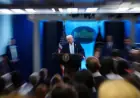
The address mixed showmanship with pointed confrontations. The program included a reunion between Venezuelan politician Enrique Marquez and his niece and a tribute to the late Charlie Kirk; the president also condemned political violence. Opposing-party protest was present: dozens of Democrats, including some in leadership, did not attend and instead staged rallies in Washington, leaving visible empty rows on one side of the chamber and on-camera protests from some who remained.
Inside the chamber there were notable moments involving the Supreme Court. The context about attendance is unclear in the provided context: one line said the full court had been in attendance at the state address, while another stated that only four of nine justices were present on Tuesday. The four named justices who were listed as present are Chief Justice John Roberts, Amy Coney Barrett, Elena Kagan and Brett Kavanaugh. The president shook hands with several lawmakers and with Chief Justice Roberts, a handshake described alongside a serious look that was read as a sign of lingering tension following earlier presidential criticism of the justices. Camera coverage reportedly lingered on Amy Coney Barrett, who the president nominated during his first term; she showed no visible emotion when the president criticized the ruling against the tariffs.
Quick timeline and next signals
- Speech length noted: 1 hour and 48 minutes (longest in recent history; prior record cited at 1 hour and 28 minutes in 2000).
- Address framed as the first of his second term.
- High court reversal of prior tariffs prompted a Section 122 proclamation for a 15% tariff lasting up to 150 days before congressional involvement.
The real question now is whether the executive tariff maneuver and the president’s framing on the economy will change voter sentiment ahead of November and how the legal and congressional process will respond to the Section 122 route.
Writer’s aside: It’s easy to overlook, but the speech traded immediate policy clarity for theatrical confidence—that will matter if legal or congressional checks interrupt the proclaimed steps.