
















"John Barron" Calls Into C-SPAN to Blast Supreme Court Tariff Ruling — Internet Goes Wild

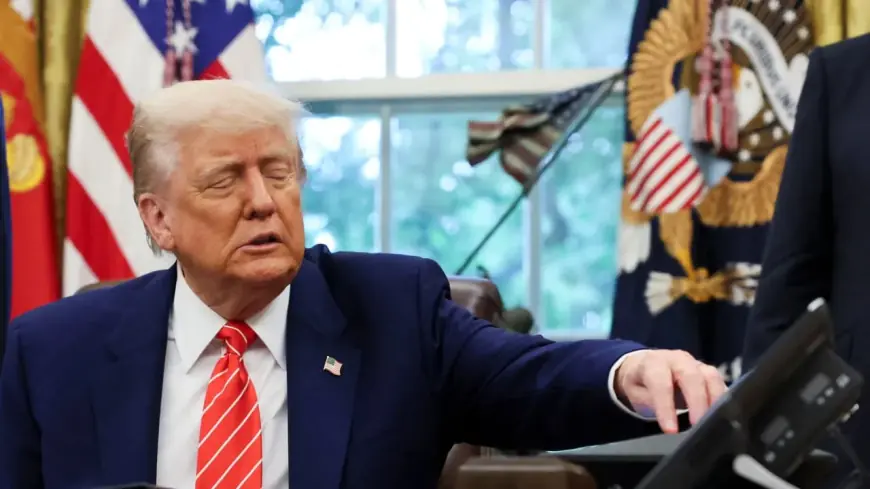
A 32-second phone call to C-SPAN's Washington Journal has taken over social media, after a caller identifying himself as "John Barron" — the famous alias Donald Trump used for decades to plant stories with journalists — phoned in Friday morning sounding unmistakably like the president and unleashed a furious rant against the Supreme Court's decision to strike down his sweeping tariffs.
The C-SPAN Call That Stopped the Internet
At 10:51 a.m. ET on Friday, February 20, 2026, C-SPAN host Greta Brawner introduced the next caller on Washington Journal. "John in Virginia, Republican, let's hear from you," she said. What followed was brief, bizarre, and instantly viral. The caller announced himself as "John Barron" and immediately attacked the Supreme Court. Within seconds he called House Minority Leader Hakeem Jeffries "a dope" and declared that Chuck Schumer "can't cook a cheeseburger." Brawner cut the call off after 32 seconds. The clip exploded online over the weekend.
Who Is John Barron — and Why Does It Sound Like Trump?
John Barron is not a new name to anyone who has followed Donald Trump's career. Throughout the 1980s and into the 1990s, Trump regularly called journalists while pretending to be his own spokesperson, using the name John Barron to feed them information and commentary about himself. The Washington Post documented the alias extensively. Trump admitted under oath in a 1990 labor dispute lawsuit that he had used the name "on occasion." He later recycled it for his youngest son, Barron Trump, born in 2006. The Friday caller's voice bore a striking resemblance to the president's — the cadence, the insults, the phrasing — setting off immediate speculation that Trump had picked up the phone and called in himself.
C-SPAN Addresses the Speculation Directly
By Sunday, February 22, 2026, the viral clip had become impossible to ignore, and C-SPAN issued a formal statement putting the rumors to rest. The network confirmed the call originated from a central Virginia phone number and that at 10:51 a.m. ET, Trump was in a widely covered, in-person meeting at the White House with state governors. C-SPAN added pointedly: "Tune into C-SPAN for the actual president at the State of the Union Address on Tuesday night." The network's statement was unambiguous — it was not the president.
Trump's Own Reaction Mirrored the Caller's Rage
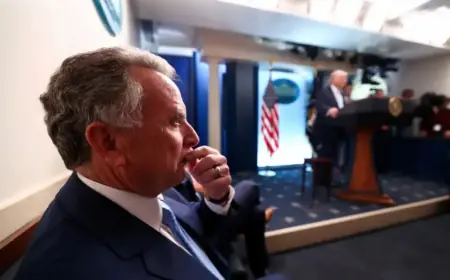
What made the John Barron C-SPAN moment all the more surreal was what Trump said hours later. At a White House press briefing on Friday afternoon, Trump called the Supreme Court ruling "deeply disappointing" and said he was "ashamed of certain members of the court, absolutely ashamed, for not having the courage to do what's right for our country." The Supreme Court ruled 6-3 against Trump's tariffs, with conservative justices Chief Justice John Roberts, Neil Gorsuch, and Amy Coney Barrett joining the majority against the president. In response, Trump announced he would invoke Section 122 of the Trade Act of 1974 to implement a 15% global tariff, bypassing Congress entirely.
The History Behind the John Barron Alias
Trump biographer Michael D'Antonio has noted that Trump borrowed the fake spokesperson tactic from his own father, Fred Trump, who reportedly used the alias "Mr. Green" in similar fashion. The John Barron persona was Trump's go-to tool when he wanted to shape press coverage while maintaining plausible deniability. It worked for years before journalists and legal proceedings began exposing the practice. The reappearance of the name — whoever was behind Friday's C-SPAN call — brought a decades-old chapter of Trump's biography roaring back into the national conversation at a moment when he is at war with the Supreme Court over trade policy.
What Comes Next
Whether Friday's caller was a prankster, an impersonator, or someone else entirely, the John Barron moment on C-SPAN crystallized the tension between the Trump administration and the judiciary at a critical juncture. With a State of the Union address looming and a new 15% global tariff taking effect, the John Barron C-SPAN call may go down as one of the stranger footnotes in a presidency already defined by the unusual.