


















Us Mens Hockey Controversy Raises Unclear Questions About Invitations, Team Reactions and Washington Appearances

The us mens hockey controversy matters now because it has shifted from a celebratory Olympic moment into a knot of unanswered logistical and reputational questions for players, national programs and leagues. Mothers, brothers and athletes have weighed in, teams have declined invitations, and organizers are juggling travel and scheduling — yet key details about who will go to Washington and what the fallout means remain unsettled.
Us Mens Hockey Controversy: Outstanding unknowns for attendance, scheduling and public reaction
At the center of this controversy are several unresolved points: whether a White House visit is actually scheduled, which players might accept any invitation, how national programs navigate conflicting commitments, and how public perception will play into individual decisions. The immediate practical impacts fall first on the athletes — both men and women — who are balancing celebratory obligations with academic and professional calendars.
What happened on the call and why people pushed back
Video that surfaced after the men’s gold-medal win over Canada shows President Donald Trump calling the men's locker room and joking that he would have to invite the women's team to the State of the Union or risk being impeached. Some players in the room laughed and engaged in back-and-forth conversation on the call. The cadence of the president’s remark and the locker-room reaction prompted criticism from observers who interpreted the line as begrudging, and from others who found the men's response disrespectful to the women’s team, which had a dominant run to gold.
Family and player responses, and a focus on unity
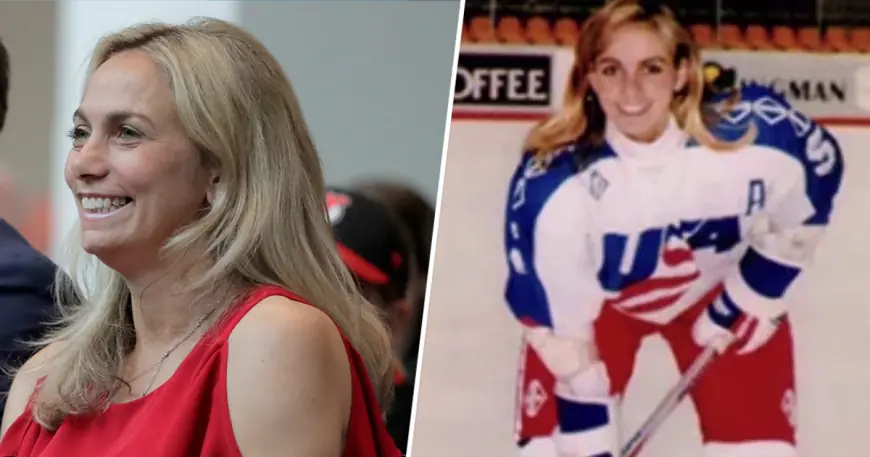
Ellen Hughes — mother of Jack and Quinn Hughes and a player development consultant for the U. S. women’s program — spoke on Feb. 24 about what she described as the teams’ ability to bring unity. She emphasized that both squads attracted cheers from people who don’t normally follow hockey, and stressed that players care about the country and about one another. She described close day-to-day interaction between the teams — sharing dorm rooms, common areas and cheering across squads — and said it still feels surreal after the Milan Cortina Winter Olympics where both the men’s and women’s teams won gold.
Jack Hughes scored the game-winning goal against Canada in the men’s gold-medal match, a victory that ended a long drought for the United States in men’s Olympic hockey dating back to 1980. The women’s team also beat Canada, finishing an unbeaten run that included an overtime win; their Olympic run was described as a 7-0 tournament performance.
Players have publicly pushed back on the backlash. Jack and Quinn Hughes appeared in a Feb. 24 video interview and in a separate Tuesday morning interview, where Quinn said the brothers were excited about a State of the Union invitation and noted a lot of social media attention surrounding both teams. Jack told reporters outside a Miami nightclub late Monday night that people were being overly negative and that everyone in the locker room knows how much the men support the women. He and teammates have pointed to late-night cafeteria celebrations — including being together at 3: 30 a. m. after the men’s win — as evidence of camaraderie.
What’s easy to miss is how many moving parts beyond public reaction affect next steps: academic calendars, professional league schedules and individual player preferences are all in play.
Logistics: invitations, league calendars and unclear statements
- A spokesperson for the women’s team said on Feb. 23 that the roster was grateful for the invitation to the State of the Union but unable to attend because of timing and previously scheduled academic and professional commitments.
- The men’s team was invited to both the State of the Union and a White House visit on Thursday, one day before the NHL resumes its regular season — whether that White House event is formally scheduled is unclear in the provided context.
- The Professional Women’s Hockey League, which has 16 American players from the U. S. Olympic team spread across five of its eight rosters, resumes its season on Thursday; the U. S. women’s Olympic roster includes seven NCAA players, some of whom were scheduled to play on Friday.
- FBI director Kash Patel placed the call to the president from the dressing room after the win; Patel was later criticized for flying to Italy and partying with the men’s team following the victory.
Mini timeline and signals to watch
- Feb. 19 — The U. S. women completed an undefeated Olympic run, capped by an overtime win over Canada.
- Following the men’s 2-1 gold-medal win over Canada, a locker-room call with the president circulated publicly; the men were invited to the State of the Union and to the White House.
- Feb. 22–23 — The video circulated and, the next day, the women’s team declined the State of the Union invitation because of timing and commitments.
- Feb. 24 — Ellen Hughes and her sons made media appearances addressing the reactions and highlighting team unity.
The real question now is whether travel plans and league schedules will solidify attendance choices — a confirmed White House event or clear statements from league officials would be the next signal that this chapter is moving toward resolution.
It is unclear in the provided context how an NHL official’s comment would conclude: an account of a statement from the deputy commissioner was truncated and therefore cannot be fully reported here.
Here’s the part that matters for readers: athletes are navigating celebration, national recognition and tightly packed pro or academic obligations all at once — and the public controversy has turned routine appearances into decisions with reputational consequences.
Editorial aside: The bigger signal here is how quickly a single locker-room exchange can amplify broader tensions around sport, politics and public perception — and how much of the next move depends on scheduling and individual choices rather than a single institution’s decree.