























Ibm Stock Plummets 13% in AI 'Scare Trade' as Market Repricing Hits Delivery, Payments and Software

What changed the tone in markets was not a single earnings miss but a quick reassessment of AI disruption risks — and the first casualties are visible. The drop in ibm stock matters because it reframes how investors price legacy systems and the companies that depend on them, creating a ripple through delivery, payments and software names that were explicitly flagged in a weekend scenario paper.
Ibm Stock move signals a broader market performance shift tied to AI risk
Monday’s market move — described in coverage as an artificial intelligence “scare trade” — pushed ibm stock down sharply and forced investors to reevaluate exposure to companies whose business models could be disrupted by new agentic AI tools. The speed of the repricing is the market signal: risk that once felt theoretical is being treated as a near-term performance factor for public equities.
How the sequence unfolded (event details embedded)
The chain began with a bearish paper published over the weekend by Citrini Research, a small firm founded by James van Geelen. That report, released on social media Sunday, used hypothetical future scenarios to call out food delivery services and credit-card companies as vulnerable. The paper included a clear disclaimer that what follows is a scenario, not a prediction, and its preface framed the exercise as modeling “left tail” outcomes to help investors prepare.
Early Monday, AI startup Anthropic posted about a tool called Claude Code, saying it can help modernize COBOL, a dated programming language mainly run on IBM computers. The post was followed by a warning from Nassim Taleb urging investors to brace for escalating volatility and possible bankruptcies in the software sector as the AI rally enters a fragile phase.
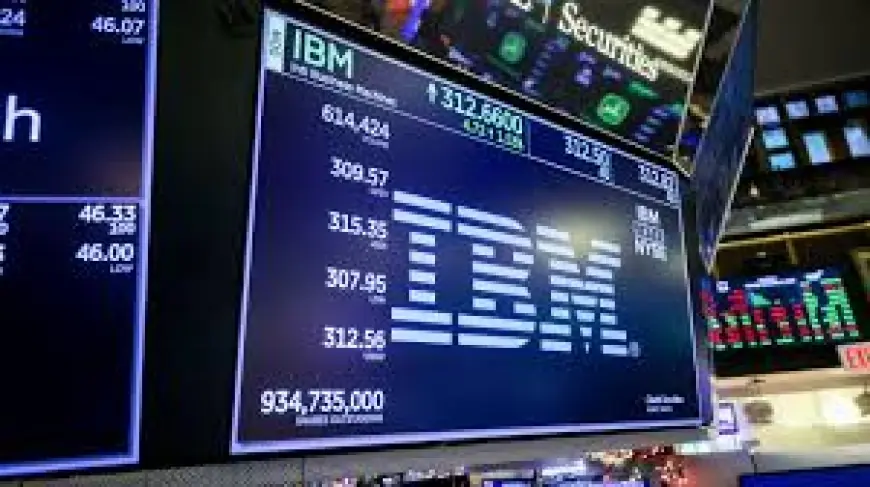
Markets reacted quickly: IBM shares closed down 13%, the largest one-day drop since 2000. DoorDash Inc., American Express Co., KKR & Co. and Blackstone Inc. slumped by at least 6%, while Uber Technologies Inc., Mastercard Inc., Visa Inc., Capital One Financial Corp. and Apollo Global Management Inc. fell by 4% or more.
Companies and scenarios flagged — concise rundown
- Citrini Research — weekend paper presented a scenario set in June 2028 with mass white-collar unemployment, falling consumer spending, software-backed loan defaults and economic contraction; the paper emphasized it was a scenario, not a prediction.
- Food delivery — the report sketched outcomes where dominant apps like DoorDash and Uber Eats are displaced by “vibe-coded” alternatives.
- Payments — one scenario described AI agents eliminating transaction fees charged by processors such as Mastercard and Visa.
- Anthropic — blog post highlighted Claude Code’s ability to modernize COBOL, a language mainly run on IBM machines.
- Nassim Taleb — warned that markets are underpricing structural risks and should expect rising volatility and potential bankruptcies in software.
Market reaction table (select moves)
| Company | Move noted |
|---|---|
| IBM | Closed down 13% (largest one-day drop since 2000) |
| DoorDash Inc. | Slumped at least 6% |
| American Express Co. | Slumped at least 6% |
| KKR & Co. | Slumped at least 6% |
| Blackstone Inc. | Slumped at least 6% |
| Uber Technologies Inc. | Fell 4% or more |
| Mastercard Inc., Visa Inc., Capital One Financial Corp., Apollo Global Management Inc. | Each fell 4% or more |
Here's the part that matters: the market is treating scenario-driven fears as a catalyst for rapid revaluation, not just intellectual debate.
Reactions, caveats and the tone from the scenario authors
Citrini’s preface framed the work as a modeling exercise aimed at highlighting underexplored left-tail risks. The authors also acknowledged that some scenarios will not materialize and noted investors still have time to assess portfolio assumptions that might not survive the decade. DoorDash co-founder Andy Fang responded on X, calling agentic commerce transformative and saying the ground is shifting and the industry will need to adapt.
What’s easy to miss is that the report pairs dramatic hypothetical outcomes — including a June 2028 scenario of mass white-collar unemployment and cascading economic stress — with an explicit caveat that it is not a prediction, yet markets treated the scenarios as actionable risk inputs.
Micro timeline and what could confirm the next turn
- Sunday: Citrini Research released the weekend scenario paper on social media.
- Monday morning: Anthropic posted about Claude Code and COBOL modernization.
- Monday trading: Nassim Taleb’s warning was issued and markets sold off sharply, including a 13% close for IBM.
The real question now is whether follow-up research, additional claims about legacy-code modernization, or broader investor reassessments will prolong the repricing or prompt a quick rebound.
Separately, readers encountering a paywall or verification prompt on market sites may see instructions asking them to click a box to confirm they are not a robot, check that their browser allows JavaScript and cookies, consult the site's Terms of Service and Cookie Policy for more information, and contact a support team with a reference ID if needed. A subscription pitch for wider market coverage may also appear on some pages.
Overall, the move in ibm stock feels less like an isolated technical drop and more like a market-wide reassessment of which legacy dependencies matter in an AI-driven shift. The real test will be whether those scenario-driven risks produce follow-on data or statements that change valuation trajectories again.