



How the Finale Upended Dunk and Egg — Aegon Targaryen, Maekar’s Grief and What Comes Next

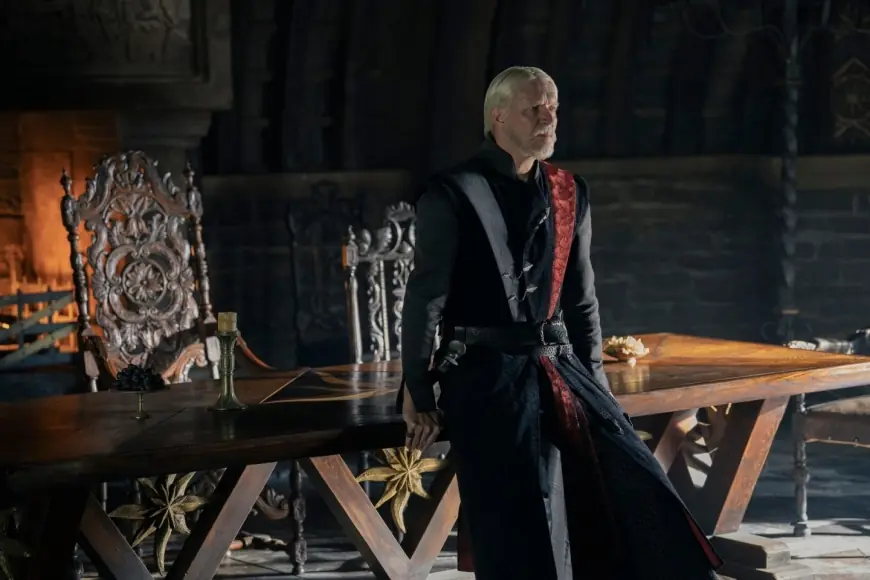
The season-one finale "The Morrow" forced several private truths into the open, and it placed aegon targaryen at the center of a chain reaction that reshapes family, honor and the pair’s future. The episode reframes Maekar Targaryen’s grief, exposes Egg’s loyalties, and deepens the long-running question of whether Duncan the Tall is truly a knight.
Maekar’s grief and the fatal turn at Ashford Meadow
Sam Spruell portrays Prince Maekar Targaryen, a widowed single father whose shortcomings as a parent reach a peak around the jousting tournament at Ashford Meadow. Maekar has three sons—Daeron, Aerion and Aegon (called "Egg")—and has long lived in the shadow of his older brother, Prince Baelor Targaryen, the heir to the Iron Throne played by Bertie Carvel. At Ashford Meadow, Maekar and Aerion discover that Aegon and Daeron did not arrive as scheduled, setting off a sequence of confrontations that end with Baelor’s unexpected death from a fatal head wound received at Maekar’s hand.
Aegon Targaryen and Egg’s secret intervention
During the Ashford Meadow events, Ser Duncan "Dunk" the Tall (Peter Claffey) clashes with Aerion (Finn Bennett) over Aerion’s assault of a puppeteer. Aegon Targaryen intervenes on behalf of the hedge knight he has secretly been squiring for under the alias Egg. The drunken Daeron is soon found nearby and, to deflect his own neglect, falsely accuses Dunk of kidnapping his youngest brother. Aerion responds by challenging Dunk to a "trial of seven, " where each side must recruit six champions.
The trial, Baelor’s fall, and Maekar’s self-delusion
Prince Baelor joins Dunk’s side in the trial, and after a hard-fought battle Dunk compels Aerion to withdraw the accusation. Dunk then bends the knee to Baelor—only for Baelor to collapse and die from the head wound that Maekar inflicted. In the finale Maekar insists the Gods know it was an accident. Sam Spruell views Maekar as susceptible to self-delusion and using divine absolution to ward off culpability, a portrayal that reads as a study of corrupt power and conscience in crisis.
Offers, refusals and a royal refusal to live like a peasant
Acting on Egg’s fondness for Dunk, Maekar offers Dunk a place at Summerhall where Dunk could train under the castle’s master-at-arms and train Egg as his squire. Dunk, citing royal exhaustion, rejects the offer and later asks if he may take the young lad on the road with him. Maekar refuses to let his royal blood live like a "peasant. " A further line in the provided text—an apparent thought about Aegon being Maekar’s last chance to have an heir worth something—is incomplete in the available context and is unclear in the provided context.
Dunk’s past and the question of true knighthood
"The Morrow" includes a flashback to Dunk’s recent past as a squire to Ser Arlan of Pennytree. Arlan is shown propped against a tree, pale and babbling and apparently dying; Dunk asks why Arlan never knighted him and receives no answer. The flashback is filmed on the same hillside where Dunk buries Arlan’s body. The episode leans into long-held suspicions that Dunk may be lying about his knighthood: he claims Arlan knighted him before dying with only a robin as witness, but when Dunk attempts to enter the Ashford Meadow joust he is told to find a lord or knight to vouch for him and no one can verify Arlan’s existence.
Hints, interpretation and the creators’ intent
The season drops subtle hints that Dunk might only ever have been a squire who told a lie to get closer to a better future. Showrunner Ira Parker framed the crucial moments as intentionally open to interpretation rather than black-and-white answers. Examples across the season underline the ambiguity: when Dunk first meets Egg, the boy bluntly tells him he doesn’t look like a knight; in episode four Dunk hesitates when Raymun Fossoway asks to be knighted and, despite Lyonel Baratheon urging that any knight can make a knight, Dunk does not draw his sword. The exact reason Dunk refuses in that scene—whether to avoid risking Raymun’s life, because Dunk does not know the formal words if he was never knighted, or another motive—is unclear in the provided context.
Where Dunk and Egg go next: a leaner, quieter second season and production hurdles
The series completed a six-episode first season and is already in production on a second season adapting George R. R. Martin’s second Dunk and Egg novella, The Sworn Sword. That novella centers on a dispute about water rights to a stream, carries even lower stakes than The Hedge Knight, and involves much less action and more extended character conversations—there is no tourney. The plan is another six-episode arc, but adapting The Sworn Sword presents challenges: it is less naturally episodic and lacks obvious midseason climaxes such as the reveal that Egg is Aegon Targaryen.
Production will also shift to warmer, drier locations because book two takes place in a drought; exteriors cannot be shot in Belfast. The budget remains the same while inflation has raised costs, and traveling to sunny locations with no water is a major new expense not faced in season one. In the book-based plan most secondary characters from season one are not expected to return for season two—Dunk and Egg, as portrayed by Peter Claffey and Dexter Sol Ansell, will return, while characters such as Lyonel Baratheon (Daniel Ings), Raymun Fossoway (Shaun Thomas), and every single Targaryen outside of Egg are unlikely to appear in the immediate adaptation, though they may return in future seasons. The new season will introduce a fresh cast of characters orbiting Duncan and Egg.
The finale’s choices—Maekar’s crisis of conscience, Egg’s public loyalty, and the renewed mystery about Dunk’s status—leave the pair’s future reshaped and set a tone for a quieter, debate-driven second season that will test how small-scale conflicts carry narrative weight.