
























Blizzard Of 78 Mentioned as Nor'easter Pounds Southern New England With 18–24 Inches Expected

Southern New England is experiencing intense blizzard conditions this morning as a nor'easter brings heavy, wet snow and powerful northeast winds. The phrase blizzard of 78 appears in public reference even as immediate threats — near-zero visibility, impassable roads and likely power outages — demand urgent caution.
Blizzard Of 78: Development details
The storm has produced sustained bands of heavy snowfall through Monday morning, with snowfall rates locally reaching 2–3 inches per hour and pockets of thundersnow reported. Winds from the northeast have gusted between 50 and 70 mph, with forecasts calling for gusts of 50–70 mph through Monday afternoon. Those combined elements have created true blizzard conditions across all of Rhode Island and southeastern Massachusetts for multiple hours, reducing visibility to near zero at times and making travel impossible.
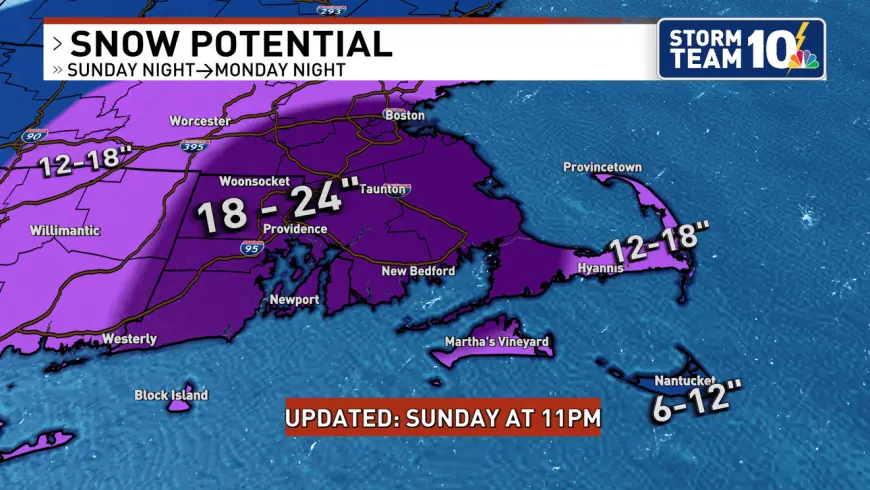
Forecasts now show a widespread 18 to 24 inches of snow for most of Rhode Island and southeastern Massachusetts. Along the immediate south coast and toward the Cape Cod Canal, accumulations are expected to be lower, roughly 12 to 18 inches. The weight of the wet snow is higher than earlier storms this season because surface temperatures and water content are greater, increasing the risk of tree damage and downed power lines.
Context and escalation
This nor'easter developed into a high-impact storm as its track moved close to the so-called benchmark, creating an ideal setup for heavy snowfall across the region. The combination of heavy, water-rich snow and powerful northeasterly gusts has driven rapid escalation: road conditions deteriorated overnight and were expected to become impassable by Monday morning. What makes this notable is that the storm’s proximity to the benchmark intensified both snowfall rates and wind impacts, producing widespread whiteout conditions in a compressed time window.
Local weather operations, including Storm Team 10, emphasized that the heaviest snow should continue through Monday morning, with snowfall rates possibly not easing until about 3: 00 PM. Light to moderate snow could linger into the evening, potentially until 11: 00 PM.
Immediate impact
Communities along the south coastline are particularly vulnerable: power outages are likely, driven by gusts of 60 mph or more combined with heavy, wet accumulations that increase the chance of downed limbs and wires. Officials warn that travel is not recommended and that roads may be impassable for extended periods. The heavy wet snow and wind-driven drifting will make shoveling and plowing more strenuous; residents are advised to allow time and, where possible, make multiple passes with snow removal equipment to reduce strain and improve clearing effectiveness.
Visibility near zero during the storm is creating immediate hazards for anyone on the roads; transportation systems are expected to face major disruptions during and after the heaviest bands pass. The combination of rapid accumulation rates — 2–3 inches per hour — and 50–70 mph gusts is the primary mechanism driving whiteout conditions and drifting that will block roadways and slow response operations.
Forward outlook
The heaviest window is concentrated through Monday morning, with forecasts indicating that snowfall rates may finally let up around 3: 00 PM. Light to moderate snow could persist into the night, potentially ending by 11: 00 PM. Emergency and utility crews are likely to face extended response demands because of downed trees and wires tied to the wet snow and high winds; power restoration timelines will depend on the extent of damage and accessibility once winds subside.
Residents are urged to avoid travel while the blizzard conditions persist, prepare for power interruptions, and follow guidance from local officials and weather teams. The blizzard of 78 phrase has surfaced in conversation, but current planning and response are being driven by measurable forecasts: 18–24 inches of accumulation, 2–3 inches per hour snowfall rates, and 50–70 mph wind gusts that together are producing widespread, high-impact blizzard conditions across southern New England.